.svg)
.svg)
.svg)
.svg)
What Is the Most Expensive Part of Building a New House in Halifax?
This guide breaks down every major cost category in a Halifax new home build, shows the real municipal fee schedule most guides skip, and explains where a homeowner actually has control over the final number.
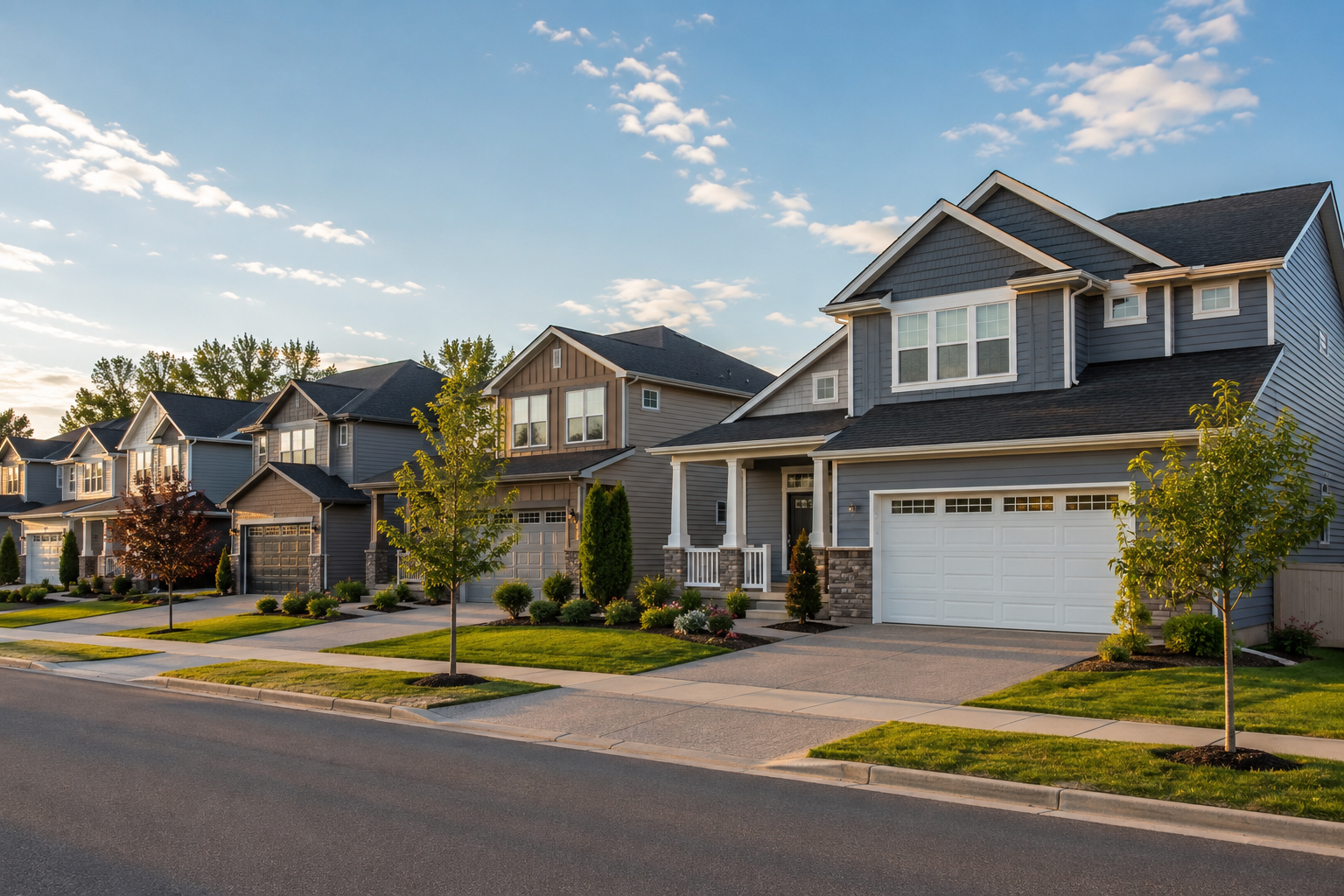
Labour and the structural shell are the most expensive parts of building a new house in Halifax. Skilled trades work, combined with excavation, foundation, and framing, absorbs the largest share of a construction budget in Halifax Regional Municipality. Materials matter, but the cost of qualified people installing them correctly is what moves a Halifax budget the most.
This guide breaks down every major cost category in a Halifax new home build, shows the real municipal fee schedule most guides skip, and explains where a homeowner actually has control over the final number.
The Short Answer: Labour Is the Biggest Line, Structure Is the Biggest Stage
Two things are true at once, and confusing them is where budgets go wrong.
Labour is the largest single cost centre across the whole project. Framing crews, plumbers, electricians, HVAC installers, and finish carpenters are billed at every stage from excavation to final walkthrough.
The structural shell is the largest single stage. Site work, foundation, and framing consume the biggest block of spending before a homeowner sees anything resembling a house.
The Halifax labour market explains why. CMHC reported roughly 7,000 housing starts in the Halifax CMA in 2025, up about 38 percent over 2024, with more than 13,000 units under construction. CMHC's Spring 2026 Housing Supply Report flags skilled labour shortages and builders operating near full capacity as a live risk to delivery. The Construction Association of Nova Scotia has said the overall cost of materials and building has roughly doubled since 2020, with about a quarter of materials imported. Nova Scotia is also working toward an estimated 11,000 newly certified tradespeople needed by 2030.
When trades are that busy, their time is priced accordingly. That is the mechanism behind the number on your quote.
What a New Home Costs Per Square Foot in Halifax in 2026
Custom home construction in Nova Scotia starts at $225 per square foot with HST included. Halifax and the wider HRM sit at the upper end of any provincial range because trades are busier, permitting takes longer, and land values are higher.
Smaller homes run higher per square foot, usually $265 to $285. Fixed costs like the foundation, mechanical systems, and site work get spread across less floor area.
All figures include HST at 14 percent, the Nova Scotia rate since April 1, 2025. Land purchase, well and septic installation, and landscaping are separate.
Cost Breakdown by Construction Stage
Land and Site Preparation
Site conditions set your budget before framing begins. Excavation, grading, drilling a well, and installing a septic system can add $20,000 to $60,000 depending on the lot.
Halifax sits on shallow bedrock in many areas, which is why blasting is a normal line item here and not an exception. HRM charges a $100 engineering fee for blasting under 50 cubic metres and $600 for larger blasting applications, and the blasting work itself is a separate contractor cost.
Foundation and Framing
Foundations in Nova Scotia are built for freeze and thaw cycles, coastal moisture, and wind exposure. That means proper footing drains, damp proofing, and backfill drainage, not just a concrete wall.
Framing cost tracks complexity more than size. Extra corners, dormers, cathedral ceilings, and cut-up rooflines all add labour hours and material waste. A simple rectangle with a straightforward roof is the cheapest strong house you can build.
Roofing, Windows, and Exterior Envelope
The building envelope is where Halifax weather gets expensive. Wind-rated shingles, properly detailed flashing, and quality window installation protect against driven rain from Atlantic storms.
Since April 1, 2025, Nova Scotia has built to the 2020 National Building Code, with energy requirements for houses set out in Section 9.36. Tier 2 of the national building code took effect April 1, 2026, and higher tiers follow through 2029. Better airtightness and insulation are now the legal floor, not an upgrade.
Plumbing, Electrical, and HVAC
Mechanical systems require licensed trades and carry both permit and inspection requirements. Plumbing cost scales with the number of bathrooms, fixture count, and how far runs travel from the stack.
Most new Halifax homes now use cold-climate air source heat pumps, often ducted with ductless mini-splits in problem rooms, plus a heat recovery ventilator to manage air quality in a tighter envelope. The upfront cost is higher than baseboard heat, and the operating cost is meaningfully lower.
Interior Finishes and Custom Features
Finishes are where two identical floor plans end up $80,000 apart. Cabinetry, flooring, tile, plumbing fixtures, lighting, and countertops each feel small in isolation.
Without a tracked allowance from day one, selections alone can shift a total by $40,000 to $80,000. This is also the one category a homeowner fully controls.
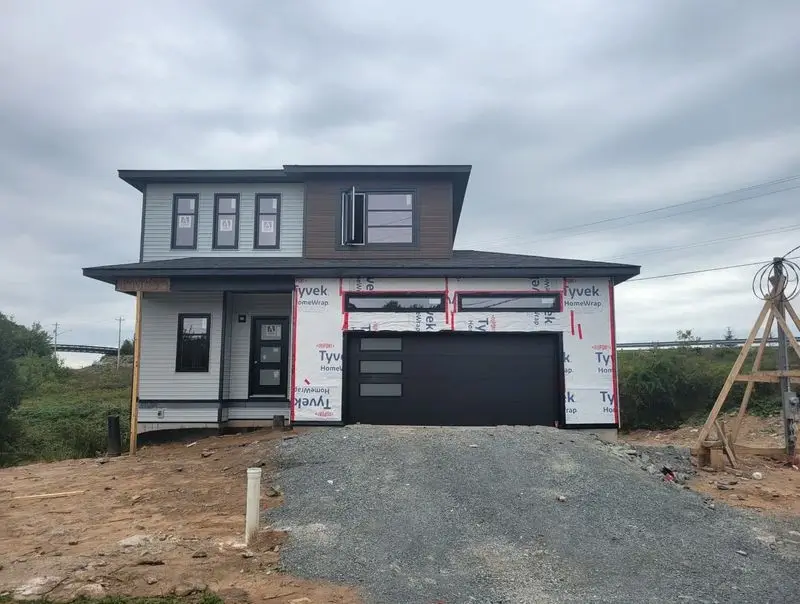
Halifax Permit and Municipal Fees, Line by Line
Most cost guides say permits "add thousands" and stop there. HRM publishes exact numbers, so here they are.
Here is how that stacks on a real house. Take a 2,400 square foot two-storey with a 1,200 square foot full basement and a 600 square foot attached garage on a serviced lot.
- Building permit: $720 above grade, plus $120 basement, plus $60 garage, totalling $900
- Development permit, plumbing permit, and solid waste charge: $498.29
- Lot grading and driveway access reviews: $400
- Halifax Water Regional Development Charges: $4,263.68
- Approximate municipal total: $6,060
Rural lots outside the Halifax Water service area skip the Regional Development Charge but pay instead for a drilled well and an on-site septic system.
Hidden Costs Homeowners Miss
- Construction draw mortgage interest during the build, which most budgets ignore entirely
- Design, engineering, and energy modelling fees required for permit submission
- Rock removal and blasting, common across HRM and rarely priced before test pits
- Landscaping, driveway paving, and final lot grading, often excluded from construction quotes
- Temporary housing if your current home sells before occupancy
- A real contingency of 10 percent for code-driven revisions and site surprises
How to Reduce Construction Costs Without Cutting Quality
- Simplify the footprint and roofline, since corners and rooflines cost more than square footage
- Lock finish selections before framing, because mid-build changes trigger rework and delays
- Spend on the envelope and mechanicals, then economise on flooring and fixtures
- Build slightly smaller with better detailing rather than larger with thin finishes
- Ask for an itemised estimate with named allowances instead of a single lump sum
- Use Efficiency Nova Scotia's new home service and get a Certified Energy Advisor reviewing plans early
How Long a Halifax Build Takes?
Construction itself runs 8 to 12 months. The full journey from first conversation to move-in is longer, and permit approval in HRM alone typically takes two to four months.
Design and consultation take one to two months, engineering and permit submission another one to two, site prep and foundation one to two, framing through drywall two to four, and finishes two to three. Starting the design phase early is the only real way to protect a target move-in date.
Why Homeowners Trust Signature Homes for Custom Home Construction in Halifax
Signature Homes builds custom homes across Halifax Regional Municipality, from waterfront properties to family homes in Bedford, Sackville, and surrounding communities. Every project runs on transparent pricing, one accountable team, and construction detailed for Nova Scotia's coastal climate.
Homeowners come to us because we give real numbers before the relationship starts, not after. If building does not make financial sense for your situation right now, we will tell you that too.
Final Thoughts
The most expensive part of building a new house in Halifax is labour, delivered through the excavation, foundation, and framing stages that create the structural shell. Lot conditions and finish selections then decide whether your project lands at the bottom or the top of any range. Budget from real numbers, add municipal fees and a genuine contingency, and work with a builder who prices the whole picture rather than the headline per square foot.
FAQs
What is the most expensive part of building a house in Halifax?
Skilled labour is the largest single cost, and the structural shell of excavation, foundation, and framing is the most expensive construction stage.
How much does it cost to build a house per square foot in Halifax?
Custom construction in Nova Scotia starts at $225 per square foot with HST included, and Halifax builds typically land at the higher end of the range.
Why are building costs higher in Halifax than the rest of Nova Scotia?
Trades are busier, permit approvals take longer, and land values are higher across HRM, which pushes builds toward the top of any provincial range.
How much are building permits for a new house in Halifax?
HRM charges $0.30 per square foot above grade and $0.10 per square foot for deep basements and garages, with municipal and water charges commonly totalling around $6,000.
What is the HST rate on a new home in Nova Scotia?
Nova Scotia's HST rate is 14 percent, made up of 5 percent federal and 9 percent provincial, effective April 1, 2025.
Does the Nova Scotia Building Code affect what my house costs?
Yes. Nova Scotia adopted the 2020 National Building Code on April 1, 2025, and Tier 2 took effect April 1, 2026, raising minimum insulation and airtightness requirements.
What hidden costs should Halifax homeowners budget for?
Construction financing interest, design and engineering fees, rock removal, landscaping, driveway paving, and a 10 percent contingency are the most commonly missed items.
How long does it take to build a custom home in Halifax?
Construction runs 8 to 12 months, with permit approval in HRM adding another two to four months before work can begin.
Are heat pumps worth the extra upfront cost in Nova Scotia?
Yes for most homeowners. Cold-climate air source heat pumps cost more to install than baseboard heat and cut annual heating costs substantially over the life of the home.
Should I hire a local Halifax builder or an out-of-area contractor?
A local builder understands shallow bedrock, coastal wind exposure, HRM permitting, and Halifax Water charges, which prevents the expensive surprises that catch outside contractors.