.svg)
.svg)
.svg)
.svg)
20 Fireplace Ideas for a Cozy and Stylish Home
A fireplace can completely change the feel of a room, adding warmth, character, and a natural focal point. From modern stone fireplaces and traditional mantels to rustic surrounds and indoor-outdoor designs, these 20 ideas offer inspiration for every home style.
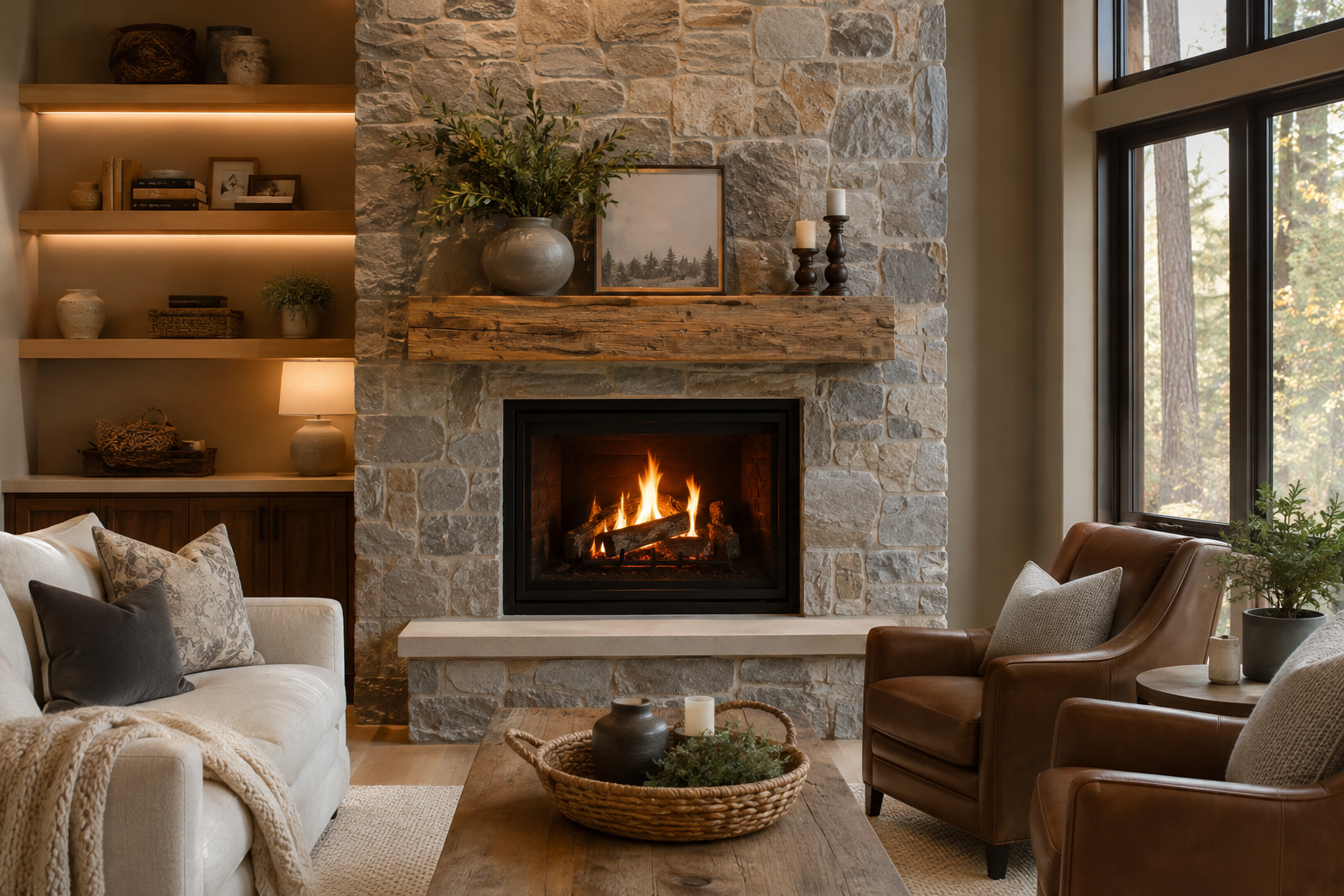
Few features change a room as quickly as a fireplace. It gives the space a centre, decides where the sofa goes, and adds a kind of warmth that lighting and paint cannot copy. The best design is the one that fits your wall, your fuel supply, and the way you actually use the room. Below are 20 ideas, each with the detail that separates a design that photographs well from one that works every night in January.
Fireplace Designs to Inspire Your Next Home
The current direction in fireplace design is quieter: simple surrounds, honest materials, and fireboxes that sit flush rather than protrude. Plaster, wood, stone, and concrete are doing the work that heavy carved mantels used to do. Most of the ideas below layer together, so treat them as parts rather than finished packages.
Modern Minimalist Fireplace
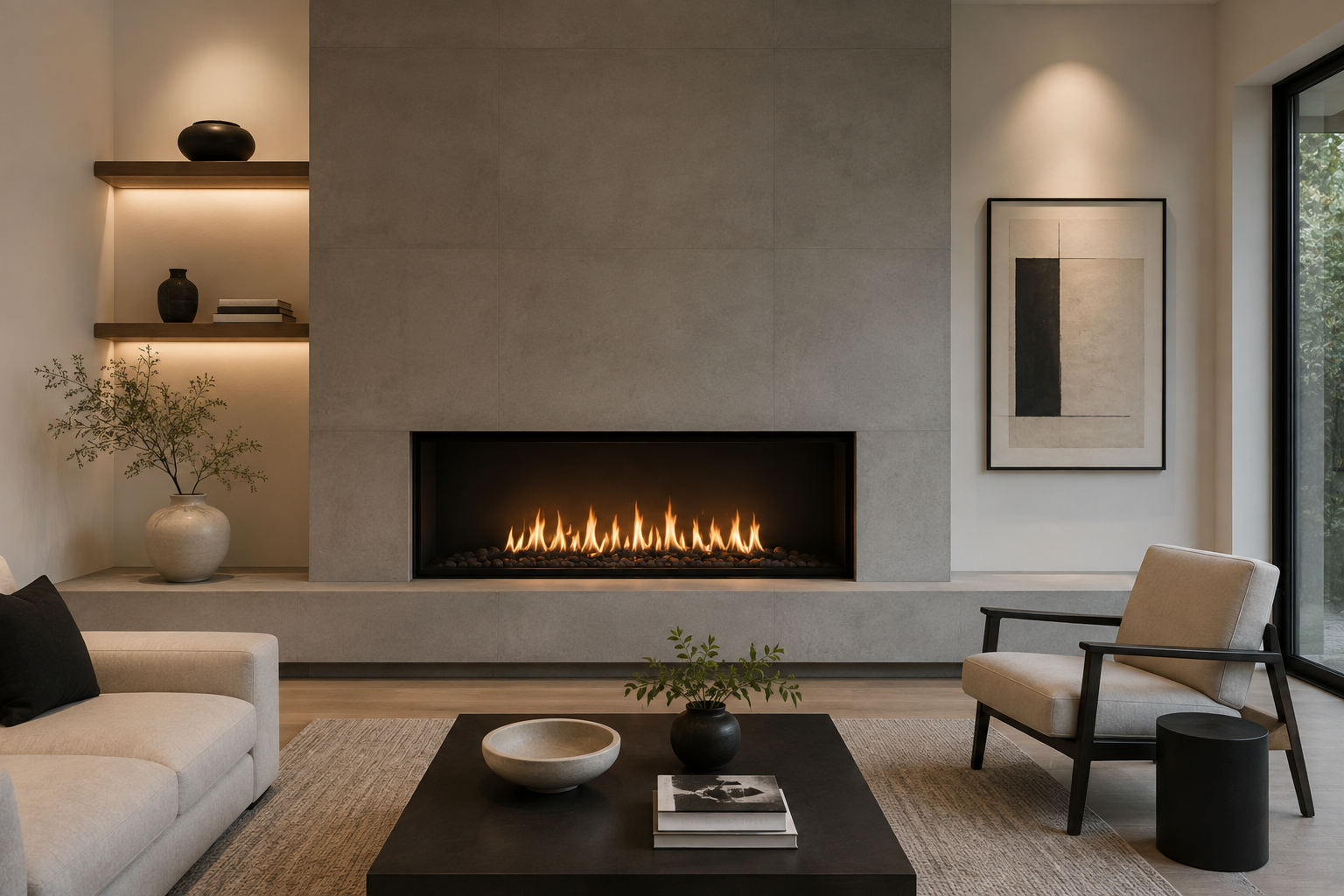
Minimalist fireplaces rely on detailing you barely notice. A shadow gap where the surround meets the wall, no visible fasteners, and a single continuous material give the opening a clean edge. Choose a firebox with a black interior and hidden controls, then run electrical and gas rough-ins early so nothing surfaces later.
Floor-to-Ceiling Fireplace
Running cladding the full height of the wall makes the fireplace the strongest element in the room. It pays off best above nine-foot ceilings, where a short surround would look stranded. Orientation matters: vertical stacked material stretches the wall upward, while horizontal ledgestone or wide-format slab widens it.
Stone Fireplace
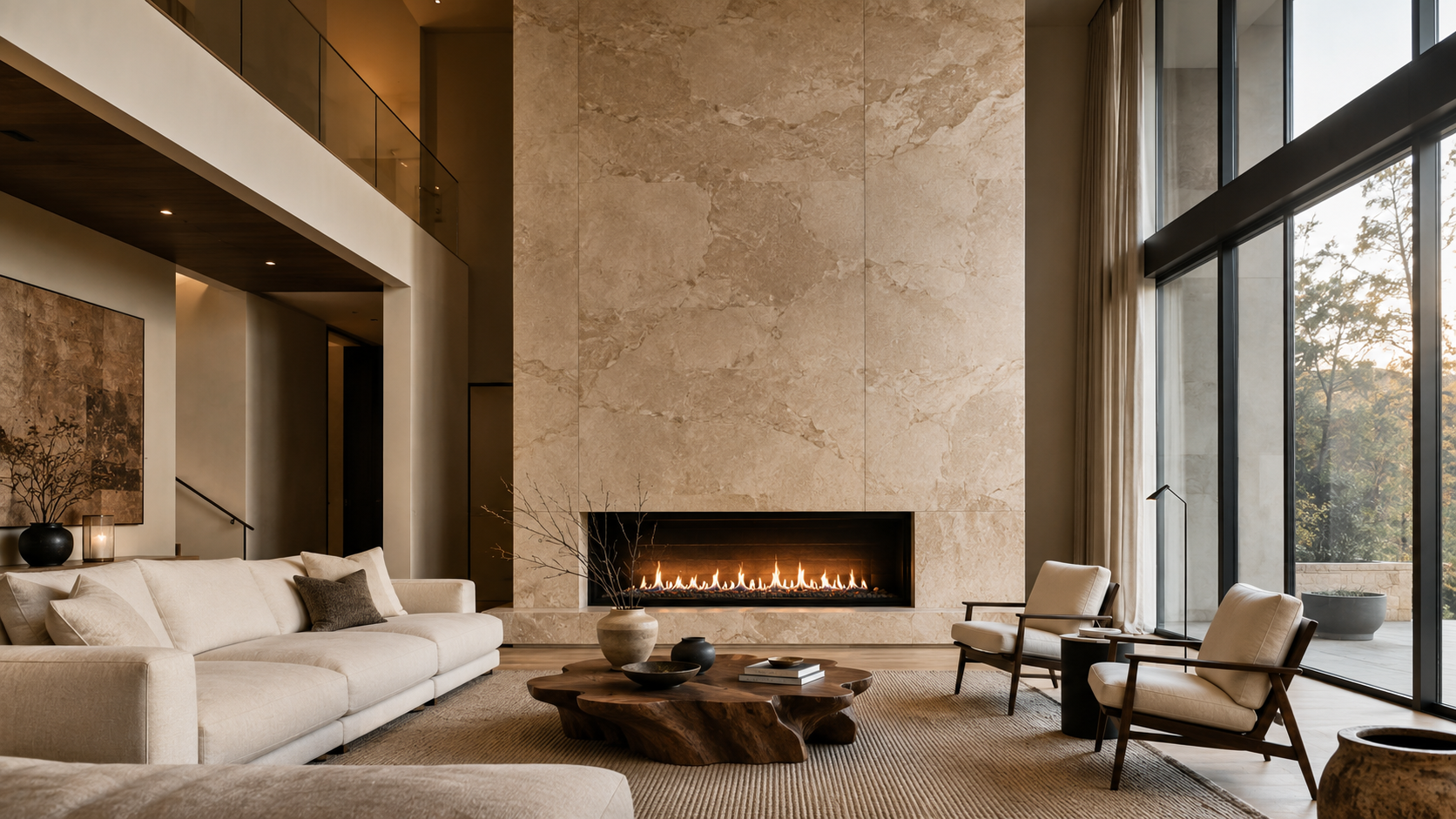
Stone choice sets the entire mood. Limestone and travertine read soft and warm, granite and slate read cool and formal, and fieldstone reads rustic. Finish changes it again, honed is smooth and matte, split-face is textured and shadowed. Most stone needs a penetrating sealer to resist soot marks near the opening.
Brick Fireplace
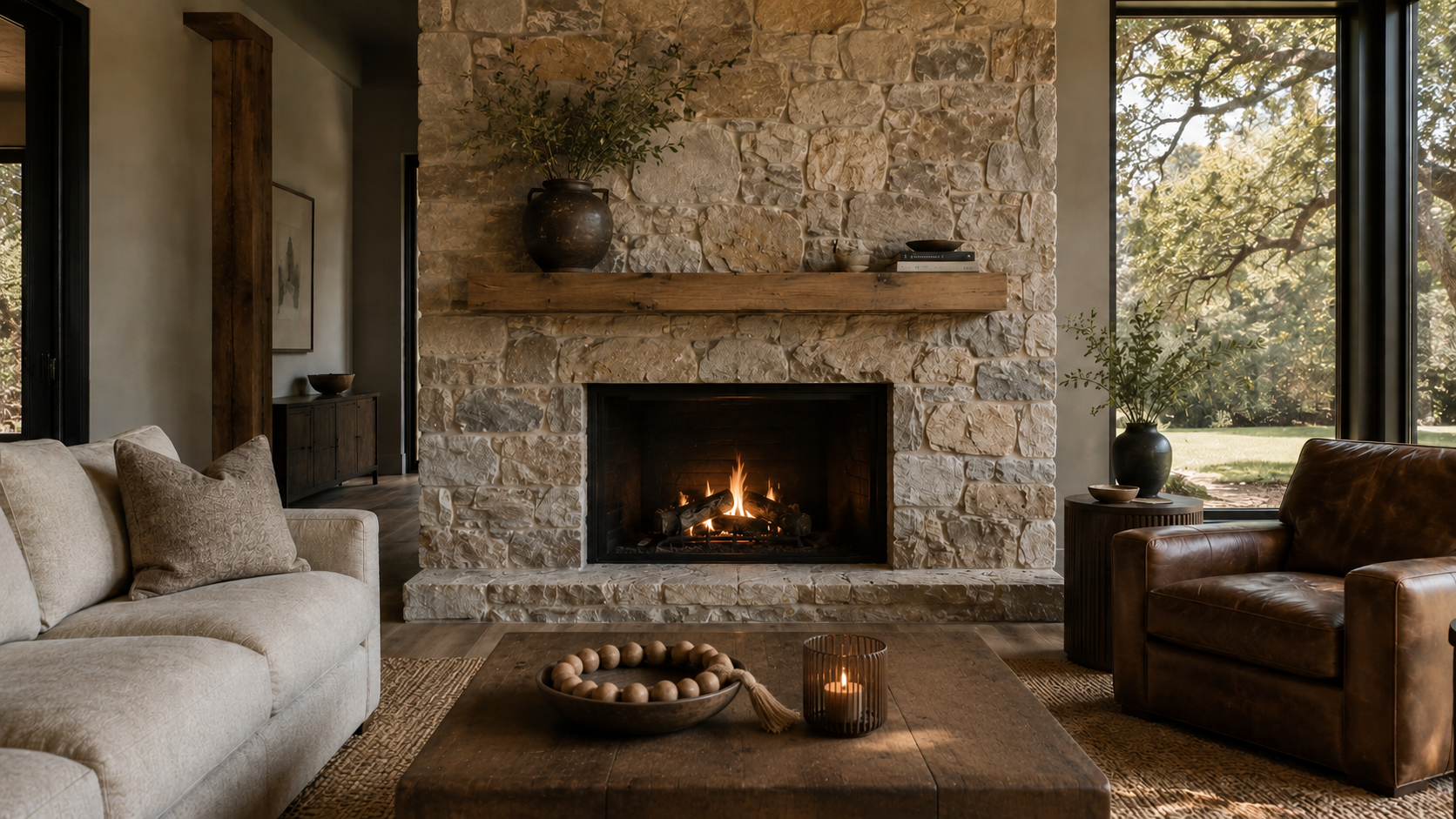
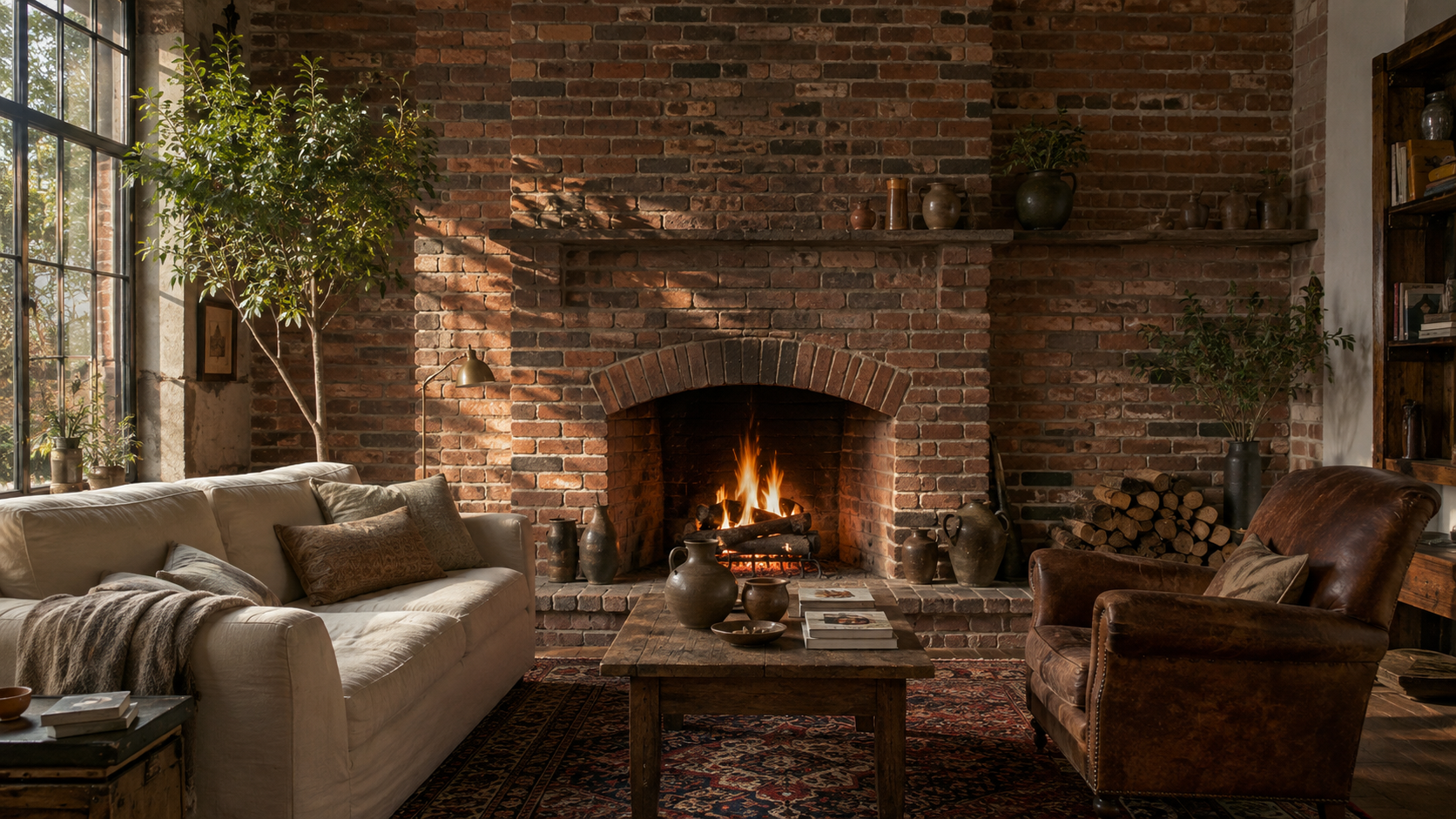
Brick works because it brings pattern without extra decoration. Reclaimed brick adds colour variation that new brick cannot match. Mortar colour is the quiet decision here: a light mortar makes the pattern pop, while a matching mortar softens it. Thin brick tile gives the same face over existing drywall at a fraction of the weight.
Modern Concrete Fireplace
Concrete suits homes that want mass without ornament. Pigment can be mixed through the material rather than applied on top, so chips do not expose a different colour underneath. A cantilevered concrete hearth doubles as a bench. Allow proper cure time before sealing, and expect the surface to develop a patina over the years.
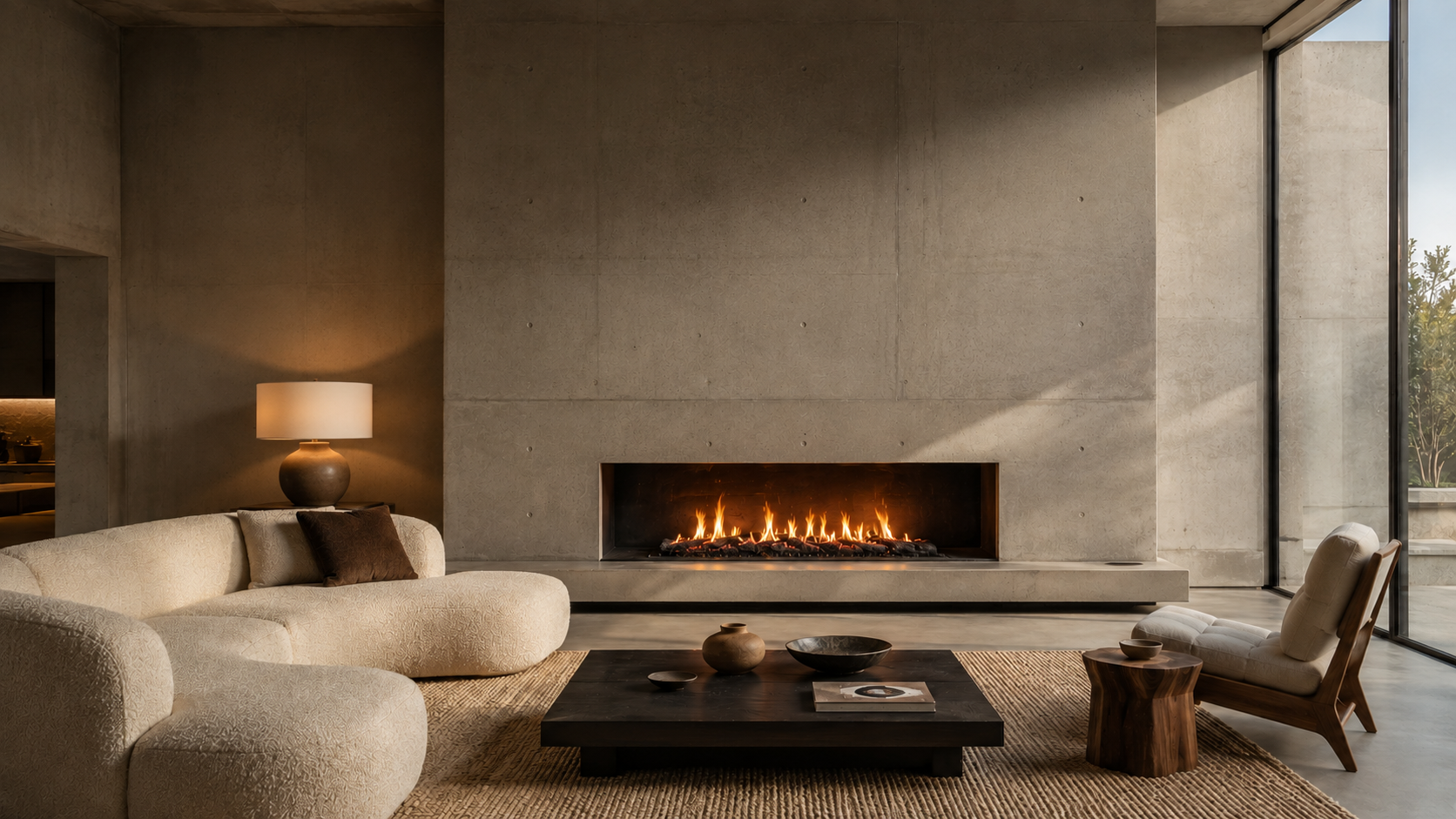
Wood-Burning Fireplace
Wood-burning appliances depend on draft, and draft depends on chimney height, flue size, and air supply. Modern airtight homes often starve a fireplace of combustion air, which shows up as smoke rolling into the room. An outside air kit solves it. Certified appliances burn cleaner and use far less wood than an open masonry firebox.
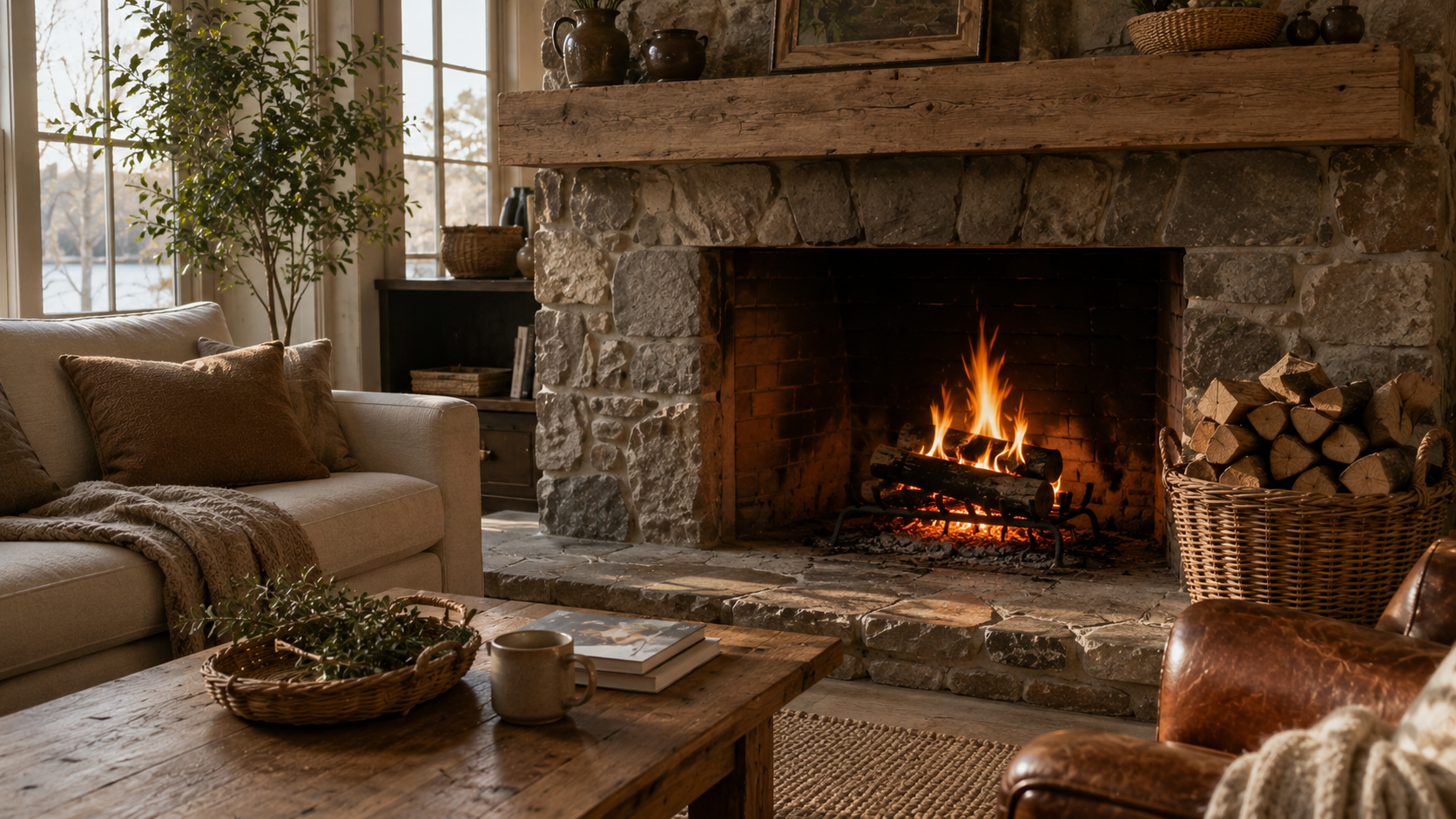
Gas Fireplace
Gas fireboxes come in three broad looks: a traditional log set, a linear ribbon burner over glass media, and a contemporary burner with stone or driftwood. Intermittent pilot ignition uses less fuel than a standing pilot. A blower kit pushes more heat into the room, and a wall thermostat lets the unit cycle on its own.
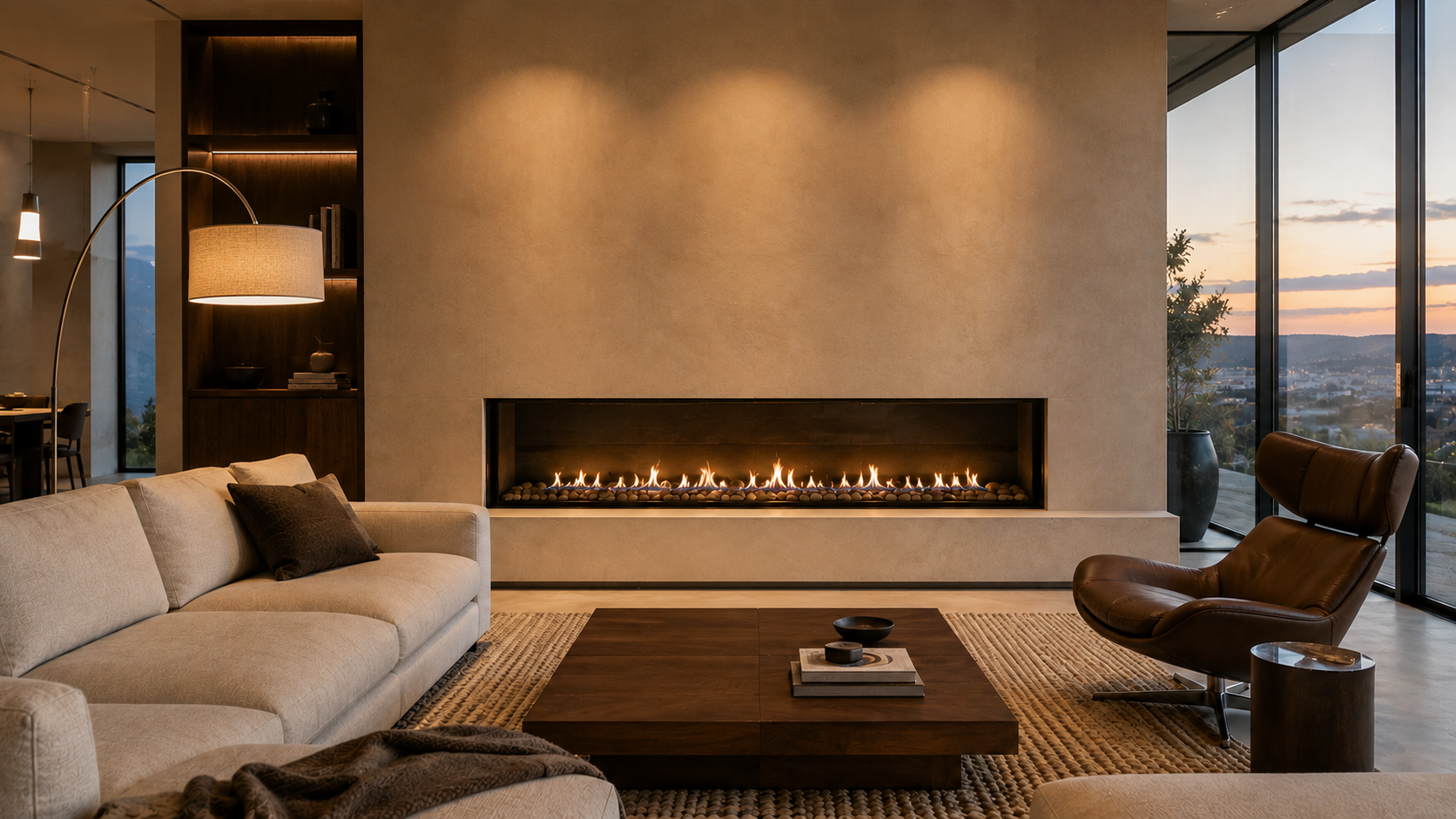
Electric Fireplace
Electric units have improved because the flame effect improved. LED and mirror systems create depth, and water-vapour models produce a mist flame that looks close to real. The heater and the flame run on separate controls, so the fireplace can stay on through summer with no heat at all.
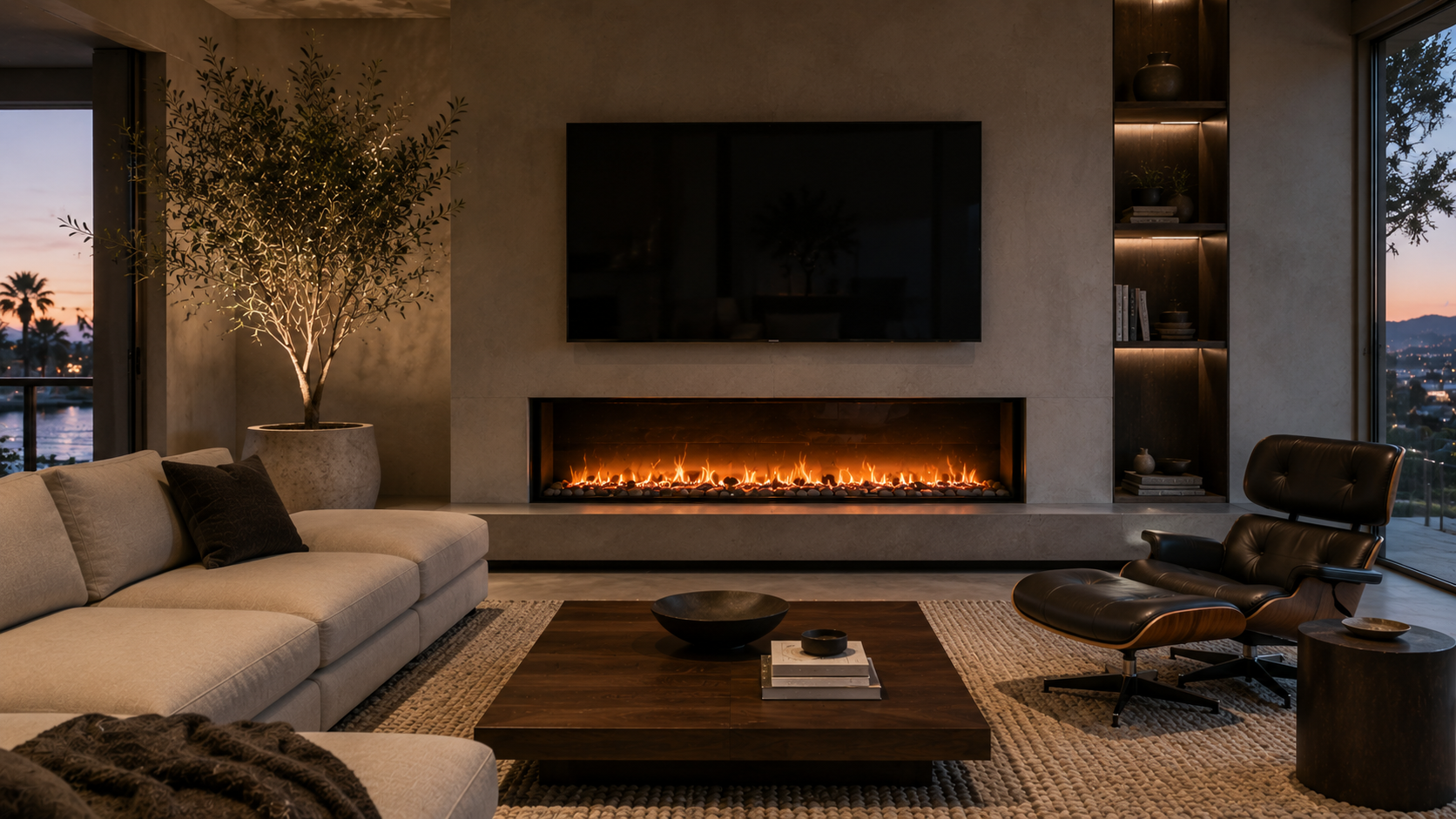
Double-Sided Fireplace
A see-through fireplace links two rooms visually. Plan the furniture on both sides at once, because whatever sits behind the glass becomes part of the view from the other room. Sound and light carry through as well, which is worth thinking about if one side is a bedroom or home office.
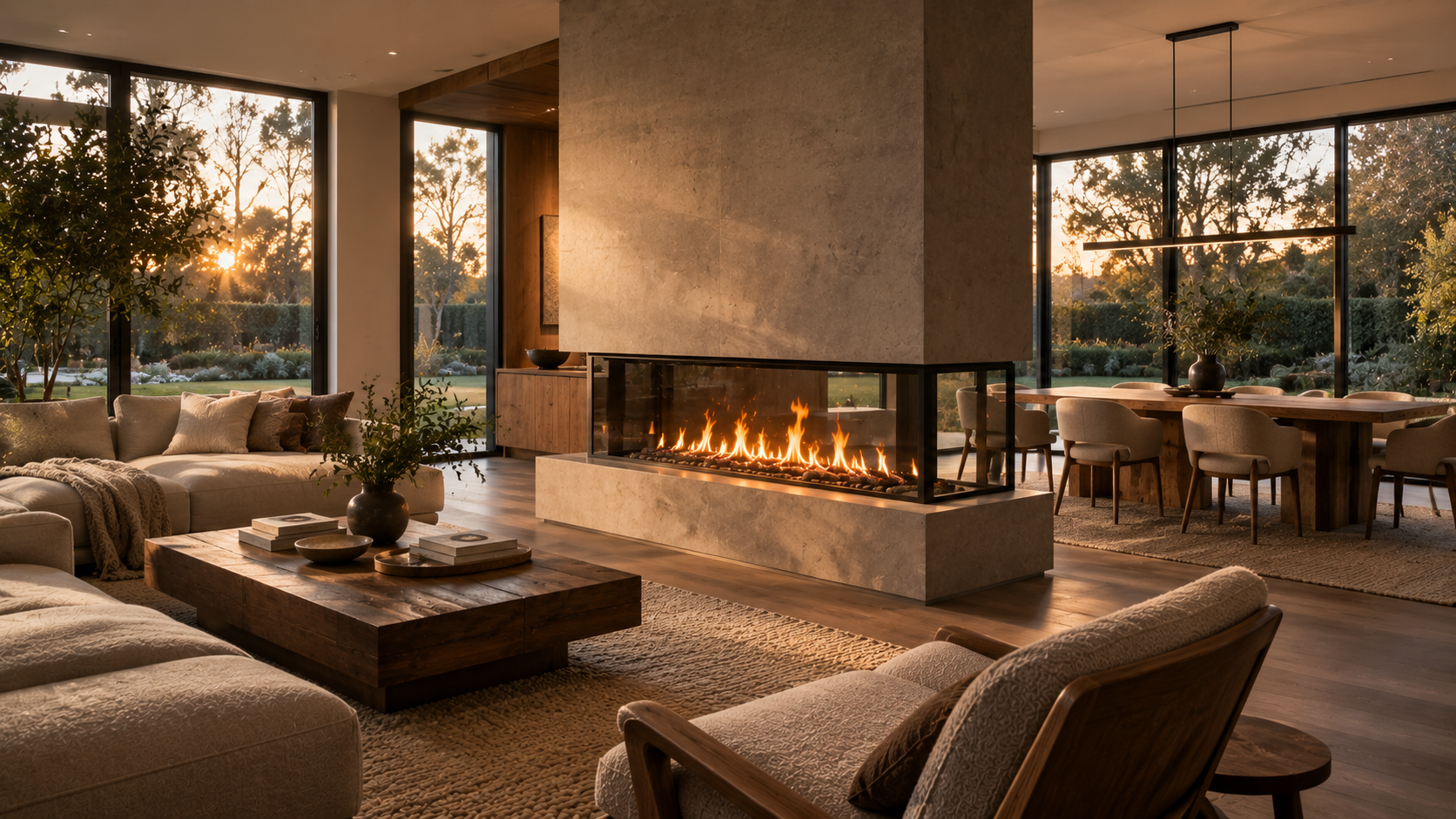
Corner Fireplace
Corner units take a footprint most rooms waste. Flat-front models sit at 45 degrees across the corner, while peninsula versions project into the room with glass on three sides. Because the corner is rarely the main viewing wall, a corner fireplace lets the television live somewhere more comfortable.
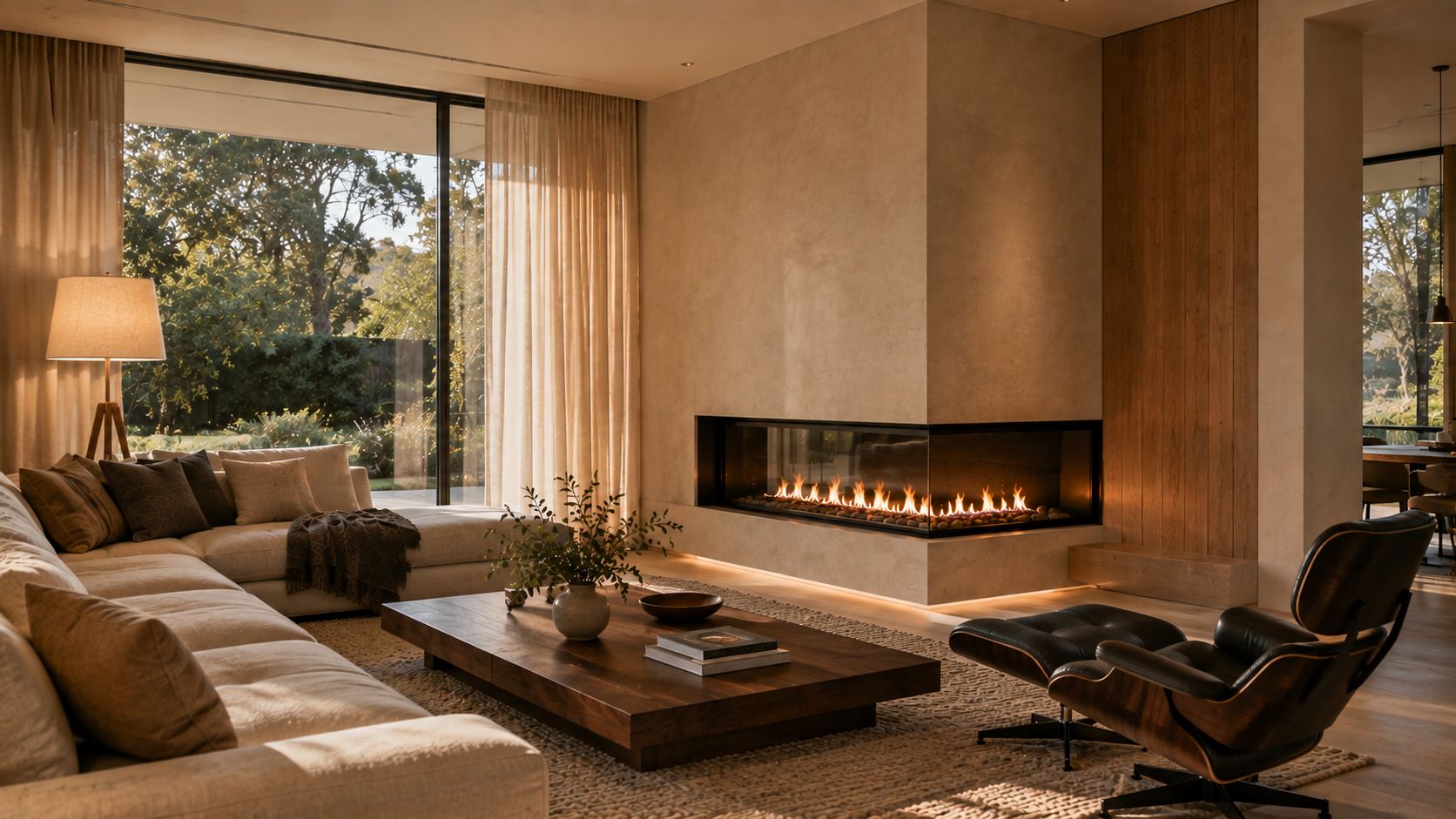
Built-In Fireplace
Built-in installation means framing a chase for the firebox, then finishing over the nailing flange so the unit sits level with the wall. The finish can return in drywall for a clean minimal edge or in tile and stone for texture. The rough-in has to happen before drywall, so the fireplace decision comes early in a build.
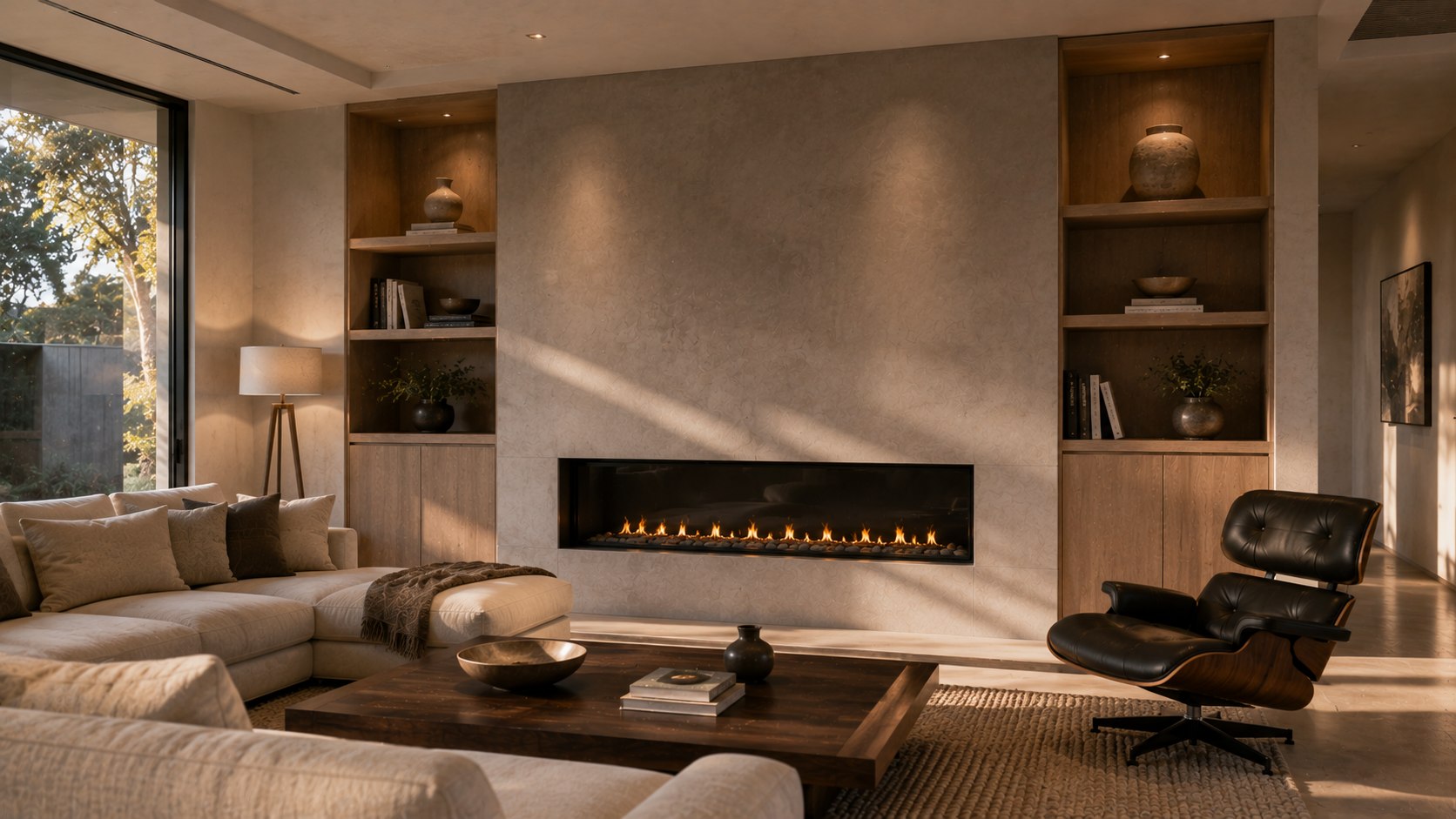
Fireplace With Built-In Shelving
Cabinetry flanking the firebox adds storage and frames the focal point.
- Keep shelf depth around 12 inches so books and decor fit without crowding the room
- Close the lower cabinets and leave upper shelves open for display
- Run power and data inside one cabinet for media components
- Add LED strips under each shelf for evening light
- Asymmetry works — a taller run on one side suits sloped or vaulted ceilings
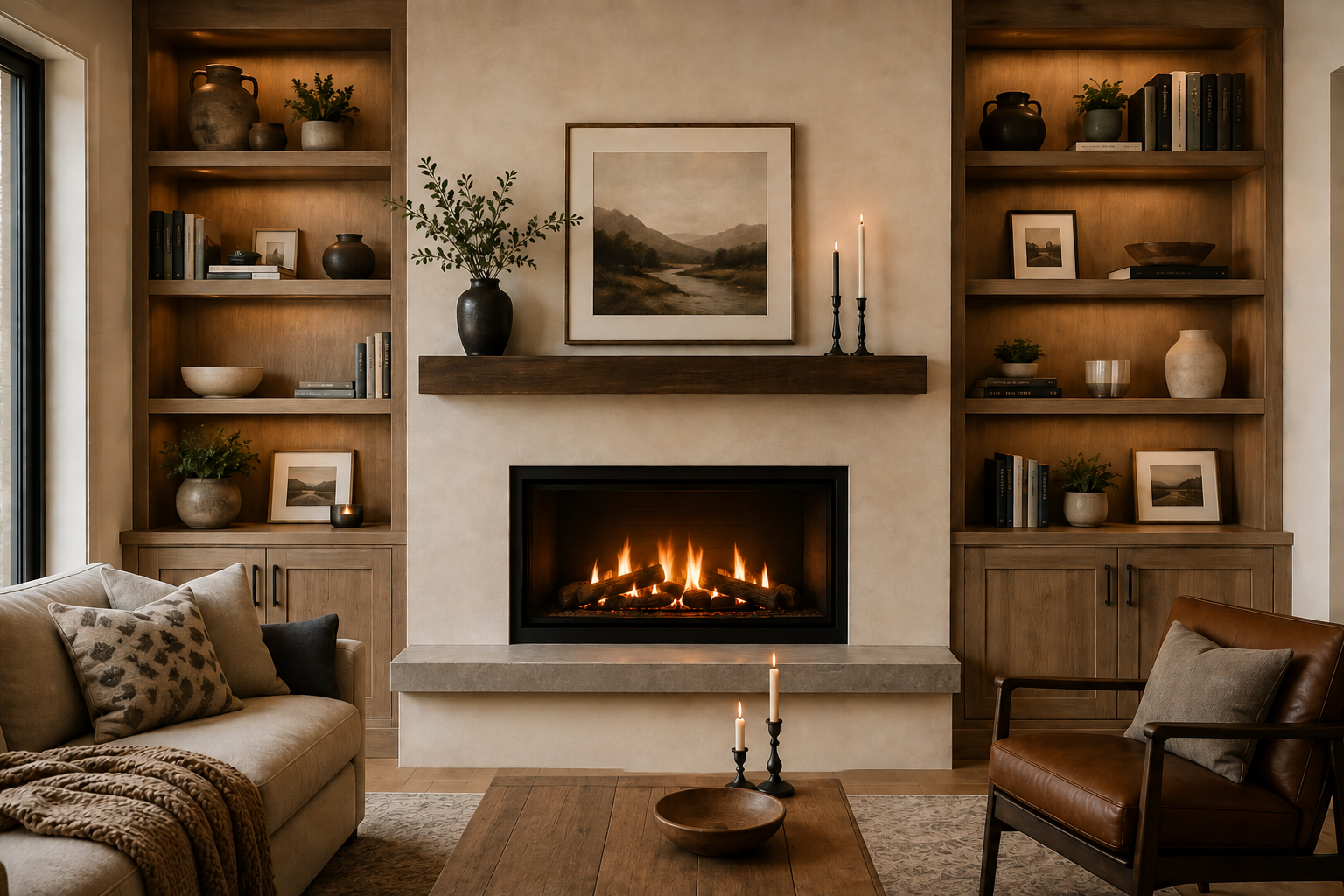
Fireplace With a TV Above It
If the TV is going above the firebox, plan a recessed niche so the screen sits close to the wall, and confirm the manufacturer's allowable clearance above the opening. Heat rises, and a mantel shelf or deflector pushes it forward. Where the wall allows, a side wall or an art-mode display often gives a better viewing angle.
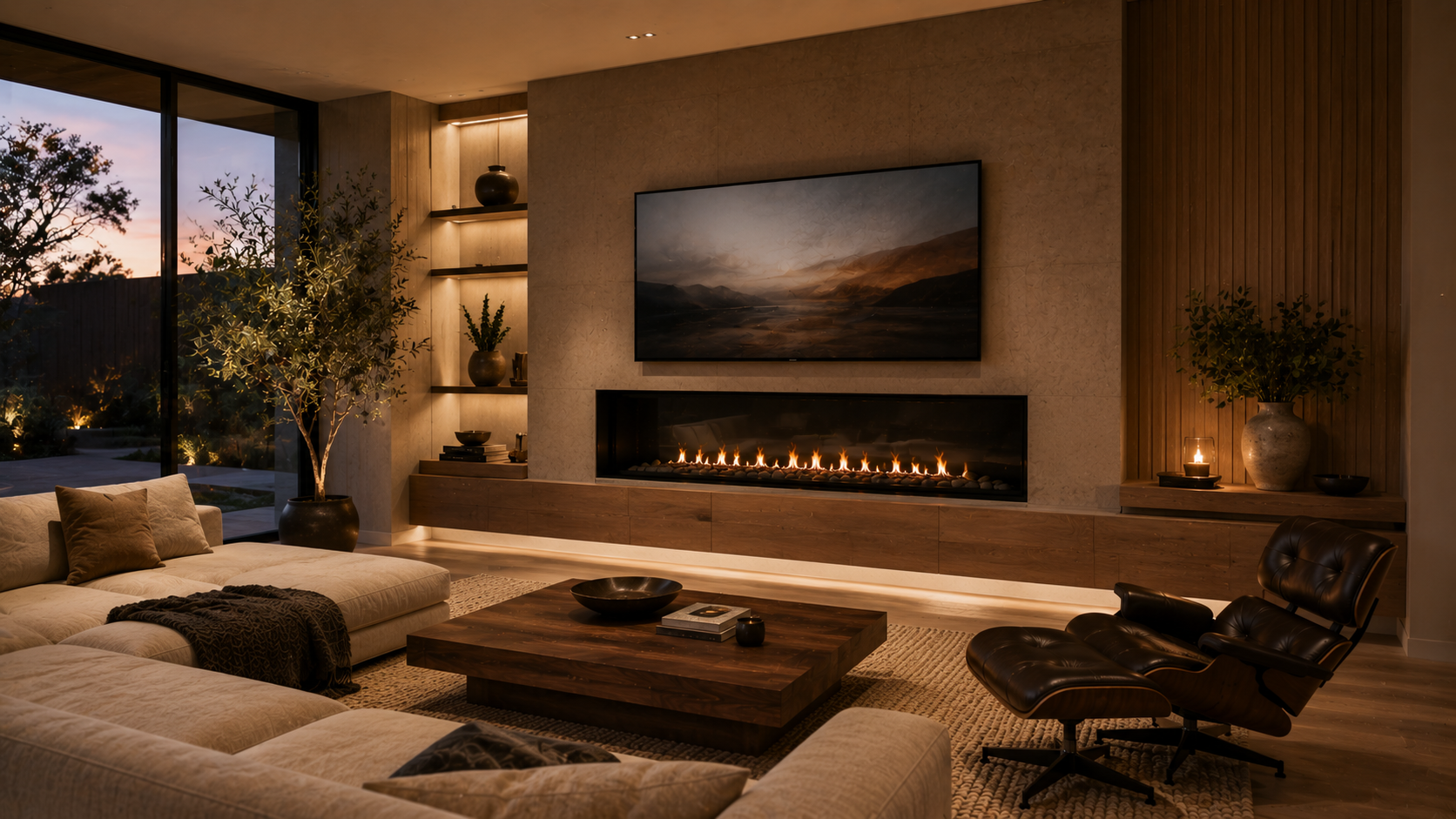
Outdoor Fireplace
Outdoor fireplaces extend the season on a patio or deck. A few things decide whether one gets used:
- Prevailing wind direction, so smoke does not blow into the seating
- Freeze-resistant materials and a proper footing below the frost line
- A woodbox or gas line, since fuel access decides how often it is lit
- Setbacks from property lines, structures, and overhanging branches
- Enough patio depth for seating at a comfortable distance from the heat
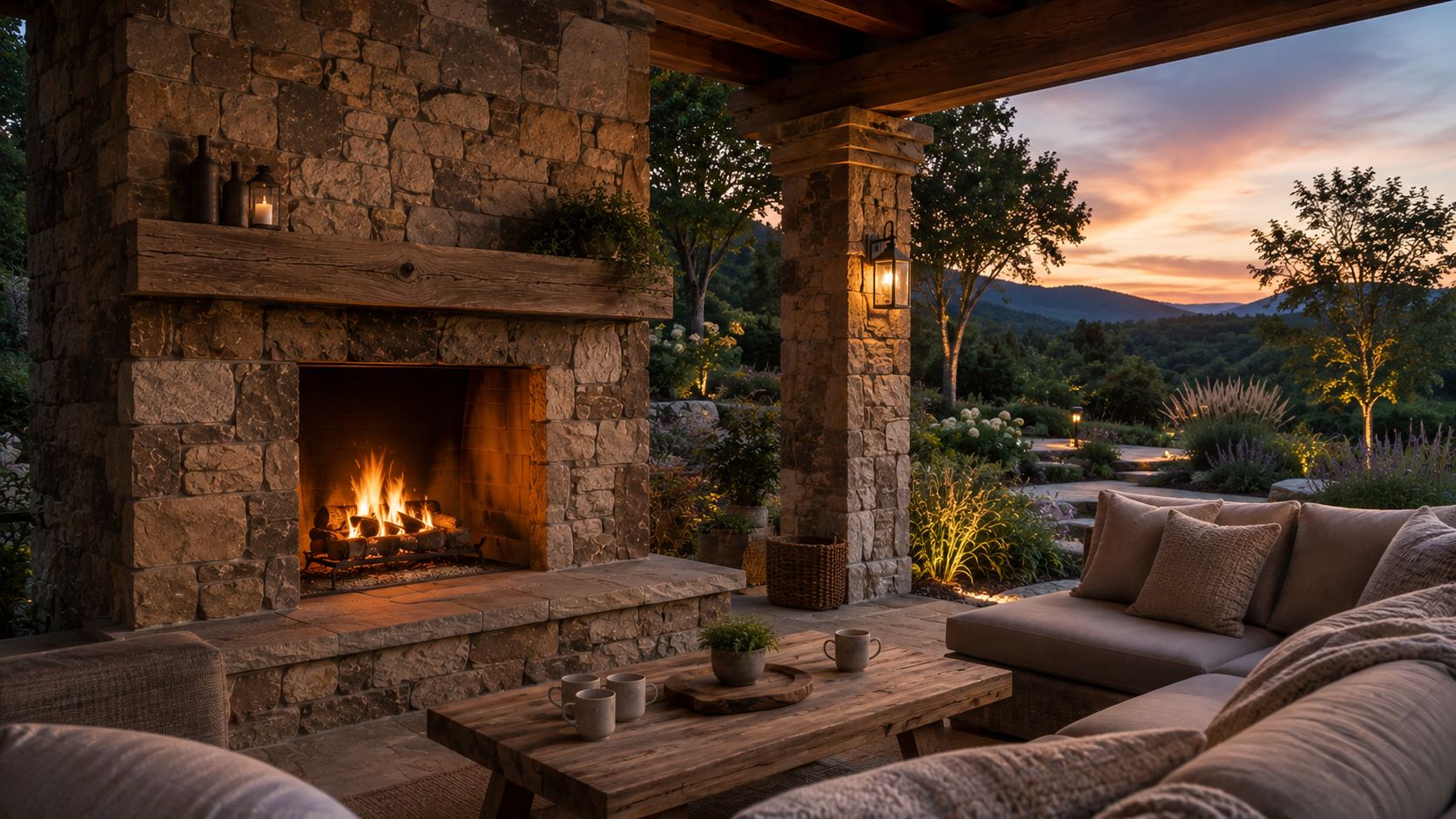
Two-Way Indoor-Outdoor Fireplace
A fireplace that opens indoors and onto a covered porch needs a unit specifically listed for that use. The detail that gets missed is the building envelope: the opening cuts through an insulated exterior wall, so air sealing and insulation around the chase have to be handled carefully to prevent drafts and condensation.
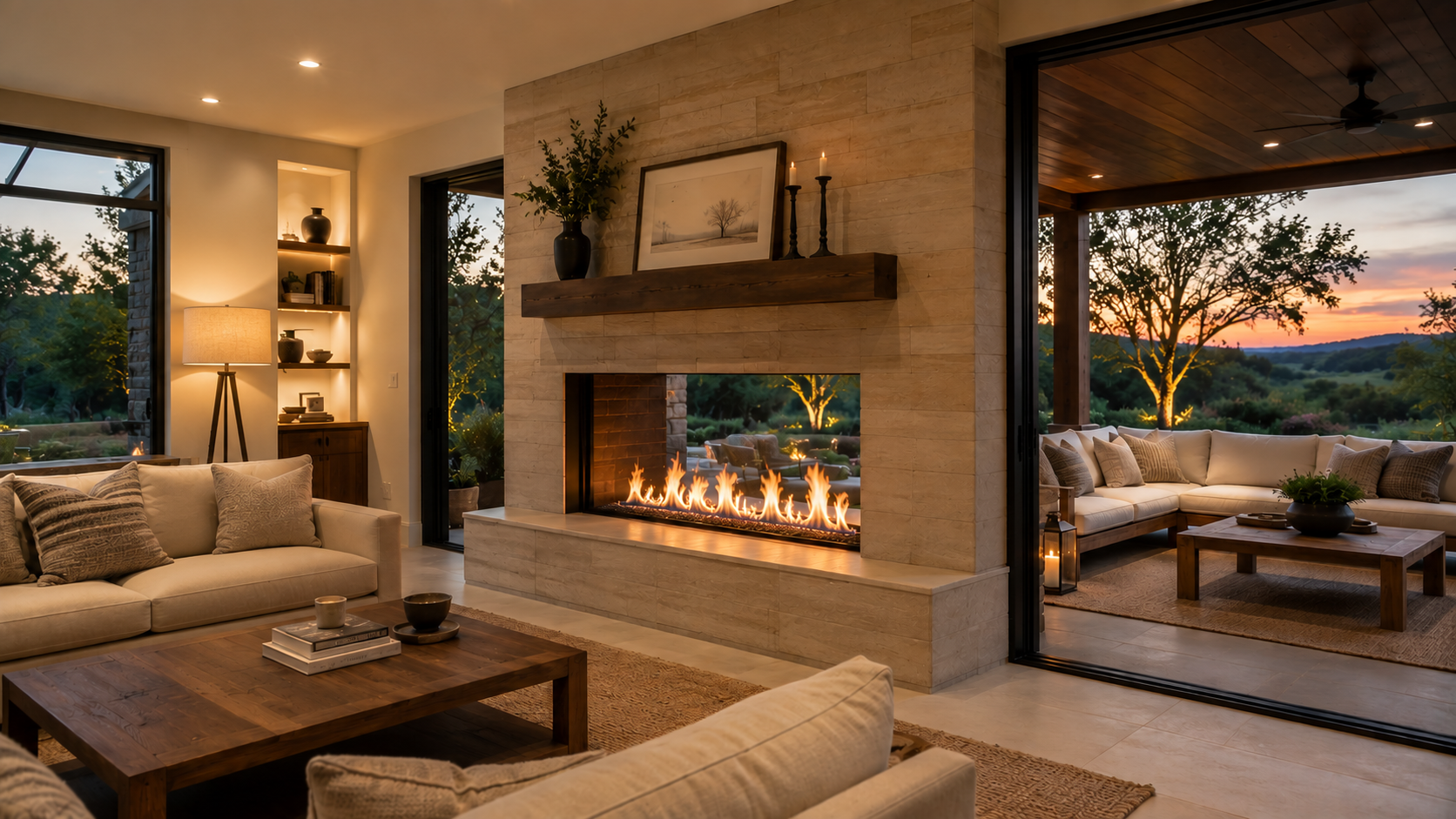
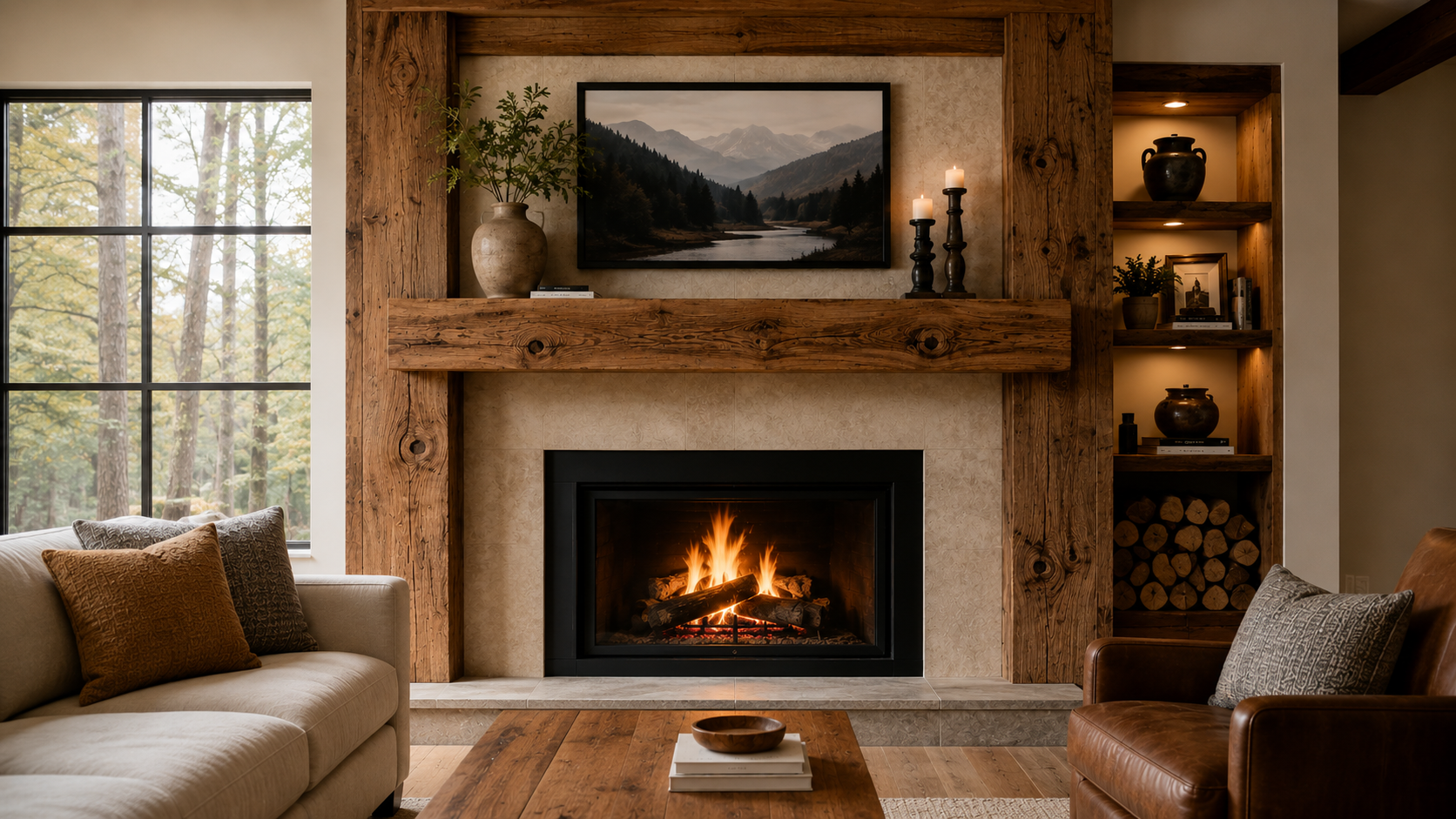
Rustic Farmhouse Fireplace
The farmhouse look comes down to three parts: a solid reclaimed beam, a masonry or whitewashed brick surround, and a raised stone hearth. Black metal straps or brackets under the beam add a hand-built feel. Sourcing a real salvaged timber, complete with saw marks and nail holes, is what keeps the style from looking manufactured.
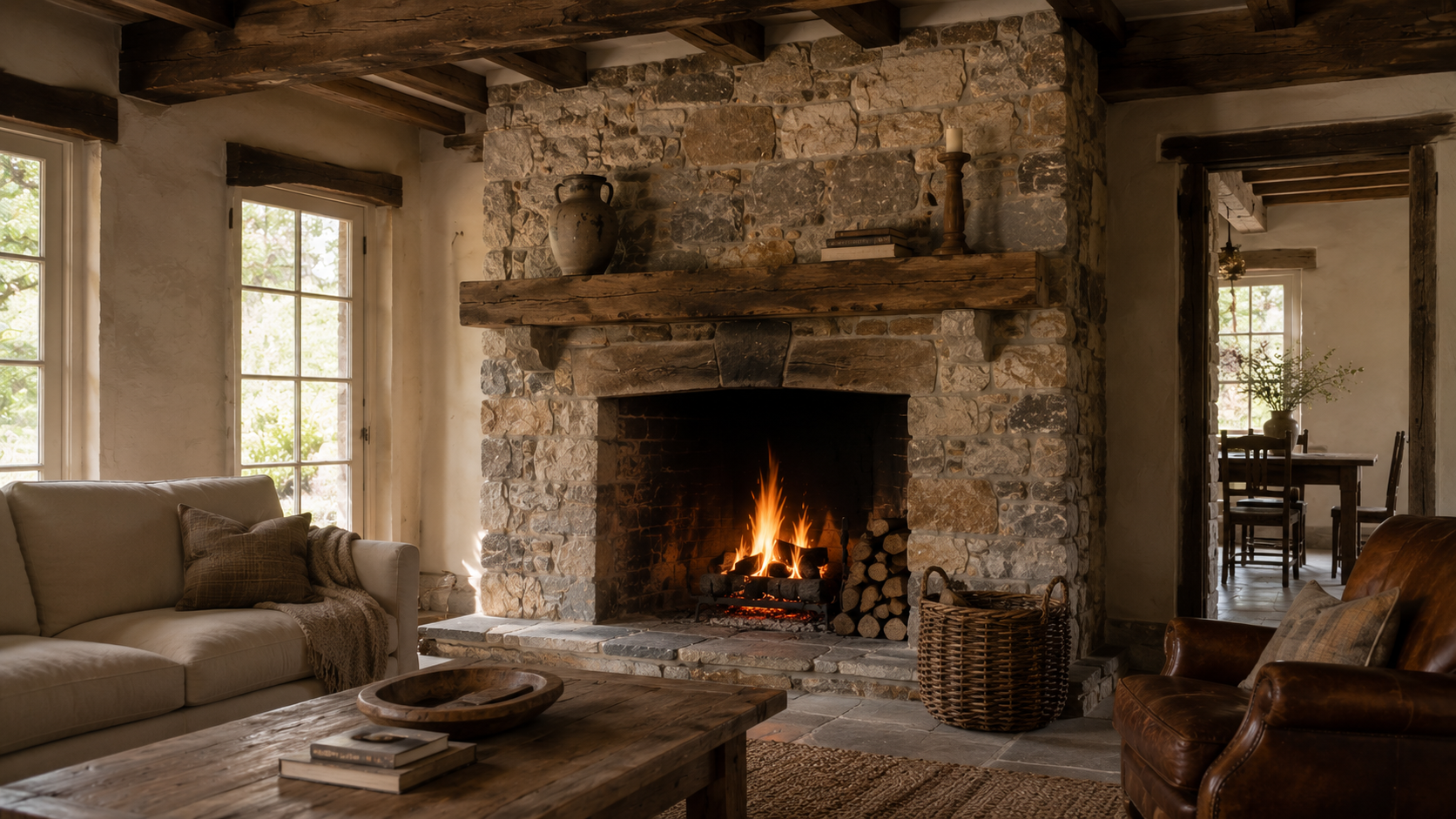
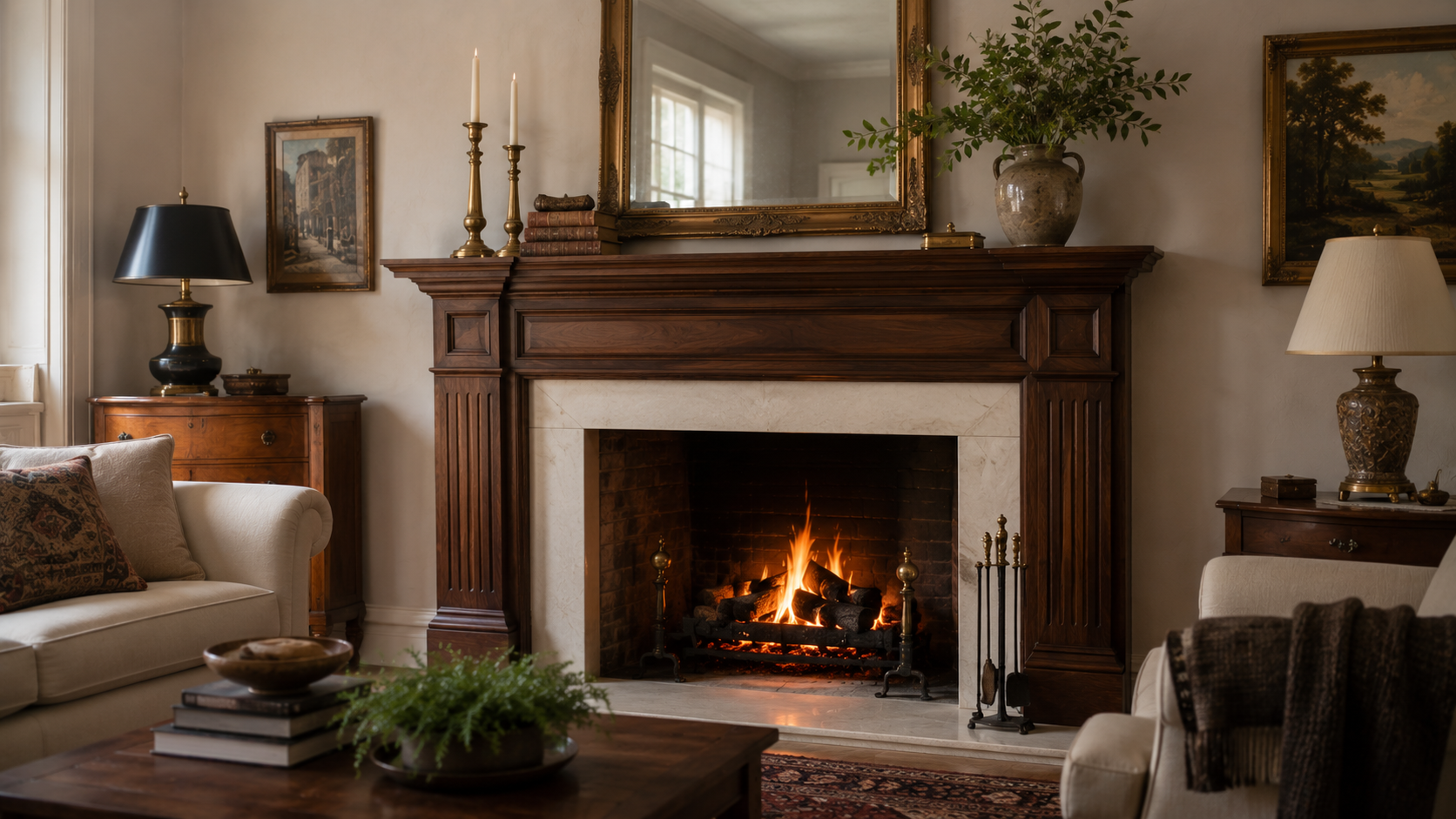
Traditional Fireplace Mantel
Traditional mantels follow historic profiles, Georgian, Federal, Victorian, built in cast stone, marble, or painted hardwood. The details that read as authentic are dentil moulding, fluted pilasters, and a shelf with a returned edge. An overmantel mirror or framed panel above completes the composition and keeps the wall from looking bare.
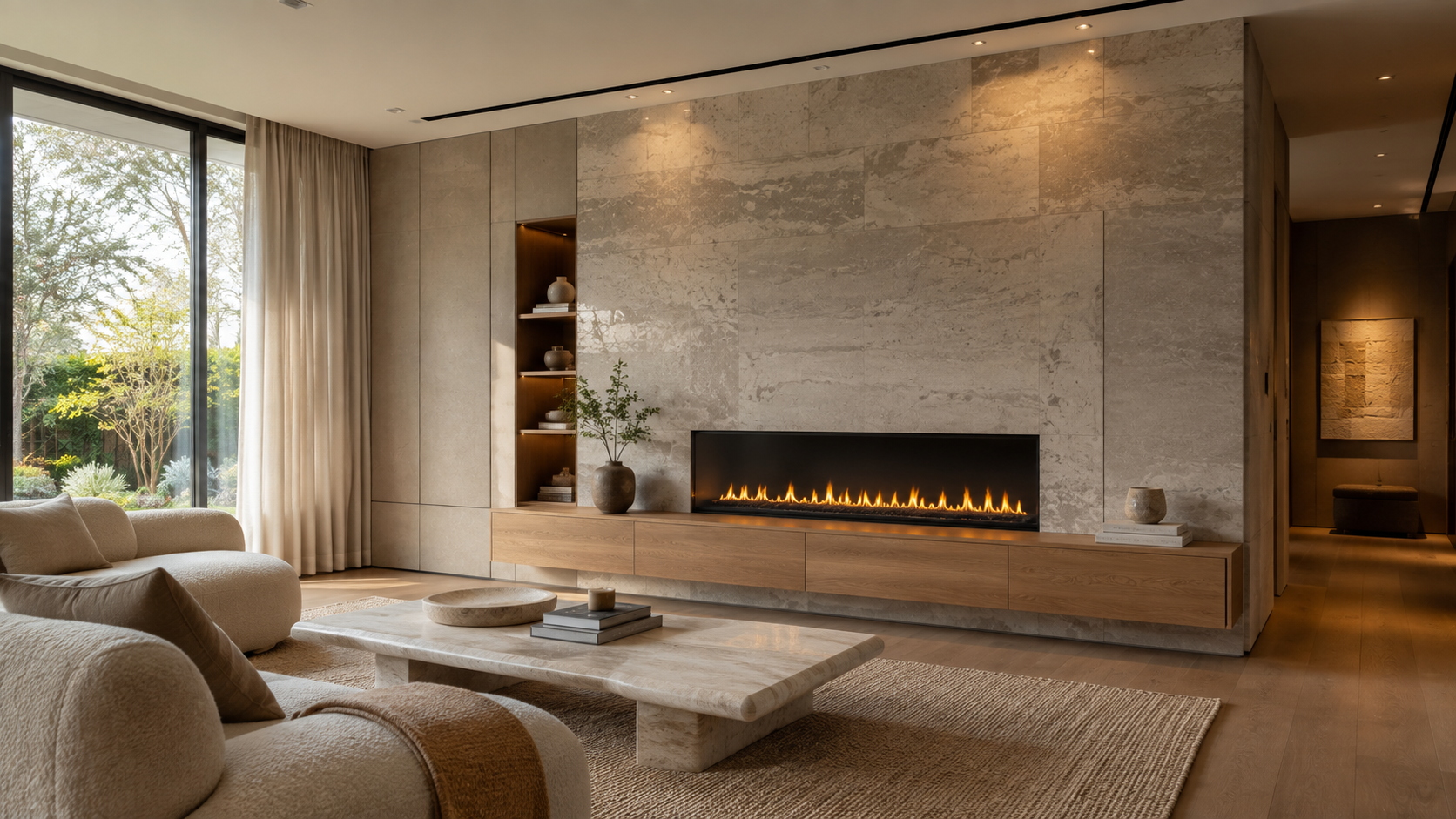
Contemporary Fireplace Wall
A contemporary fireplace wall treats the surface as one material field. Fluted panelling, vertical slat wood, or a book-matched porcelain slab all work. With slab, plan the veining layout before cutting so the pattern lines up across the seam. With tile, set the grid so no thin cut pieces land at the edges of the wall.
Fireplace With Natural Wood Surround
Wood warms up the hard materials around a firebox. White oak with visible grain, walnut for depth, and painted poplar for a smoother look are the usual choices. A floating mantel can be mounted on hidden steel rods drilled into the shelf, so nothing shows from below. Hardwax oil is easier to repair than lacquer if the surface marks.
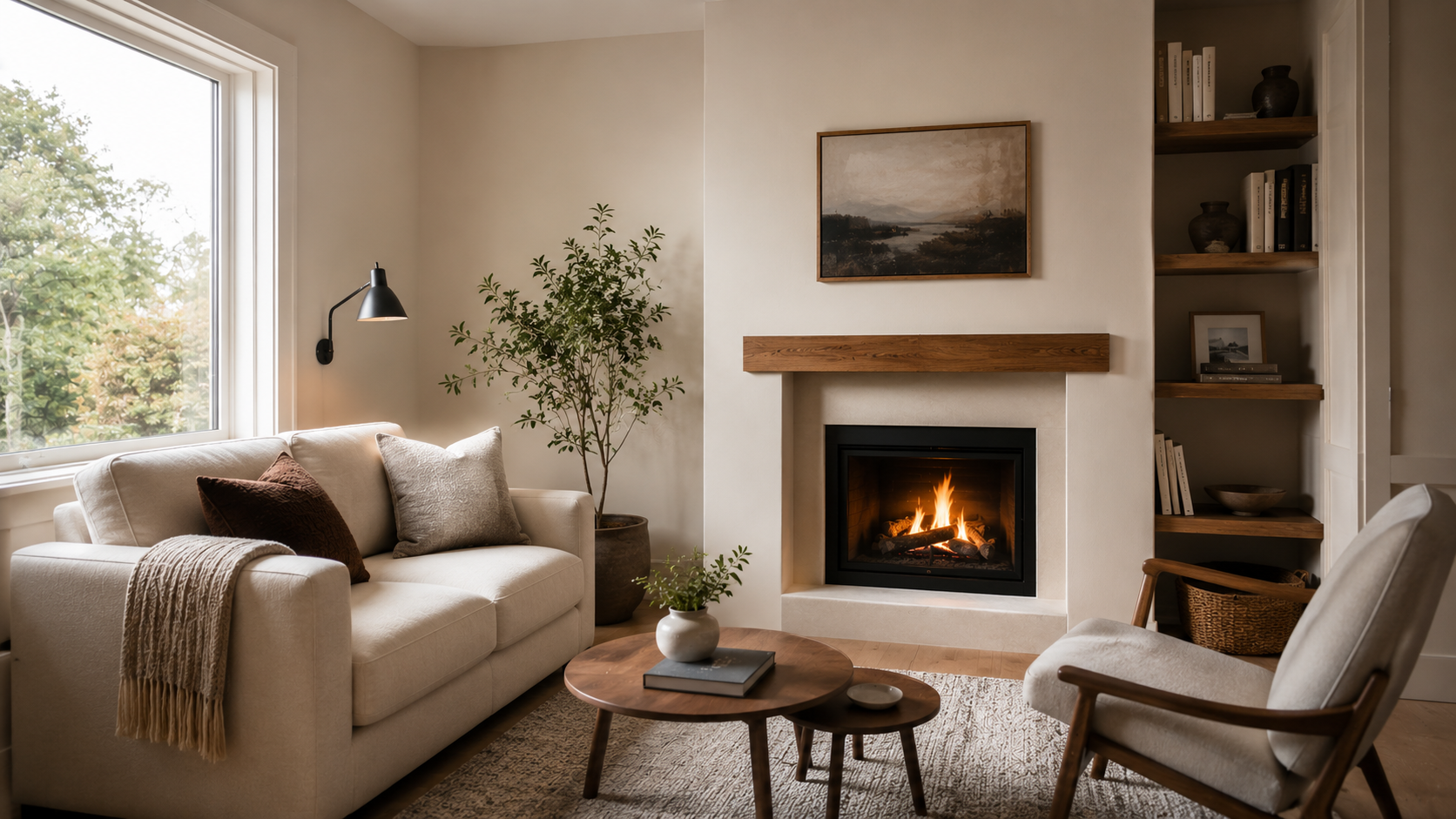
Small Fireplace for Compact Spaces
Small rooms, bedrooms, home offices, dining nooks, suit cassette-style inserts and slim wall-mounted electric units. Scale the fireplace to the wall, not the room; a unit wider than about half the wall will dominate. Tabletop and freestanding bioethanol burners need no venting, but they use an open liquid fuel and must never be refilled while lit or warm.
FAQs
Can I Add A Fireplace To A Home With No Chimney?
Yes. Direct-vent gas units vent horizontally through an exterior wall, and electric fireplaces need no venting at all. Only wood-burning appliances require a full chimney or insulated flue.
How Wide Should A Fireplace Be For My Room?
As a rough guide, the firebox opening should read as a feature without swallowing the wall. In most living rooms, that means a unit no wider than about half the wall it sits on.
Do I Need A Hearth Extension In Front Of The Fireplace?
Wood-burning appliances usually require a non-combustible hearth extension of a specified size. Most sealed gas and electric units do not. Check the appliance listing.
Can I Tile Or Stone Over An Existing Brick Fireplace?
Often yes, if the brick is sound, clean, and plumb. The surface may need a scratch coat or cement board first, and clearance around the opening still applies.
What Is The Difference Between A Fireplace And A Wood Stove?
A fireplace is built into a wall and radiates from one face. A freestanding stove sits in the room and radiates from all sides, which usually delivers more heat.
How Long Does A Fireplace Installation Take?
An electric unit can be done in a day. A gas insert typically takes one to three days plus finishing. A full masonry build with a chimney runs several weeks.
Do Gas Fireplaces Work During A Power Outage?
Models with a standing pilot or a battery-backed ignition will still light. Units that depend entirely on grid power, including the blower, will not run.
What Goes Inside A Linear Gas Fireplace Instead Of Logs?
Common media include tempered glass beads, lava rock, river stone, and ceramic driftwood. Use only media supplied or approved for that specific burner.
Why Is The Wall Above My Fireplace Turning Dark?
Soot staining usually points to incomplete combustion, poor draft, or the wrong fuel. Have the appliance and flue inspected rather than simply repainting.
Should The Fireplace Or The Furniture Be Planned First?
Plan them together. The fireplace sets the focal point, but seating distance, walkways, and television placement often determine the best wall for it.