.svg)
.svg)
.svg)
.svg)
15 Living Room Design Ideas for Every Style
Create a living room that feels like you. From modern and minimalist spaces to cozy, traditional, and contemporary designs, these 15 ideas offer inspiration for every style, layout, and way of living.
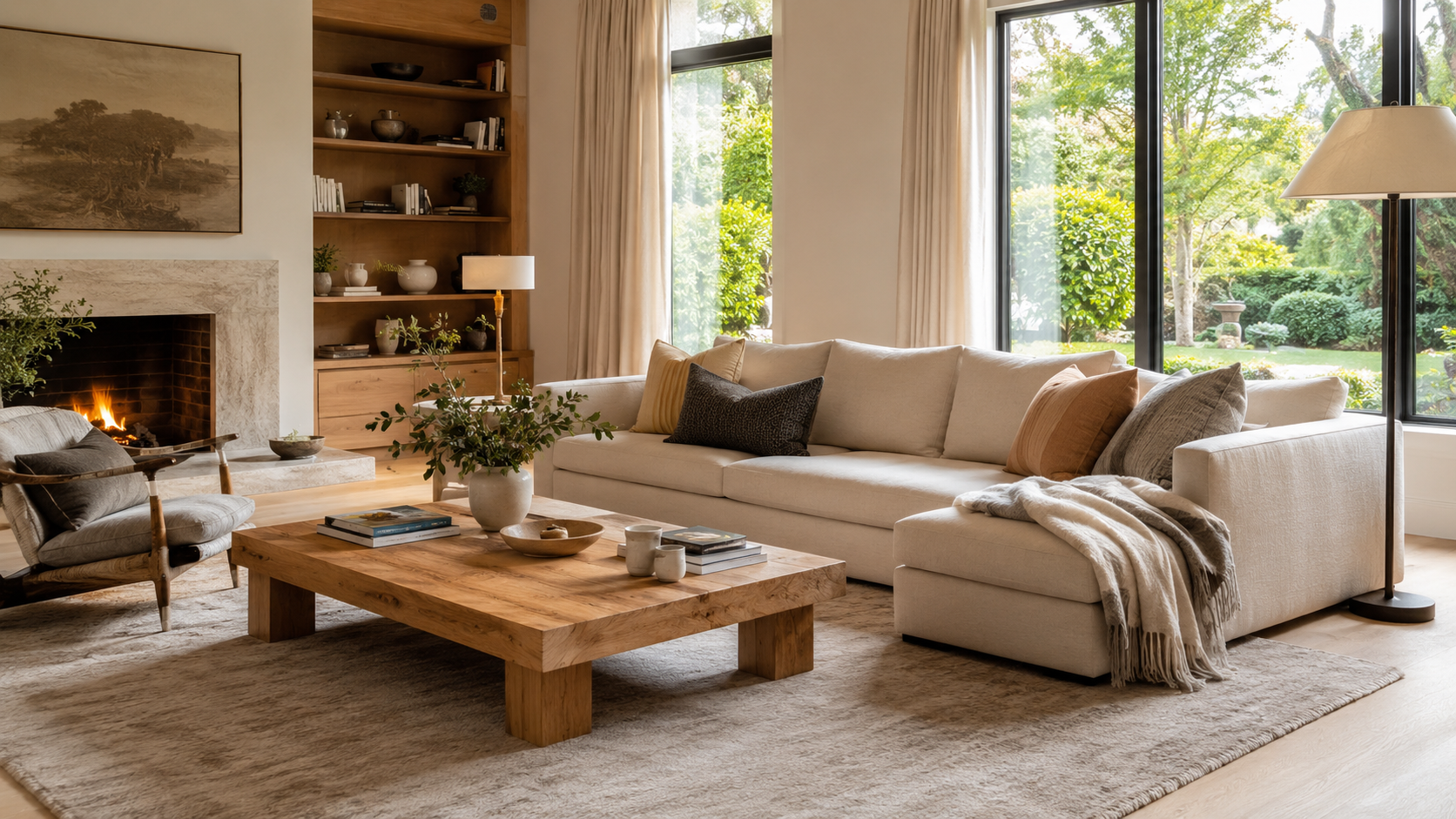
Choosing a living room style is one of the most personal decisions in home design. This is the space where families gather, guests are welcomed, and daily life happens, so it needs to balance comfort, function, and personality. Whether you're starting a full renovation or simply refreshing a few key pieces, the right design direction can transform how a room feels and works.
This guide breaks down 15 living room styles, from minimalist and Scandinavian to farmhouse and eclectic, so you can find the look that fits your home, budget, and lifestyle. Each idea includes practical tips on color palettes, furniture choices, and materials to help you plan with confidence.
15 Living Room Design Ideas to Inspire Your Space
Every living room style has its own visual language, but most share a few core principles: a clear color scheme, purposeful furniture layout, and lighting that supports how the room is used. Use the ideas below as a starting point, then mix elements across styles to create a space that feels uniquely yours.
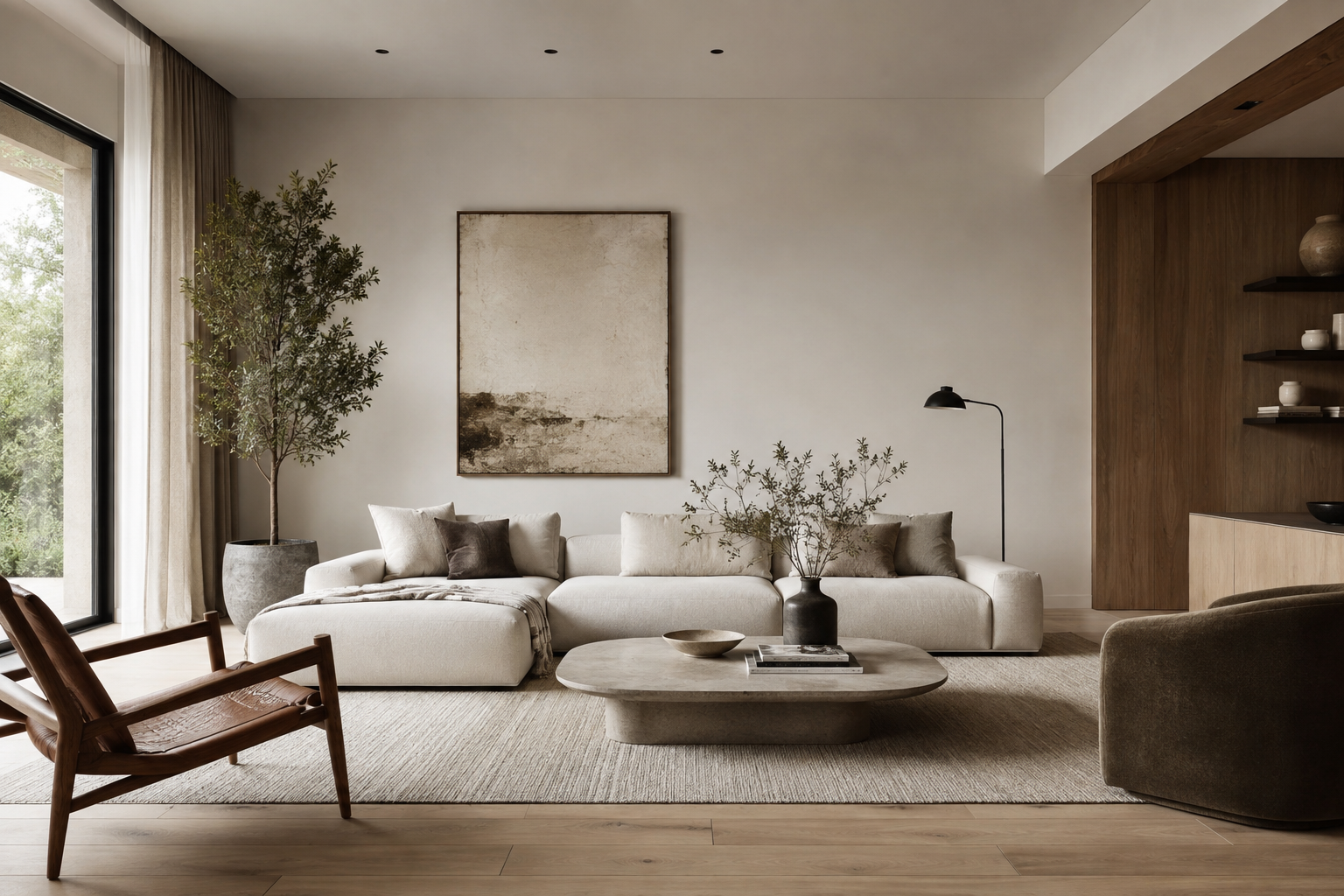
Modern Minimalist Living Room
Minimalist design strips a room down to its essentials. Think clean lines, a restrained color palette, and furniture with simple silhouettes. Clutter is kept out of sight, storage is built-in or hidden, and every object in the room earns its place. Whites, greys, and soft blacks dominate, with one or two accent pieces to add visual interest. This style works well in smaller spaces because it creates an open, uncluttered feel without sacrificing comfort.
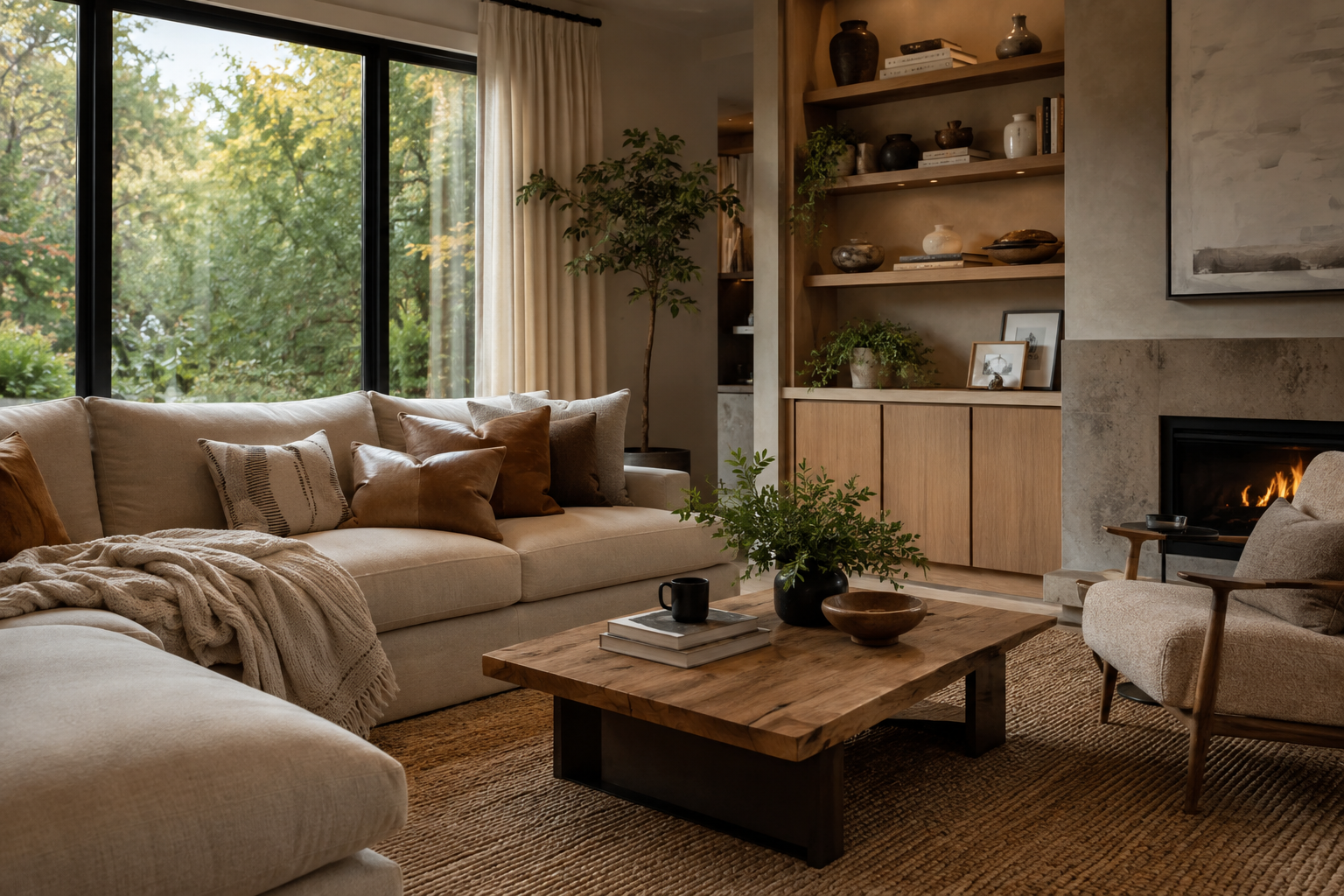
Cozy Contemporary Living Room
Contemporary design reflects current trends while staying timeless in its structure. A cozy contemporary living room pairs sleek furniture with soft textiles like chunky throws, plush area rugs, and layered cushions. Warm lighting, mixed materials such as wood and metal, and rounded furniture edges soften the modern edge and make the room feel inviting rather than sterile.
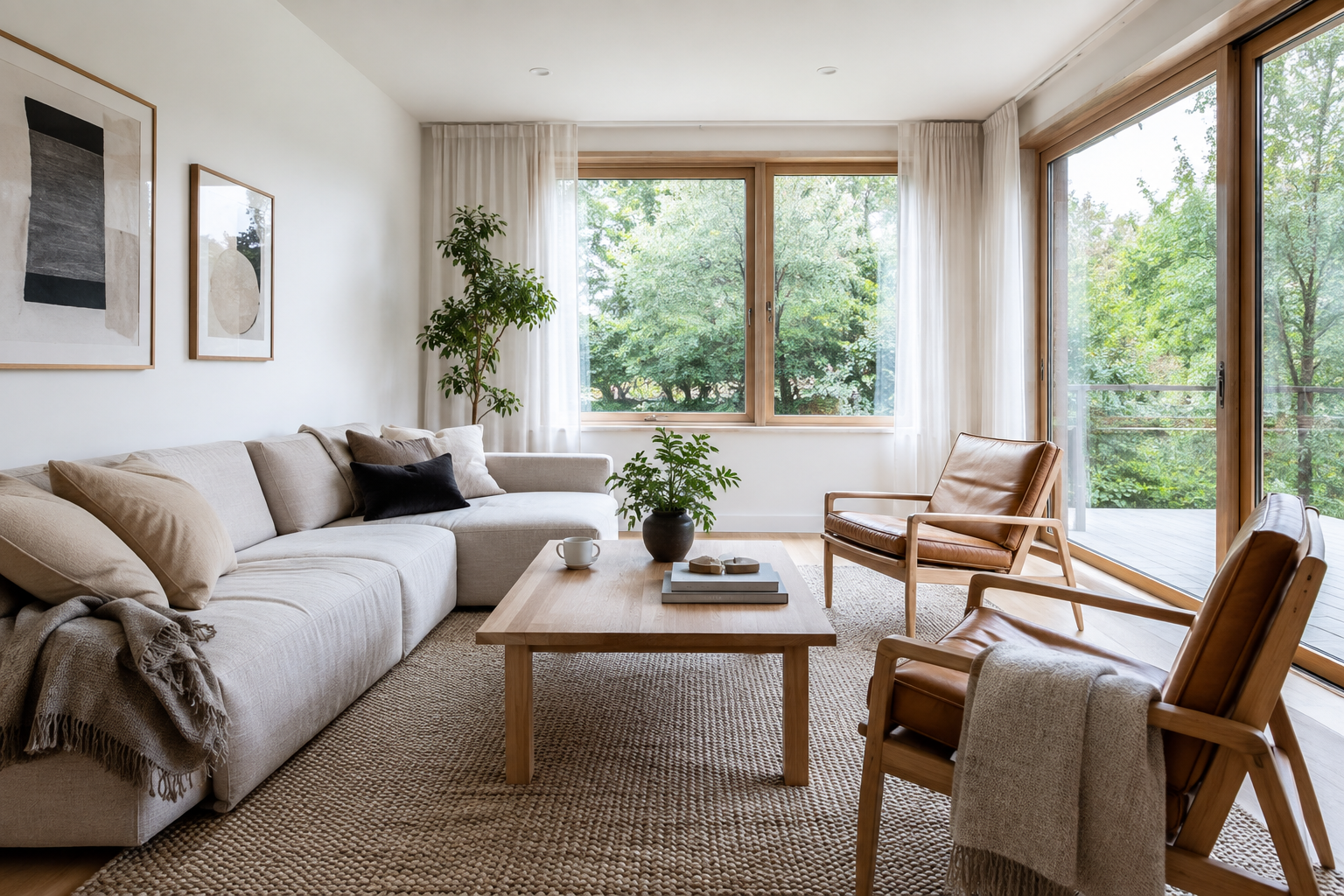
Scandinavian-Inspired Living Room
Scandinavian design is built around light, function, and simplicity. Pale wood floors, white or muted walls, and natural textiles like wool and linen create a calm, airy atmosphere. Furniture tends to be functional with clean, gently curved lines, and greenery is often used to bring life into the space. Large windows or sheer curtains maximize natural light, a key feature of this Nordic-inspired approach.
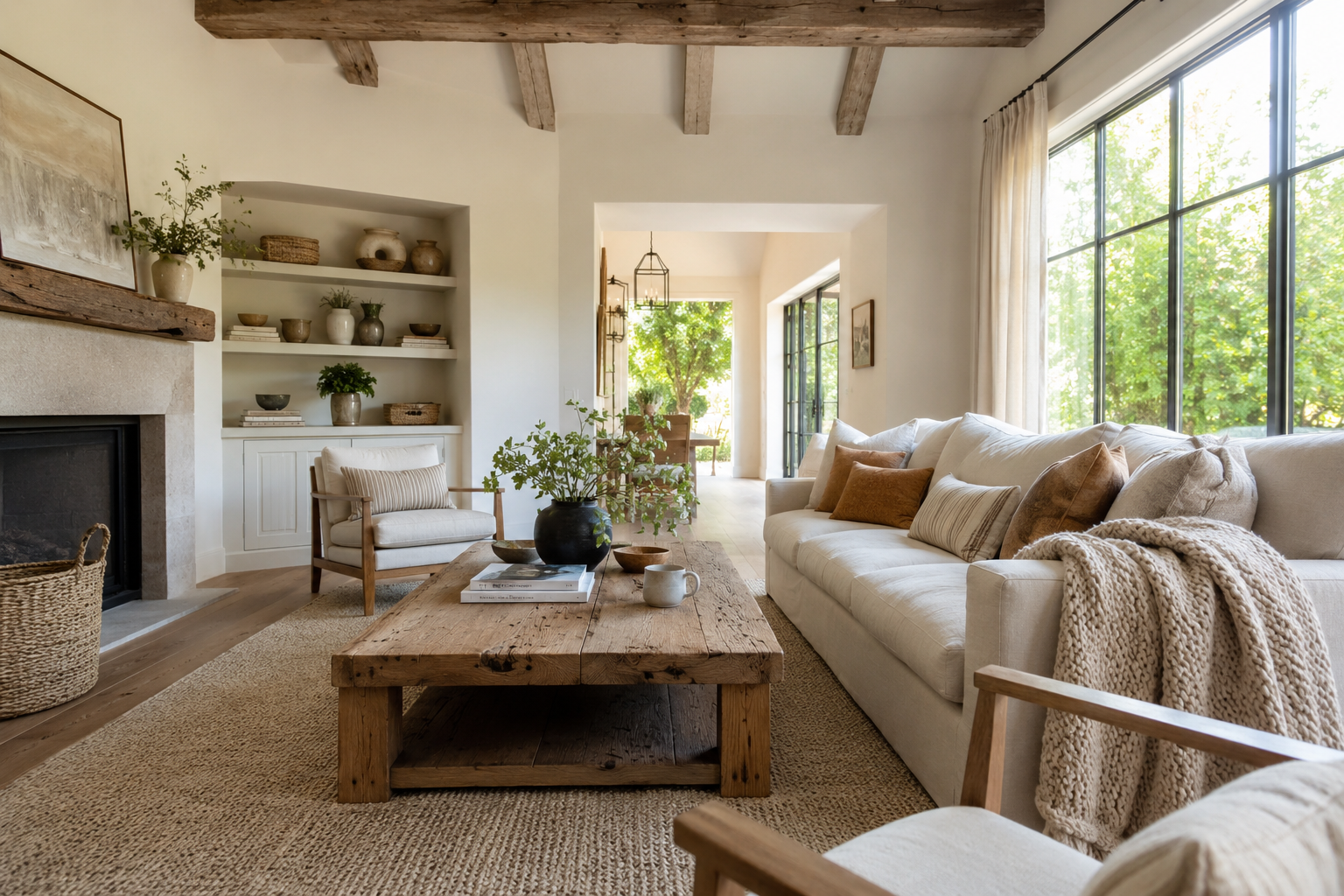
Modern Farmhouse Living Room
Modern farmhouse style blends rustic charm with contemporary comfort. Shiplap walls, exposed wood beams, and vintage-inspired accessories sit alongside clean-lined sofas and updated lighting fixtures. Neutral color palettes in white, cream, and warm grey form the base, while black metal accents and natural wood tones add contrast. This style suits homes that want a lived-in, welcoming feel without looking outdated.
Luxury Living Room Design
A luxury living room focuses on rich materials, statement furniture, and refined details. Velvet upholstery, marble surfaces, brass or gold hardware, and custom millwork are common features. Lighting plays a major role, with layered fixtures like chandeliers, sconces, and floor lamps creating depth. Deep, saturated colors or classic neutrals with metallic accents give the room a polished, high-end atmosphere.
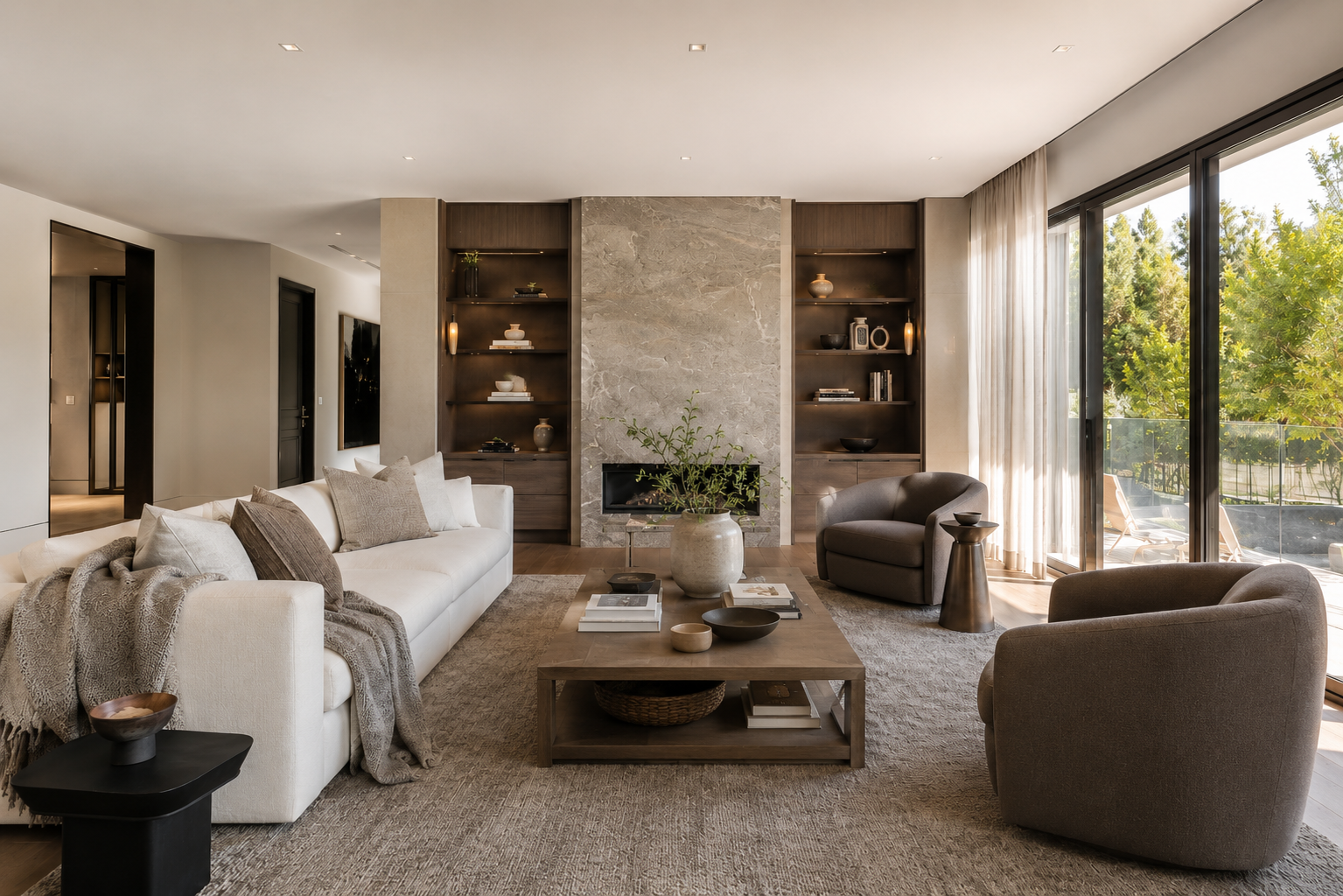
Small Living Room Design
Small living rooms benefit from smart planning rather than restrictive rules. Multi-functional furniture, such as ottomans with storage or nesting tables, helps maximize floor space. Light color palettes and mirrors can make a compact room feel larger, while vertical storage draws the eye upward. Choosing a few well-scaled pieces instead of many small ones keeps the layout from feeling crowded.
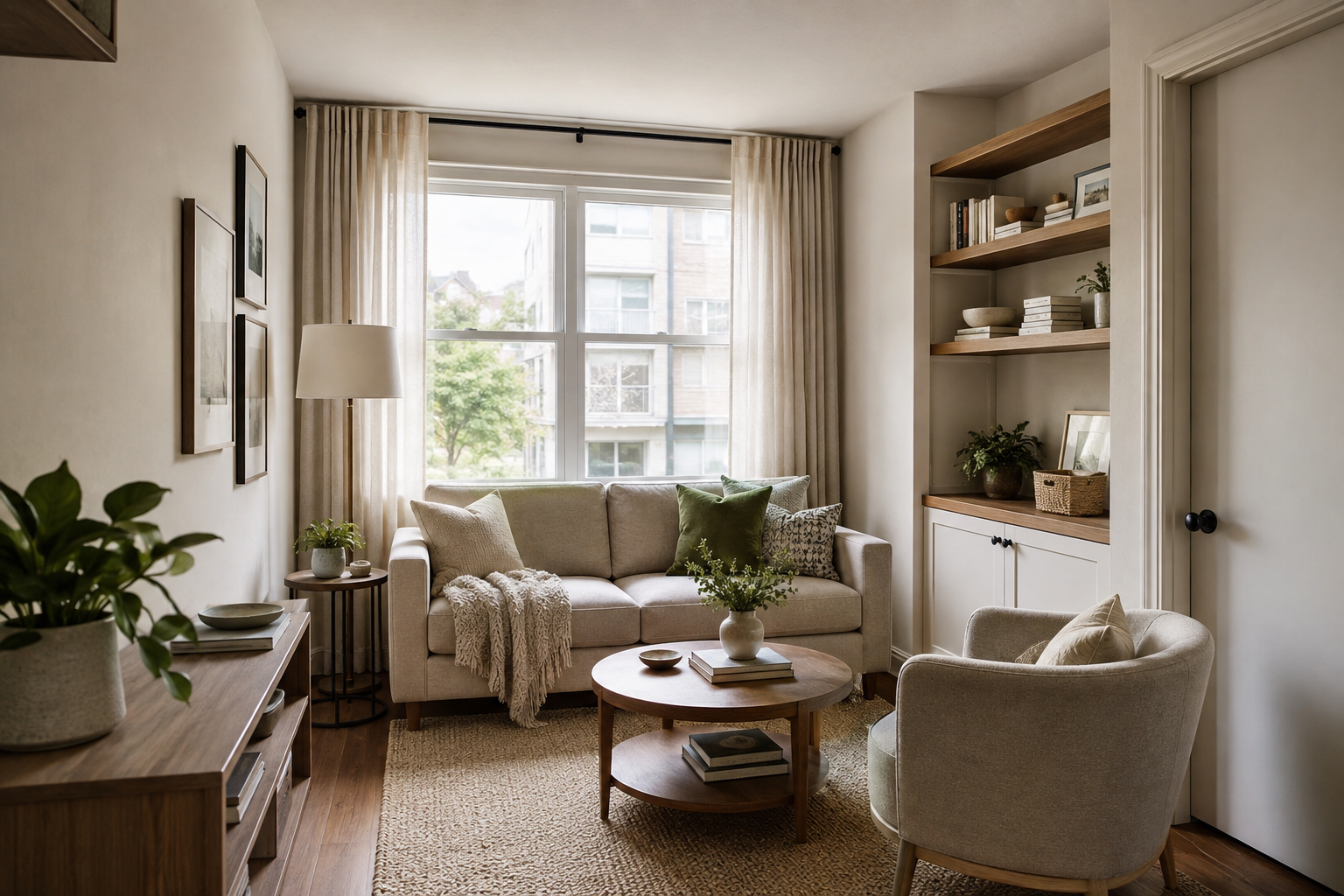
Open-Concept Living Room
Open-concept living rooms flow into adjoining kitchen or dining areas without solid walls dividing them. Defining separate zones with area rugs, furniture placement, or lighting fixtures helps maintain structure within the open layout. A consistent color palette and cohesive material choices tie the connected spaces together, so the living room still feels like its own distinct area.
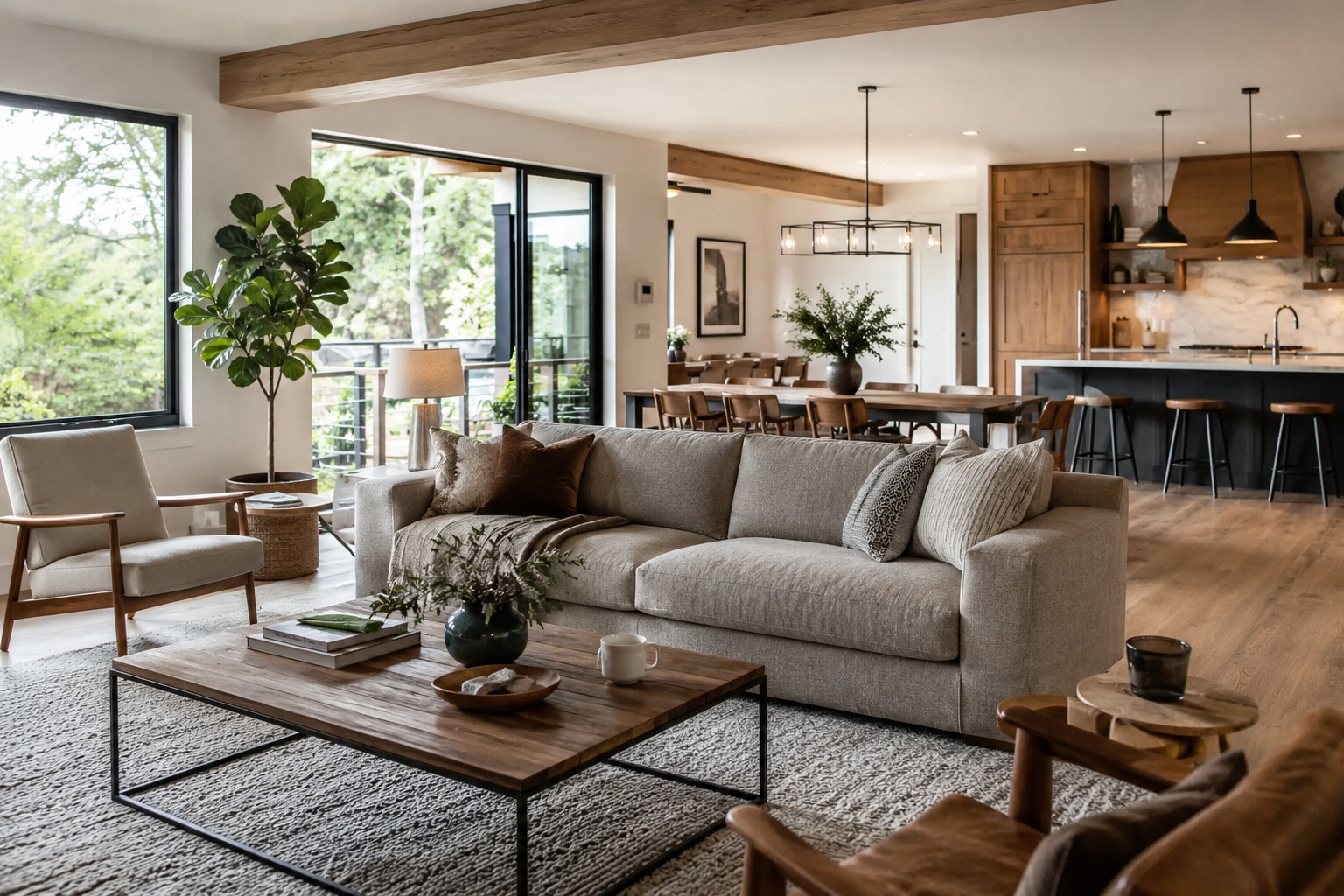
Neutral-Tone Living Room
Neutral color schemes rely on shades like beige, taupe, ivory, and soft grey to create a versatile, timeless backdrop. This palette makes it easy to update the room over time with new accessories or artwork without a full redesign. Texture becomes especially important in a neutral space, so mixing materials like linen, wool, and wood keeps the room from feeling flat.
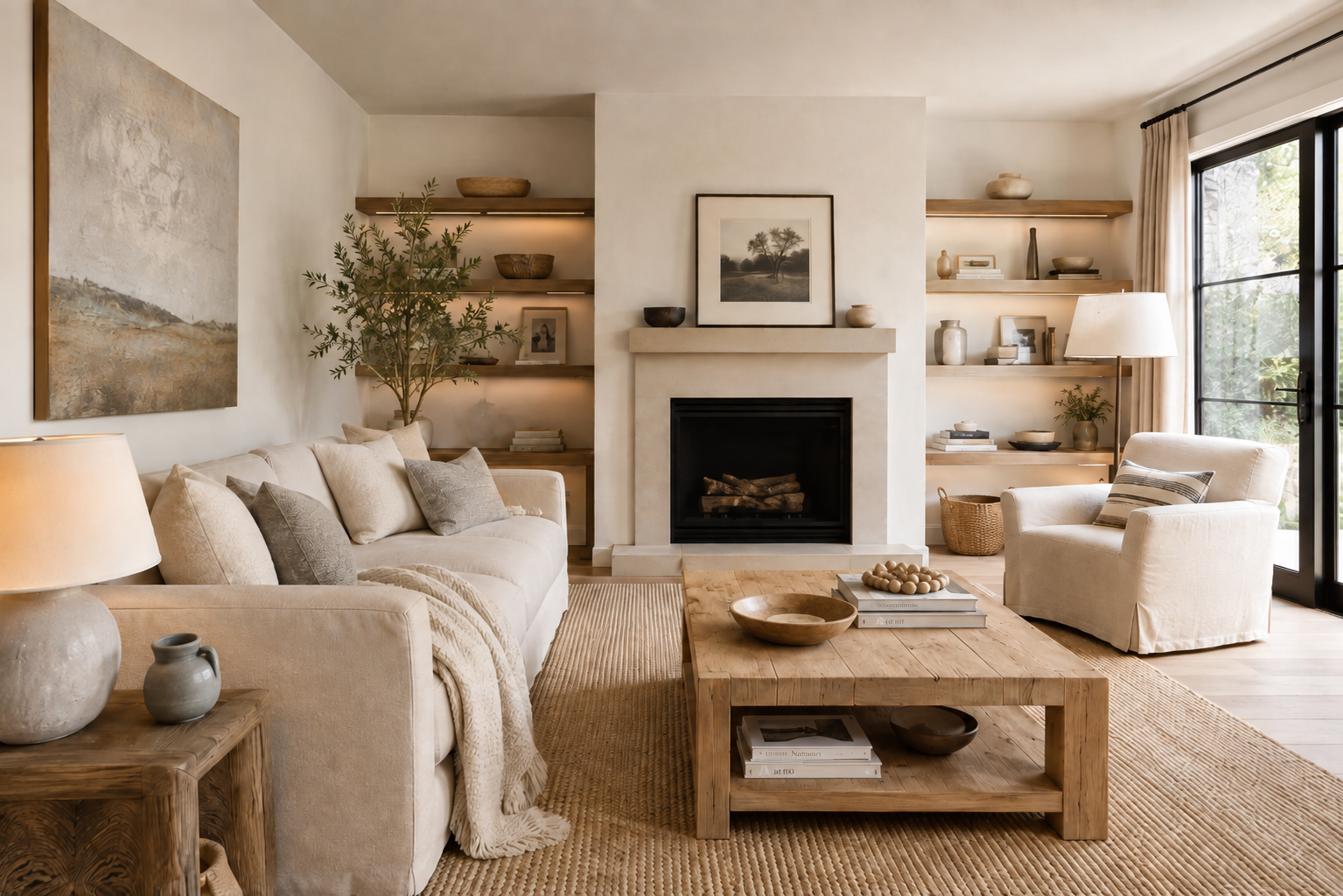
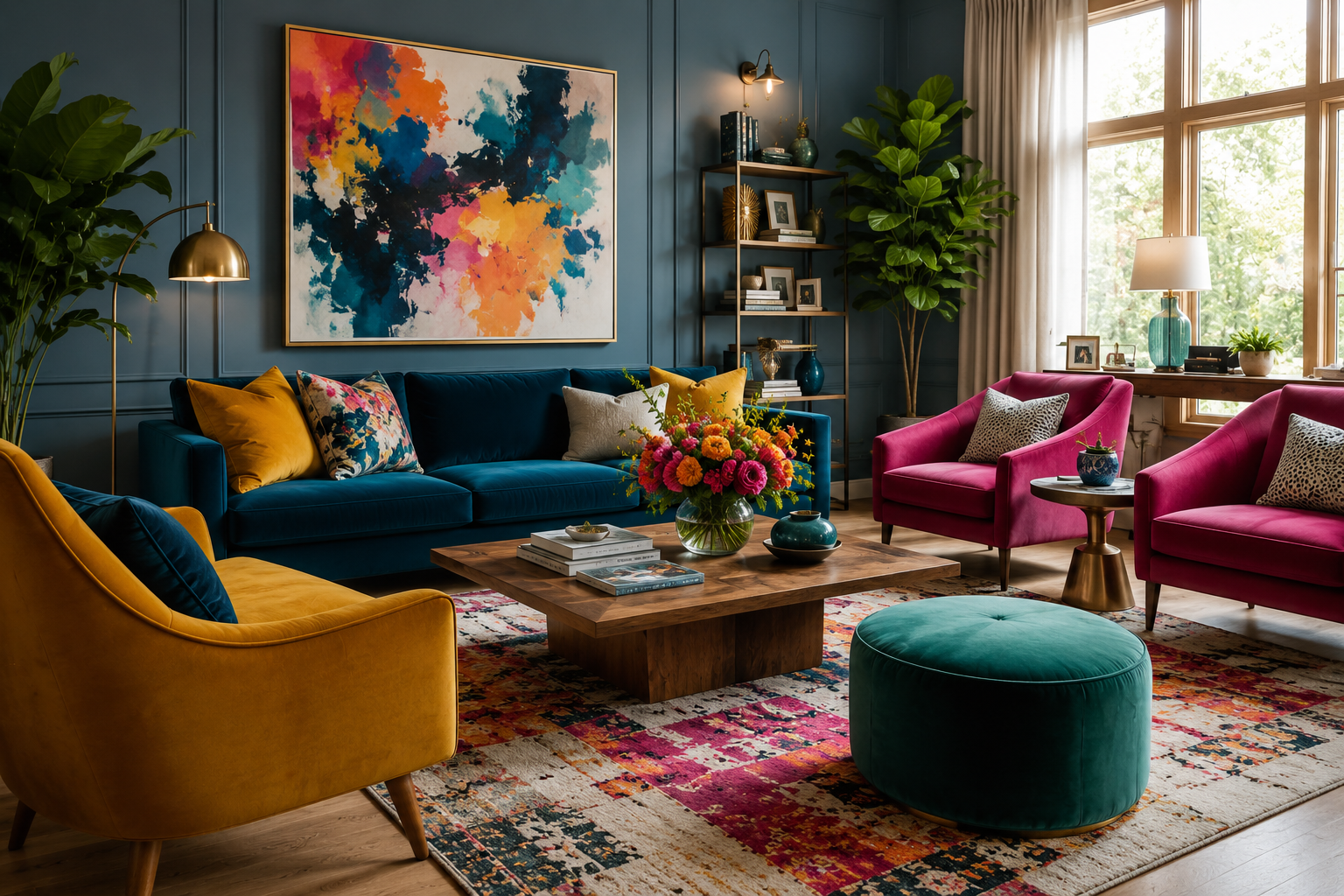
Bold and Colorful Living Room
For homeowners who want personality over restraint, a bold living room uses saturated colors, patterned textiles, and statement furniture pieces. Jewel tones like emerald, sapphire, or deep terracotta can be applied through an accent wall, sofa, or rug. Balancing bold colors with neutral walls or flooring keeps the room from feeling overwhelming while still making a strong visual statement.
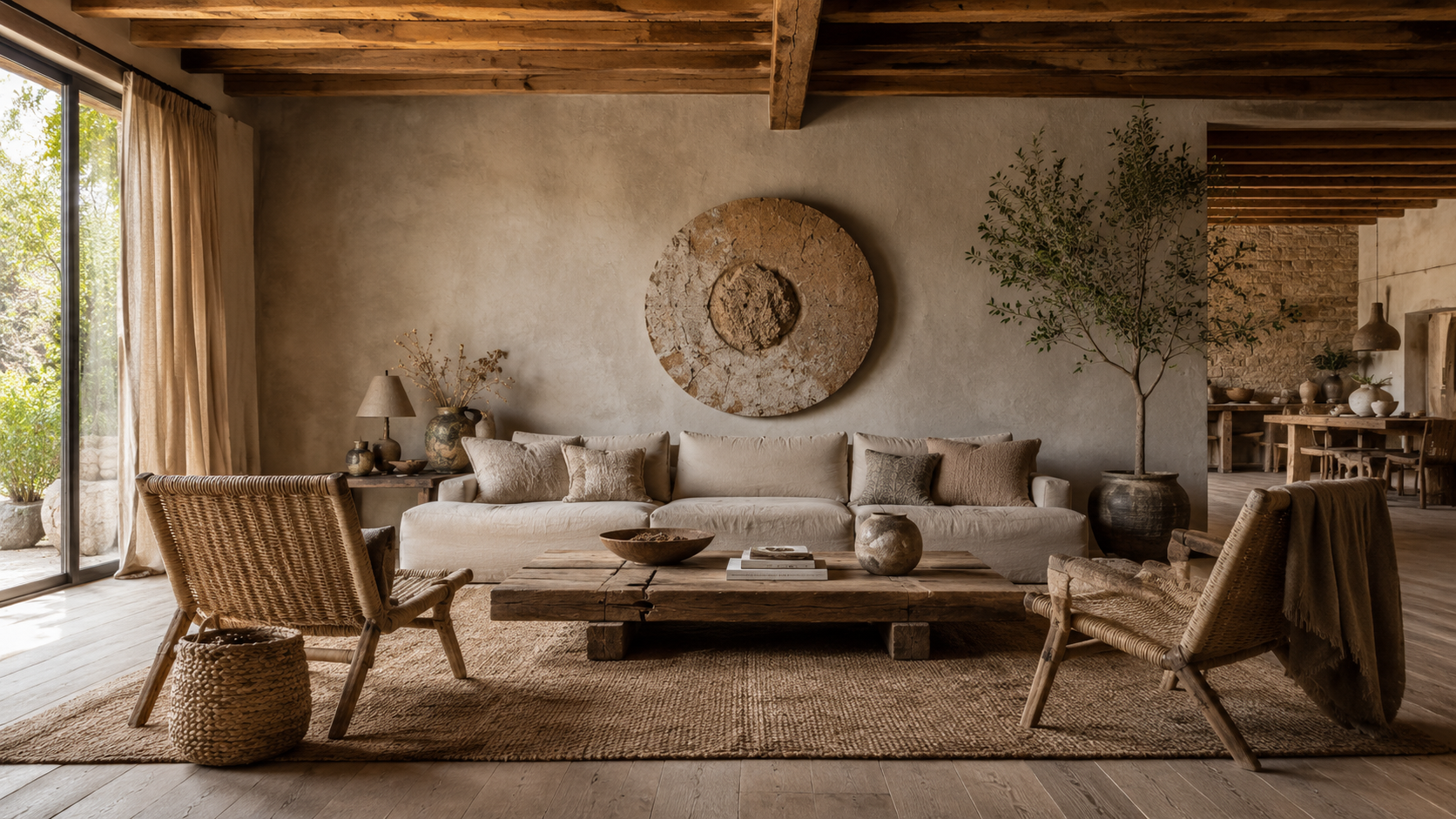
Earthy and Natural Living Room
Earthy design draws on organic materials and colors found in nature: terracotta, olive green, sandy beige, and warm browns. Natural fiber rugs, rattan furniture, and untreated wood surfaces reinforce the connection to the outdoors. Houseplants are a natural fit for this style, adding texture and color while supporting the room's grounded, calming atmosphere.
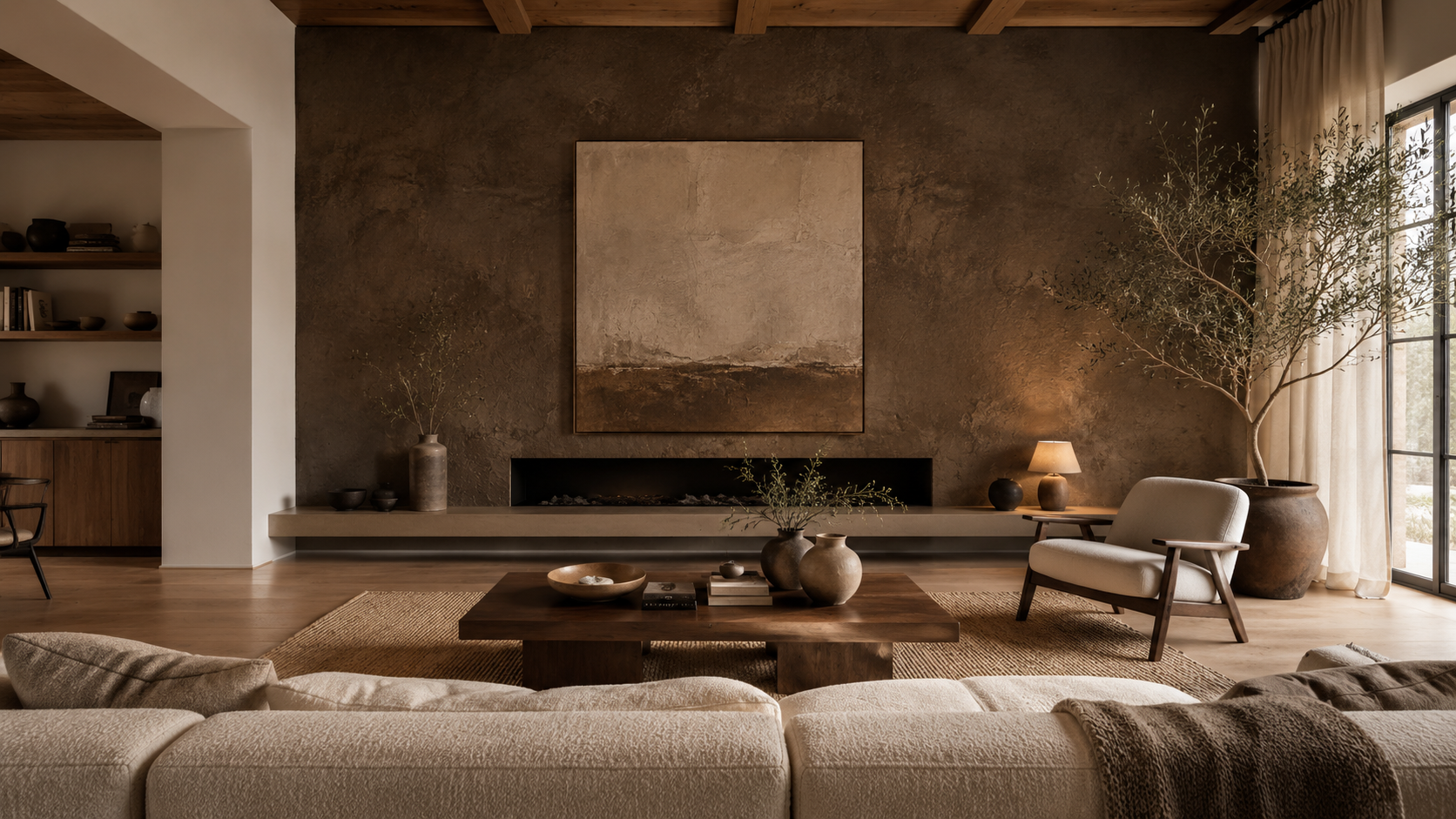
Living Room With an Accent Wall
An accent wall adds a focal point without redesigning the entire room. Options range from a bold paint color to textured wallpaper, wood paneling, or exposed brick. The accent wall typically sits behind the main seating area or fireplace, drawing the eye and anchoring the furniture layout. Keeping the remaining walls neutral allows the accent wall to stand out without competing for attention.
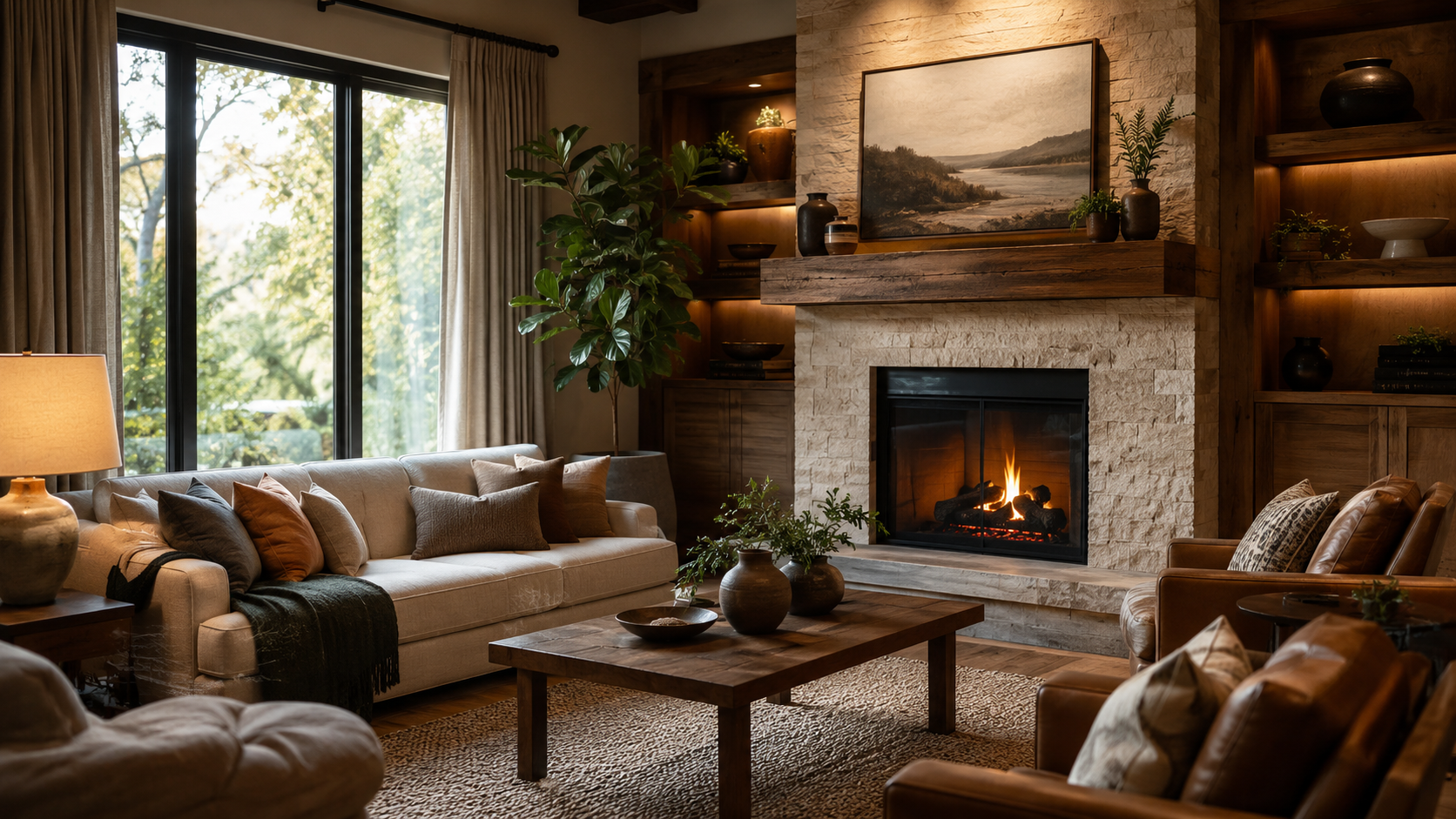
Living Room With a Fireplace
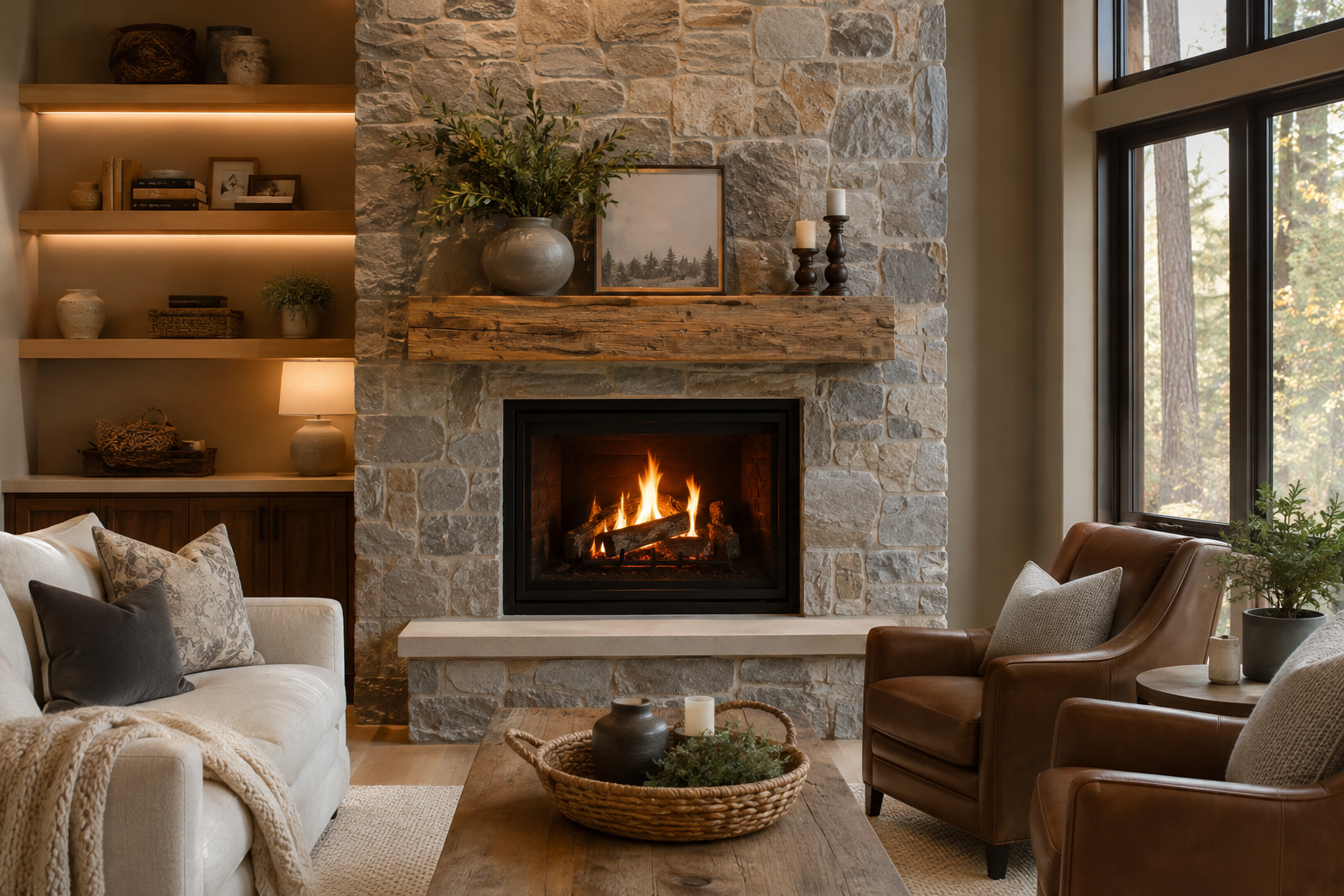
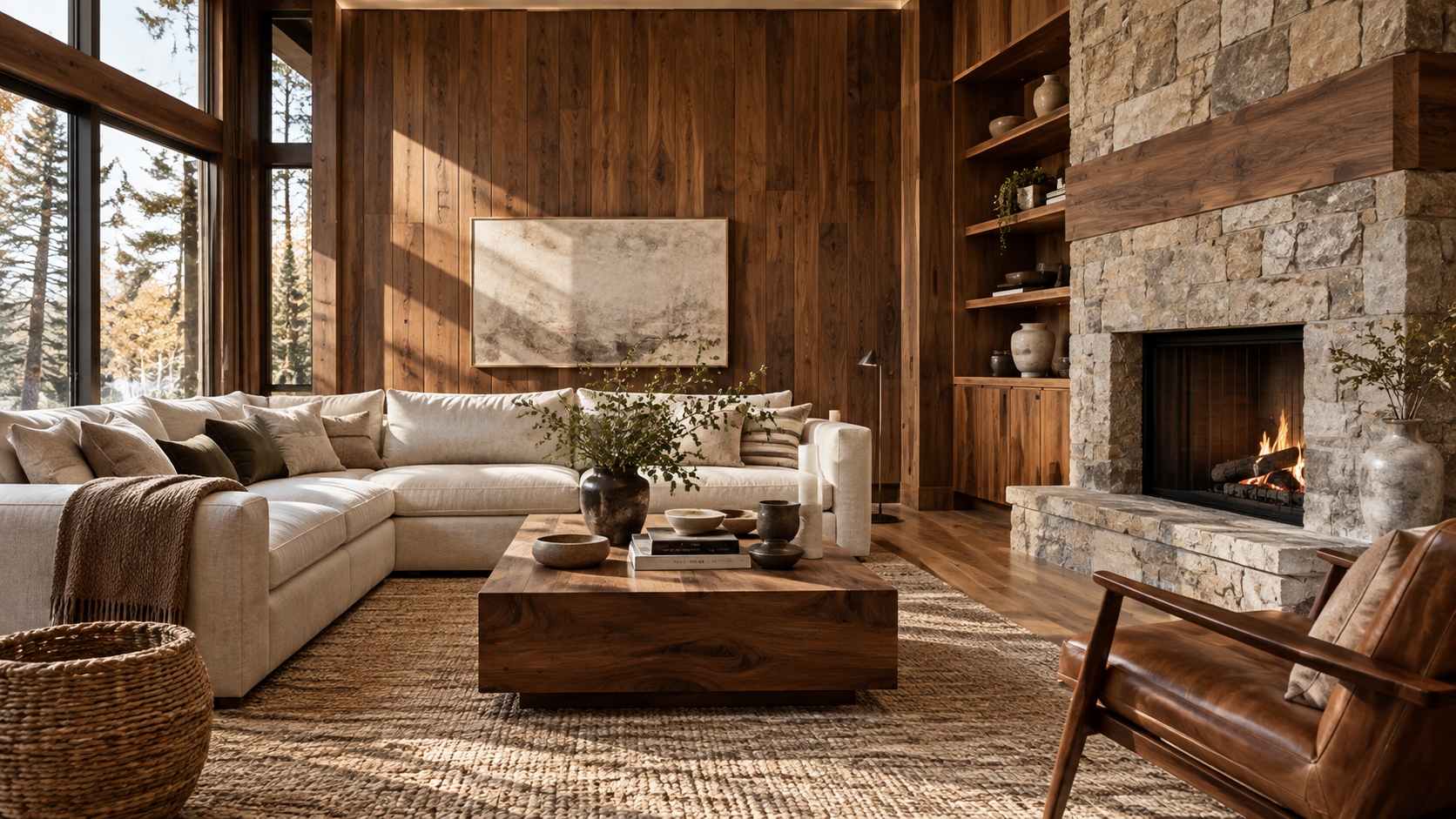
A fireplace naturally becomes the focal point of a living room, so furniture is usually arranged to face it. Mantel styling, whether minimal or layered with art and decor, sets the tone for the space. Materials like stone, brick, or tile surrounding the fireplace can reinforce the room's overall style, from rustic to contemporary, while built-in shelving on either side adds function and symmetry.
Warm Wood Living Room
Wood tones bring instant warmth to a living room, whether through flooring, ceiling beams, furniture, or wall paneling. Mixing different wood finishes, such as a light oak floor with a walnut coffee table, adds depth without looking mismatched when undertones are coordinated. Pairing wood elements with soft textiles and warm lighting keeps the room from feeling too heavy or dark.
Traditional Living Room Design
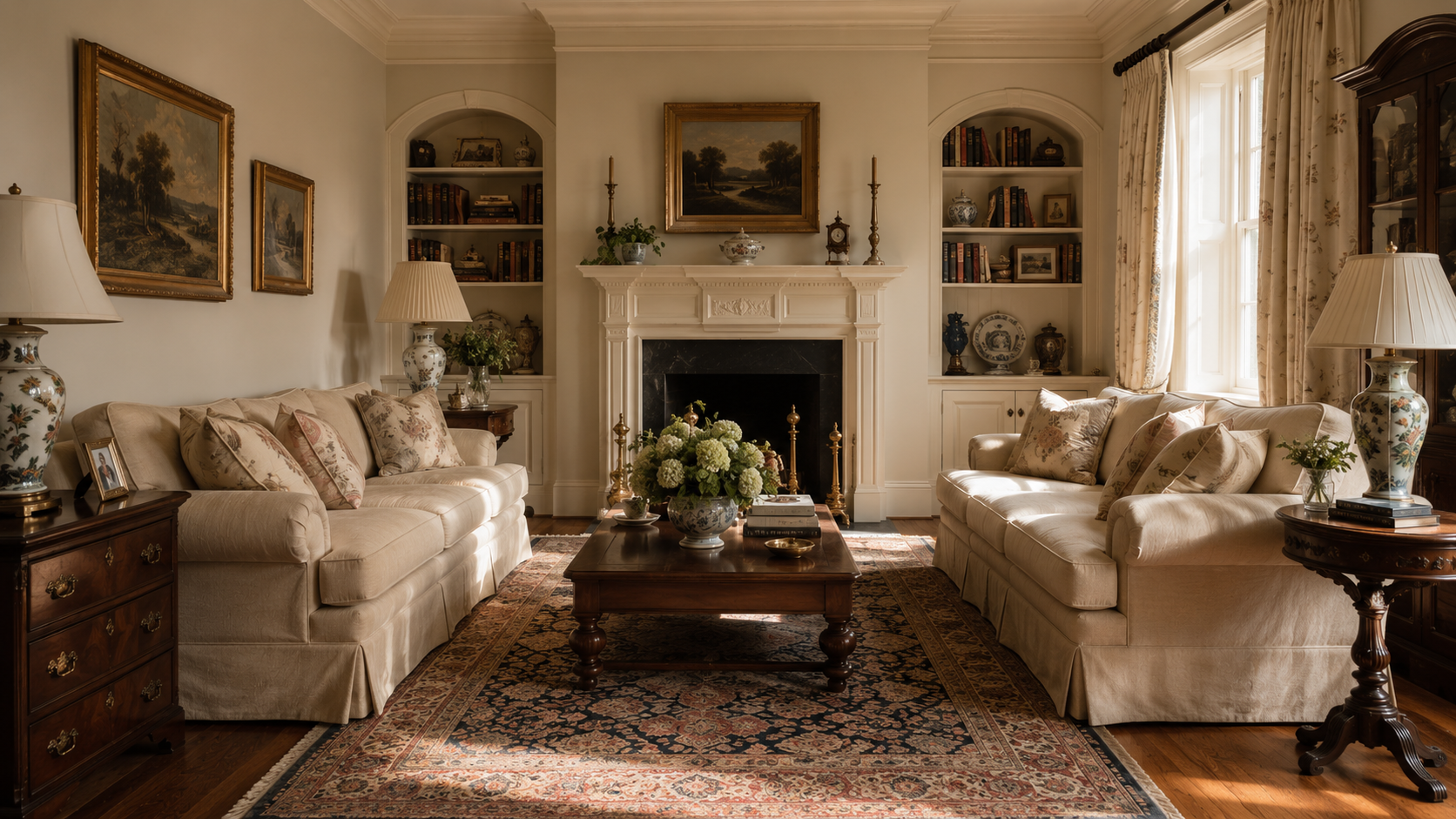
Traditional design draws on classic furniture shapes, symmetry, and time-tested color palettes. Rolled-arm sofas, wingback chairs, and detailed millwork are common features, along with rich fabrics like damask or plaid. Furniture is typically arranged in balanced, symmetrical layouts, and antique or vintage pieces often blend with newer furnishings to give the room depth and history.
Eclectic Living Room Design
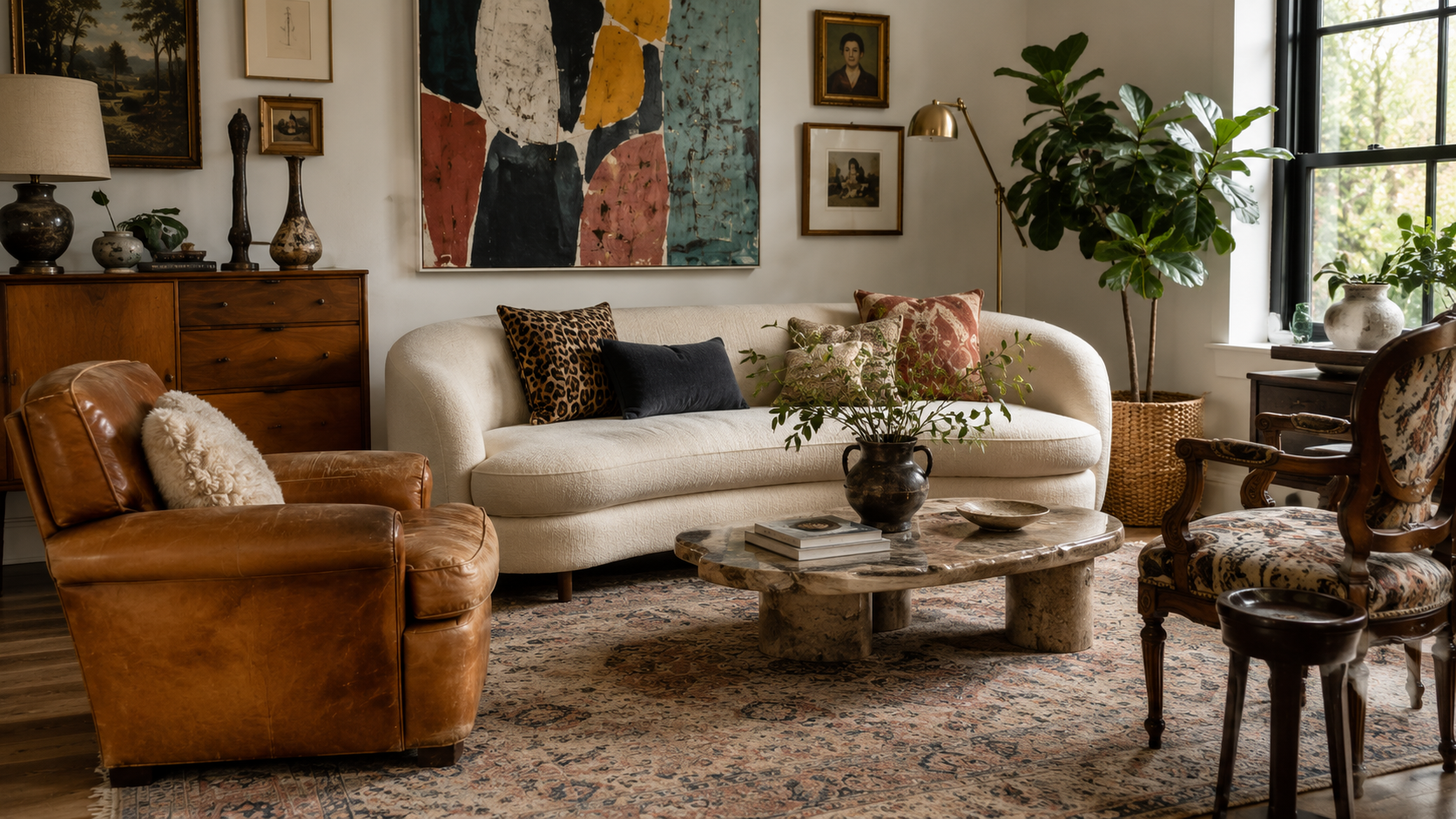
Eclectic style combines furniture, colors, and patterns from different eras and design traditions into one cohesive space. The key to making eclectic design work is a unifying thread, whether that's a consistent color palette, a shared material, or a common scale among pieces. This approach suits homeowners who collect furniture and decor over time rather than buying a matched set.
FAQs
What Is The Most Popular Living Room Design Style Right Now?
Modern farmhouse and cozy contemporary styles remain among the most requested, thanks to their balance of comfort and updated, clean aesthetics.
How Do I Choose A Living Room Style That Fits My Home?
Consider your home's architecture, existing finishes, and how the room is used daily. A style should complement the house, not fight against it.
What Colors Make A Small Living Room Look Bigger?
Light neutrals like white, soft grey, and pale beige reflect more light and help a small room feel more open and spacious.
Can I Mix Two Living Room Styles Together?
Yes. Many homeowners blend styles, such as Scandinavian and farmhouse, by keeping a consistent color palette and balancing furniture shapes.
What's The Difference Between Contemporary And Modern Design?
Modern design refers to a specific historical period with defined characteristics, while contemporary design reflects current trends and changes over time.
Do I Need An Accent Wall To Add Personality To My Living Room?
No. Personality can also come from artwork, textiles, lighting, or furniture choices without committing to a permanent accent wall.
How Do I Style A Living Room With A Fireplace?
Arrange seating to face the fireplace, keep the mantel styling simple, and use materials around the fireplace that match your overall design style.
What Furniture Works Best In An Open-Concept Living Room?
Furniture that defines zones, such as a sofa with its back to the kitchen or a rug that outlines the seating area, helps structure open layouts.
Is Eclectic Design Hard To Get Right?
It can be challenging without a unifying element. Sticking to one color palette or material thread helps mixed pieces feel intentional rather than random.
How Often Should A Living Room Design Be Updated?
There's no fixed timeline, but refreshing accessories, textiles, or paint every few years keeps the room feeling current without a full renovation.