.svg)
.svg)
.svg)
.svg)
Duplex vs. Twin Home: What's the Difference?
This guide breaks down what makes a duplex different from a twin home, compares costs and ownership models, and helps you decide which option fits your goals better.
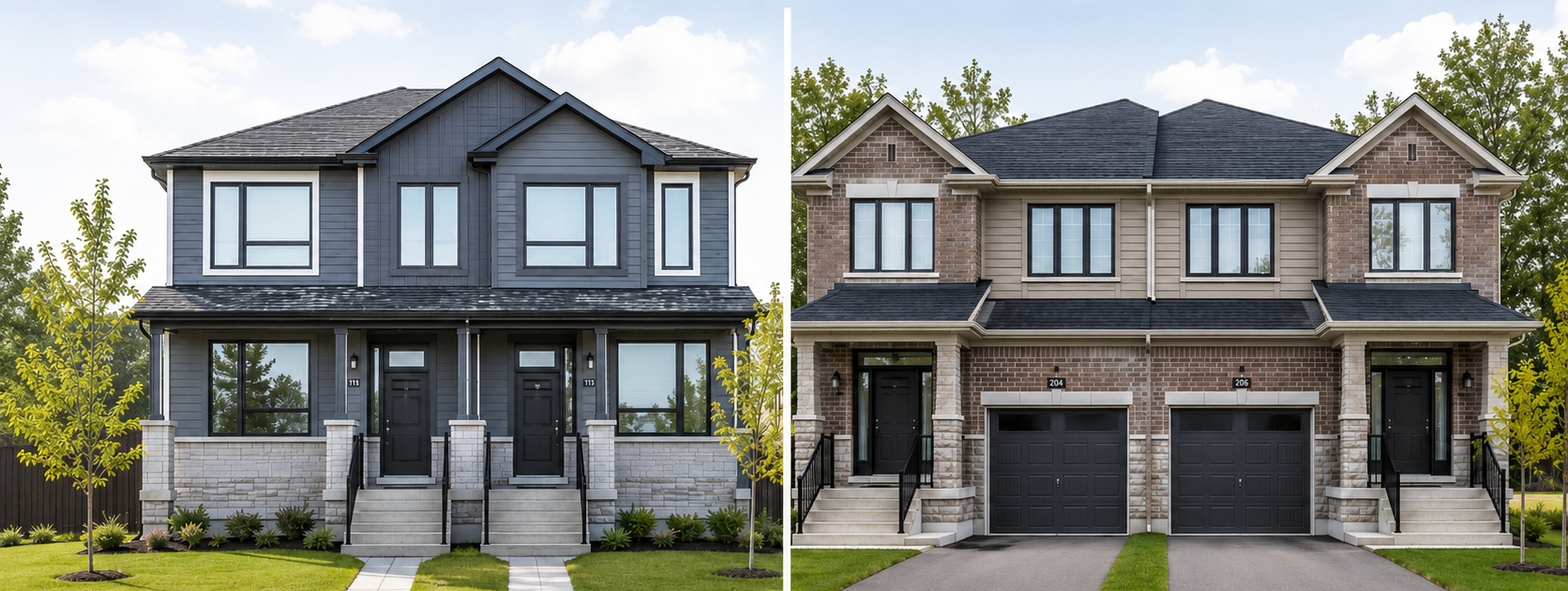
If you are exploring housing options in Halifax, Nova Scotia, you have likely come across the terms duplex and twin home. These two property types often get confused because they both involve two separate living units on one piece of land. However, they differ in structure, ownership, and legal classification. Understanding these differences matters whether you are a first-time buyer, a growing family, or an investor looking to expand a rental portfolio in the Halifax Regional Municipality.
This guide breaks down what makes a duplex different from a twin home, compares costs and ownership models, and helps you decide which option fits your goals better.
What Is a Duplex?
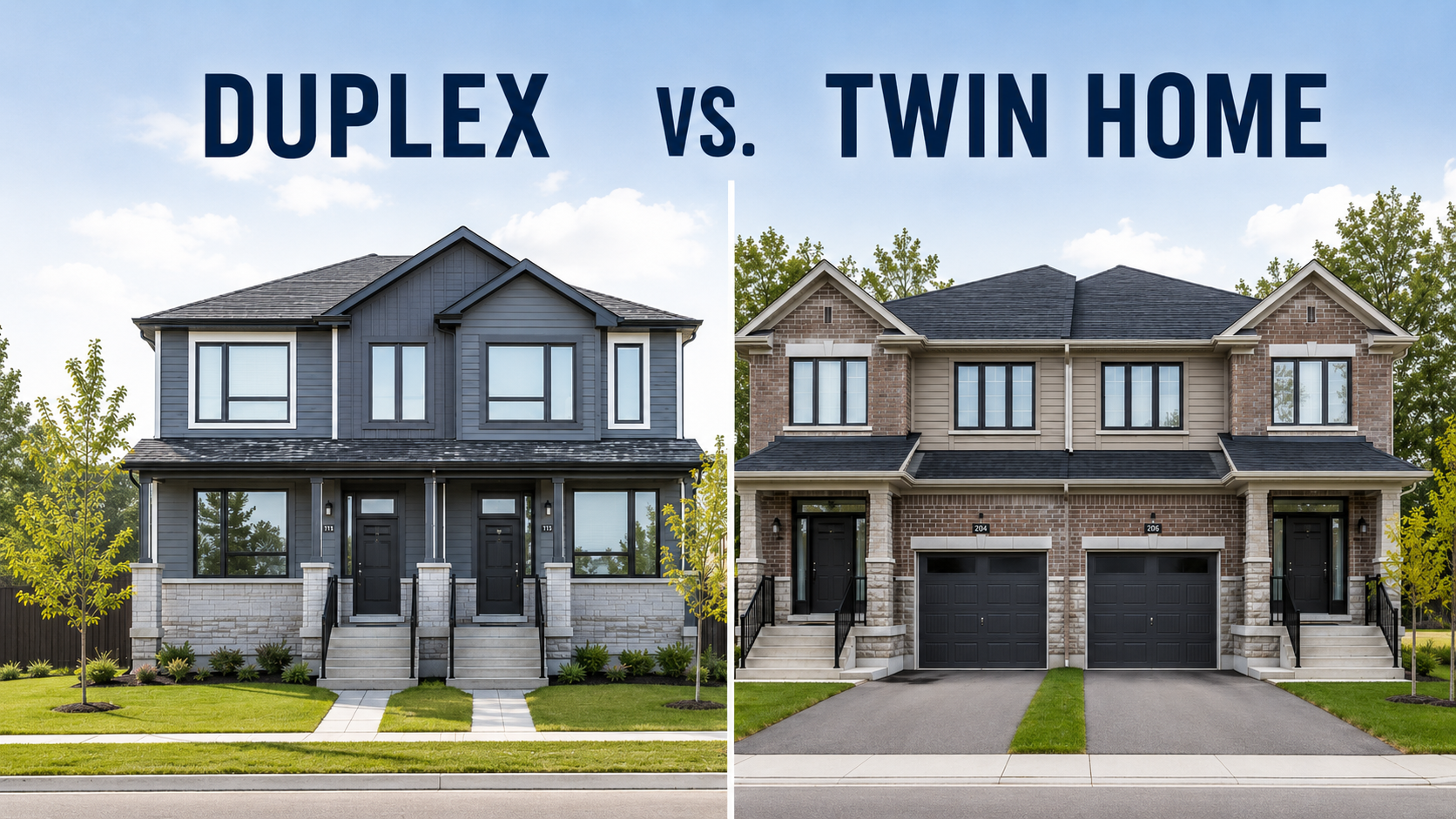
A duplex is a single building divided into two separate living units, typically stacked on top of each other or arranged side by side. Both units sit on one property with one legal title. This means the entire structure, along with the land it sits on, is owned by a single party unless the units are converted into a condominium-style arrangement.
Duplexes are common across Halifax neighborhoods like Dartmouth, Fairview, and Clayton Park, where lot sizes support multi-unit builds. Many homeowners choose a duplex layout to live in one unit while renting out the other, creating a built-in income stream that helps offset mortgage payments.
Key features of a duplex include:
- One shared building structure
- One property title covering both units
- Shared walls, foundation, and often a shared roof
- Units can be side by side or stacked (upper and lower)
- Owned by one person or entity, unless legally divided
Understanding this structure helps Halifax buyers decide if a single-title, multi-unit property aligns with their ownership and income goals.
What Is a Twin Home?
A twin home, also called a semi-detached home, consists of two separate dwellings that share one common wall but sit on individually owned lots. Unlike a duplex, each unit in a twin home has its own legal title, its own property boundaries, and its own owner.
This distinction is significant for buyers in Halifax. With a twin home, you own your half outright, including the land beneath it. Your neighbor owns the other half independently. The two properties are connected structurally but are legally and financially separate.
Twin homes are popular in newer Halifax developments, including areas like Bedford, Sackville, and parts of the Halifax Peninsula, where builders design semi-detached layouts to maximize land use while still offering private ownership.
Key features of a twin home include:
- Two separate legal titles
- Each unit sits on its own lot
- Shared wall between units, similar to row housing
- Independent ownership and mortgage responsibility
- Typically offers more privacy in terms of property rights
Knowing how twin homes differ legally from duplexes helps Halifax buyers choose a property that matches their privacy and ownership expectations.
Duplex vs Twin Home: Key Differences at a Glance
Before diving into details, this quick comparison table highlights the essential differences between duplexes and twin homes across ownership, cost, and structure.
This side-by-side comparison highlights the core distinctions buyers should weigh before choosing between these two popular Halifax housing options.
Ownership and Property Rights
The biggest difference between these two property types comes down to legal ownership. In a duplex, one owner typically holds the deed to the entire property, including both units and the land. If you buy a duplex, you become a landlord to whoever occupies the second unit, or you rent out both and manage the property remotely.
In a twin home, ownership is split at the property line. You hold a separate deed for your unit and the land it sits on. Your neighbor holds a completely separate deed. This setup means you have full control over your unit's exterior, landscaping, and any renovations, within municipal bylaws, without needing agreement from the other owner.
For Halifax buyers, this distinction affects financing, insurance, and long-term flexibility. Twin homeowners can sell their unit independently at any time. Duplex owners looking to sell only part of the property usually need to go through a legal conversion process, often involving condominium registration through Nova Scotia's Condominium Act.
Cost Comparison: Duplex vs Twin Home
Pricing varies based on location, lot size, and finishes, but general cost patterns hold true across the Halifax Regional Municipality.
Duplexes often carry a higher upfront purchase price since buyers are acquiring an entire building with two units. However, the rental income potential from the second unit can offset this cost significantly over time. Property taxes and insurance are also calculated on the whole structure, which can be higher than a single-unit twin home but lower than owning two completely separate detached homes.
Twin homes tend to have a lower individual purchase price since you are only buying one unit and its portion of land. Mortgage qualification is often more straightforward because lenders assess the loan against a single legal title rather than a shared property. Property taxes and insurance apply only to your unit, which can make monthly costs more predictable.
A general cost breakdown for Halifax buyers:
Comparing upfront costs, taxes, and insurance helps Halifax buyers budget accurately and choose the option that best fits their finances.
Pros and Cons of Duplexes and Twin Homes
Benefits of Buying a Duplex
A duplex offers strong income potential since you can live in one unit and rent the other, or rent both for full investment returns. This setup appeals to buyers in Halifax looking to enter the rental market without purchasing multiple separate properties. Maintenance is also centralized since one owner manages the entire structure, which can simplify repairs and upkeep decisions.
Other advantages include:
- Built in rental income to help cover mortgage costs
- Single point of maintenance decisions
- Potential for higher long term appreciation if converted to condo units later
- Easier to manage as a single investment property
Benefits of Buying a Twin Home
Twin homes offer independence that duplexes cannot match. You are not responsible for another unit's upkeep or tenant issues since your neighbor owns and manages their side separately. This makes twin homes attractive to families or first time buyers who want the affordability of semi-detached living without the responsibilities of being a landlord.
Other advantages include:
- Full ownership and control over your unit and land
- Easier mortgage approval with a smaller loan amount
- Greater privacy in decision making and renovations
- Simpler resale process since you only sell your unit
Potential Drawbacks to Consider
Both property types come with trade offs worth weighing before you buy.
For duplexes, being a landlord means dealing with tenant screening, repairs, and potential vacancy periods. Selling only part of a duplex is not straightforward and often requires legal restructuring.
For twin homes, sharing a wall with another household still means less privacy than a fully detached home. Noise transfer and exterior appearance disputes can arise since the two units are visually connected, even though ownership is separate.
Which Option Is Better for Homeowners and Investors?
The right choice depends on your goals.
For homeowners who want privacy, independent ownership, and a simpler mortgage process, a twin home is usually the better fit. You get semi-detached living with your own legal title and full control over your property, without the added responsibility of managing tenants.
For investors or buyers looking to generate rental income while living on site, a duplex offers more flexibility. Owning the entire structure allows you to control both units, adjust rental rates, and build equity across the full property rather than a single unit.
Halifax's growing rental demand, driven by population growth and limited housing supply across Nova Scotia, makes duplexes appealing for buyers focused on long term investment returns. Meanwhile, the steady demand for affordable, low maintenance homeownership keeps twin homes popular among young families and downsizers across the HRM.
Factors to Consider Before Buying
Before deciding between a duplex and a twin home in Halifax, think through these factors:
- Budget and financing – Determine whether you qualify for a larger mortgage (duplex) or prefer a smaller, single unit loan (twin home)
- Landlord responsibilities – Consider whether you want to manage tenants or prefer full independence
- Location – Research whether your preferred Halifax neighborhood has more duplexes or twin home developments available
- Long term goals – Decide if you are buying primarily for investment income or personal homeownership
- Resale flexibility – Factor in how easily you could sell the property down the road
- Municipal bylaws – Check HRM zoning rules, since some areas restrict multi unit conversions or additions
Working with a local builder familiar with Halifax's zoning requirements and neighborhood trends can help you avoid costly surprises during the buying or building process.
Final Thoughts
Choosing between a duplex and a twin home comes down to ownership preferences and financial goals. Duplexes suit buyers seeking rental income and centralized property control, while twin homes offer independent ownership and simpler mortgage terms. Both options provide practical paths to homeownership across Halifax's growing communities. Consider your budget, long term plans, and comfort with landlord responsibilities before deciding which structure fits your lifestyle and investment strategy best in Nova Scotia's evolving housing market.
FAQs
What Is The Main Difference Between A Duplex And A Twin Home?
A duplex has one legal title covering both units, while a twin home has separate titles for each unit on individual lots.
Can I Sell One Unit Of A Duplex Separately?
Not easily. Duplexes typically require condominium conversion under Nova Scotia law before units can be sold individually.
Are Twin Homes Cheaper Than Duplexes In Halifax?
Yes, twin homes usually cost less upfront since buyers purchase only one unit rather than an entire two-unit building.
Do Twin Homeowners Share A Mortgage?
No, each twin homeowner holds a separate mortgage tied to their individual unit and lot.
Is A Duplex A Good Investment Property?
Yes, duplexes offer built-in rental income potential, making them popular among Halifax investors seeking cash flow.
Do Duplexes And Twin Homes Share Walls?
Both types share a common wall, but duplex units are part of one structure while twin homes are separately titled buildings.
Which Option Offers More Privacy?
Twin homes generally offer more privacy since each unit has independent ownership and no shared landlord responsibilities.
Are Duplexes More Common In Older Halifax Neighborhoods?
Yes, duplexes are frequently found in established areas like Dartmouth and Fairview, while twin homes appear more in newer developments.
Can I Convert A Duplex Into Two Separately Owned Units?
Yes, through condominium registration, though this involves legal fees and municipal approval in Nova Scotia.
Which Is Better For First Time Buyers, A Duplex Or Twin Home?
Twin homes often suit first time buyers better due to simpler financing and no landlord responsibilities compared to duplexes.