.svg)
.svg)
.svg)
.svg)
Spec House vs. Custom House: Pros and Cons
Choosing between a spec house and a custom house is one of the biggest decisions you'll make when building or buying a home. While a spec home offers convenience and a faster move-in timeline, a custom home gives you complete control over the design, layout, and finishes.
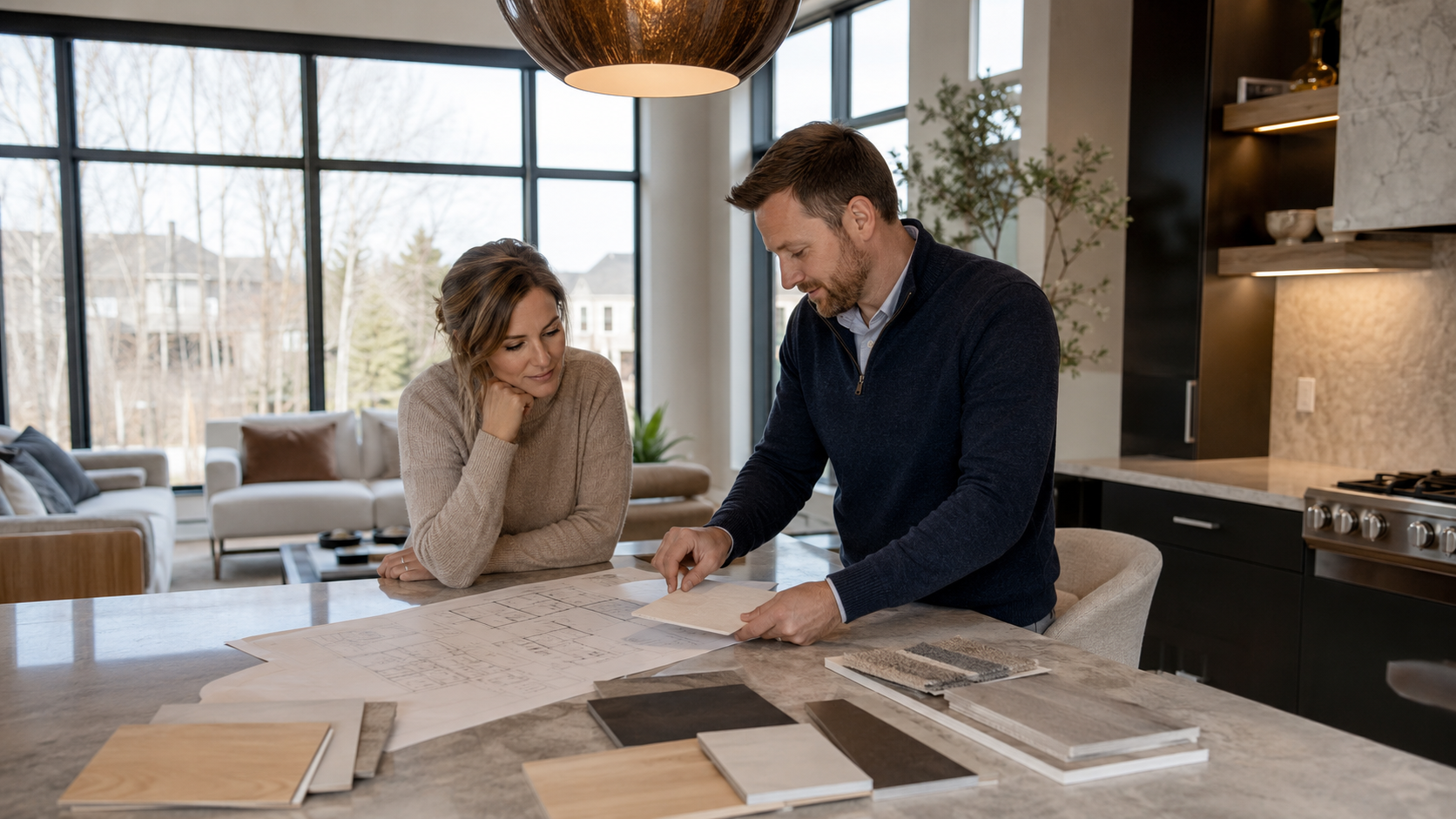
Buying or building a home is one of the biggest financial decisions you'll ever make. Two of the most common paths homeowners consider are spec houses and custom houses, and while both deliver a place to live, they're very different experiences in terms of cost, timeline, control, and long-term value.
This guide breaks down the real differences between spec and custom homes, covering costs, construction timelines, personalization, long-term value, and the key questions to ask before you decide, so you can move forward with confidence and clarity.
What Is a Spec House?
A spec house, short for speculative house, is a home built by a developer or builder without a specific buyer in mind. The builder invests their own capital, selects the design, layout, and finishes, and constructs the home with the expectation of selling it for a profit once complete.
Spec homes are typically built in planned subdivisions or residential developments. They follow popular floor plan trends, use mid-range materials, and are designed to appeal to the broadest possible buyer pool. In many cases, buyers can purchase a spec home while it's still under construction and choose from a limited selection of finishes, but the core design is already locked in.
What Is a Custom House?
A custom house is designed and built specifically for one buyer on a lot they own or have purchased. The homeowner works directly with an architect or design-build firm to create a floor plan, select materials, and make decisions about every element of the home, from the foundation type to the hardware on the kitchen cabinets.
Custom homes are built to the buyer's exact specifications, lifestyle needs, and aesthetic preferences. The process takes longer and typically costs more than buying a spec home, but the result is a property that fits your life rather than a general buyer profile.
Key Differences Between a Spec House and a Custom House
Choosing between a spec house and a custom house becomes much easier when you compare them side by side. Here's how they differ in the areas that matter most to homebuyers. Spec houses and custom houses differ across ownership, design control, cost, and timeline.
Spec House:
- A builder constructs the home without buyer input.
- The builder selects the lot, floor plan, and finishes.
- Buyers purchase the completed or near-complete property as-is.
- Closing timelines are shorter in Canadian real estate markets.
- Upfront costs are typically lower than custom builds.
Custom House:
- A homeowner owns the land before construction begins.
- The buyer directs every design and construction decision.
- Architects and builders execute the homeowner's vision fully.
- Timelines are longer due to design and permit stages.
- Budgets are larger but design control is complete.
Pros and Cons of Buying a Spec House
Spec homes attract a wide range of buyers for good reason, they're fast, straightforward, and come with new construction quality. But like any major purchase, they carry real trade-offs worth understanding before you commit.
Pros
- Faster Move-In: Many spec homes are move-in ready or close to completion when listed, making them ideal for buyers with urgent timelines.
- Predictable Pricing: The purchase price is set up front, reducing the risk of cost overruns during construction.
- New Construction Quality: You get modern building standards, current energy codes, and builder warranties without the renovation risks of an older resale home.
- Less Decision Fatigue: Finishes and fixtures are already selected, which appeals to buyers who don't want to manage hundreds of design decisions.
- Easier Financing: Traditional mortgage financing is straightforward since the home is a finished or near-finished product.
Cons
- Limited Personalization: You're buying someone else's vision. Structural changes are rarely possible once framing is complete.
- Cookie-Cutter Layouts: Spec homes in the same development often share floor plans, which can affect resale differentiation down the line.
- Lot Choice is Restricted: You're limited to lots within the developer's project, which may not suit your preferred location or lifestyle.
- Builder-Driven Decisions: Material and finish selections prioritize builder margins, not necessarily your long-term preferences.
A spec home makes the most sense when speed, simplicity, and move-in readiness matter more than personalization, but go in with clear eyes about what you can and can't change.
Pros and Cons of Building a Custom House
Building a custom house puts you in complete control of one of the biggest investments of your life, but that level of freedom comes with added time, cost, and decision-making responsibility worth considering carefully.
Pros
- Total Design Control: Every decision, from the floor plan to the finishing trim, reflects your personal taste and functional needs.
- Built for Your Lifestyle: Home office, multigenerational suite, accessible design, energy-efficient systems, a custom home accommodates needs, a spec home simply can't.
- Better Long-Term Fit: Homes built around your actual lifestyle tend to require fewer renovations and modifications over time.
- Site Flexibility: You choose the lot, the orientation, the view, and the neighbourhood, not the developer.
- Higher Resale Differentiation: A well-designed custom home stands out in the resale market compared to standard subdivision properties.
Cons
- Longer Timeline: Custom builds typically take 12 to 24 months from design to occupancy, which isn't practical for every buyer's situation.
- Higher Upfront Cost: Land acquisition, design fees, and construction costs make custom builds a larger financial commitment.
- Decision Overload: Managing hundreds of design and material choices throughout the process can be stressful without the right builder partnership.
- Cost Variability: Scope changes, material price fluctuations, and site surprises can push budgets beyond original estimates.
A custom home is the right choice when long-term fit, design freedom, and building something uniquely yours matter more than a faster or simpler path to move-in day.
Spec House vs. Custom House: Cost Comparison
Cost is where spec houses and custom houses diverge most significantly for Canadian buyers. Each option carries a distinct cost structure across purchase price, design fees, land, and long-term expenses.
Spec House Costs:
- Base purchase price ranges from $350,000 to $700,000+ in most Canadian markets.
- Design and architecture fees are included in the purchase price.
- Land cost is typically bundled into the sale.
- Finish upgrade costs range from $5,000 to $30,000 post-purchase.
- Post-move renovation costs can be high if finishes do not match your lifestyle.
Custom House Costs:
- Base purchase price ranges from $450,000 to $1,000,000+ depending on scope.
- Design and architecture fees add $15,000 to $50,000+ separately.
- Land must be purchased independently before construction begins.
- Finish selections are built directly into the project budget.
- Long-term operating costs are lower when the home is built efficiently.
Spec homes appear more affordable at the point of purchase. Post-purchase renovations can close that cost gap quickly. Custom homes carry higher upfront costs. They are purpose-built for how you actually live. This reduces the need for expensive changes after move-in.
Both options must be evaluated on total cost of ownership. The initial price tag does not reflect the full financial picture.
Spec House vs. Custom House: Construction Timeline
Construction timelines represent one of the most significant differences between spec and custom houses. Understanding each phase helps Canadian buyers plan their purchase and move-in date with realistic expectations.
Spec House Timeline:
- Design and planning are already complete before you purchase.
- Permits are approved and in place prior to sale.
- Construction spans 4 to 8 months for incomplete units.
- Total timeline ranges from 0 to 8 months from purchase to move-in.
- Completed units allow immediate or near-immediate occupancy.
Custom House Timeline:
- Design and planning require 2 to 4 months before construction begins.
- Permit processing adds 1 to 3 months to the pre-build phase.
- Construction spans 8 to 16 months depending on project complexity.
- Total timeline ranges from 12 to 24 months from land purchase to move-in.
- Each phase is spent building exactly what you want.
Spec homes offer a clear speed advantage in Canadian housing markets. Completed or near-complete units allow buyers to move quickly. Custom homes require a longer commitment of time. That time is used to create a home built around your lifestyle. No compromises are made on finishes, layout, or function.
A flexible timeline makes the custom build process worthwhile. Long-term satisfaction outweighs the extended wait for most buyers who choose this path.
Which Option Offers Better Long-Term Value?
Both spec and custom homes can appreciate in value over time, but the factors driving that appreciation differ.
Spec homes in well-located, high-demand subdivisions tend to appreciate steadily alongside comparable properties in the same development. However, since many units share the same floor plan and finishes, individual differentiation is limited in a competitive resale market.
Custom homes built with quality materials, energy-efficient systems, and thoughtful design tend to hold their value strongly, particularly when they're located on desirable lots or in established neighbourhoods. Unique architectural features, higher-end finishes, and functional layouts that genuinely serve modern living can give custom homes an edge in resale scenarios.
From a return on investment perspective, a custom home built with discipline and a clear budget often delivers stronger long-term value than a spec home that requires significant post-purchase upgrades to truly feel like yours.
How to Choose Between a Spec House and a Custom House
The right choice depends on your personal priorities. Here are the key questions to help guide your decision:
Choose a Spec House if:
- You need to move within the next 6 to 12 months
- You prefer a predictable, fixed purchase price
- You're comfortable with standard layouts and pre-selected finishes
- You want new construction without managing a build process
Choose a Custom House if:
- You have a clear vision for how your home should look and function
- You're planning for the long term and want a home that truly fits your lifestyle
- You own or are purchasing a specific lot with a particular location in mind
- You're willing to invest time and energy in the design and build process
Work with the right builder either way. Whether you're buying spec or going custom, the builder's reputation, communication style, and construction quality matter enormously. Always review past projects, check references, and ask detailed questions about what's included in the price.
Final Thoughts
Choosing between a spec house and a custom house isn't about which option is objectively better, it's about which one is right for you. Spec homes offer speed, simplicity, and predictable pricing, making them a practical choice for buyers with tight timelines. Custom homes deliver complete design freedom and a long-term fit that no off-the-shelf build can replicate.
Weigh your priorities carefully, work with an experienced builder you trust, and make the decision that aligns with both your lifestyle and your financial goals.
FAQs
What Is The Main Difference Between A Spec House And A Custom House?
A spec house is built by a developer for a general buyer market with pre-selected designs and finishes. A custom house is designed and built specifically for one buyer based on their personal requirements and preferences.
Are Spec Houses Cheaper Than Custom Houses?
Generally yes, spec homes have a lower upfront cost. However, post-purchase renovations to personalize the space can narrow that gap. Custom homes cost more initially but are built specifically for your needs, reducing the need for future upgrades.
Can I Make Changes To A Spec House Before It's Finished?
Sometimes. If the home is still under construction, builders may allow limited finish selections — flooring, paint colours, or fixtures. Structural changes are rarely possible once framing is underway.
How Long Does It Take To Build A Custom House?
Most custom home builds take 12 to 24 months from design to occupancy, including permit processing. Timeline varies based on design complexity, site conditions, and contractor availability.
Is A Custom Home A Better Investment Than A Spec Home?
A well-built custom home on a desirable lot can offer stronger long-term resale value due to quality construction and unique design. However, location remains the most important factor for any home's appreciation potential.
Do Spec Homes Come With Warranties?
Yes. New spec homes in Canada typically come with a new home warranty covering defects in materials and workmanship. Warranty terms vary by province and builder.
Can I Get A Mortgage For A Custom Home Build?
Yes, through a construction mortgage or draw mortgage, which releases funds in stages as construction milestones are reached. This differs from a standard purchase mortgage and requires working with a lender experienced in new construction financing.
What Are The Risks Of Buying A Spec House?
The main risks include limited personalization, builder-driven material choices, and potential layout compromises. Buyers should also review the developer's track record and the terms of the purchase agreement carefully.
Who Is Responsible For Permits In A Custom Home Build?
Typically, your builder or design-build firm handles permit applications on your behalf. However, as the homeowner, it's important to confirm all required permits are in place before construction begins.
Can A Design-Build Firm Help With Both Spec And Custom Homes?
A design-build firm primarily specializes in custom homes, managing the entire process from initial design through construction under one team. Some firms also develop spec properties, but their core value is in delivering personalized, purpose-built homes efficiently.