.svg)
.svg)
.svg)
.svg)
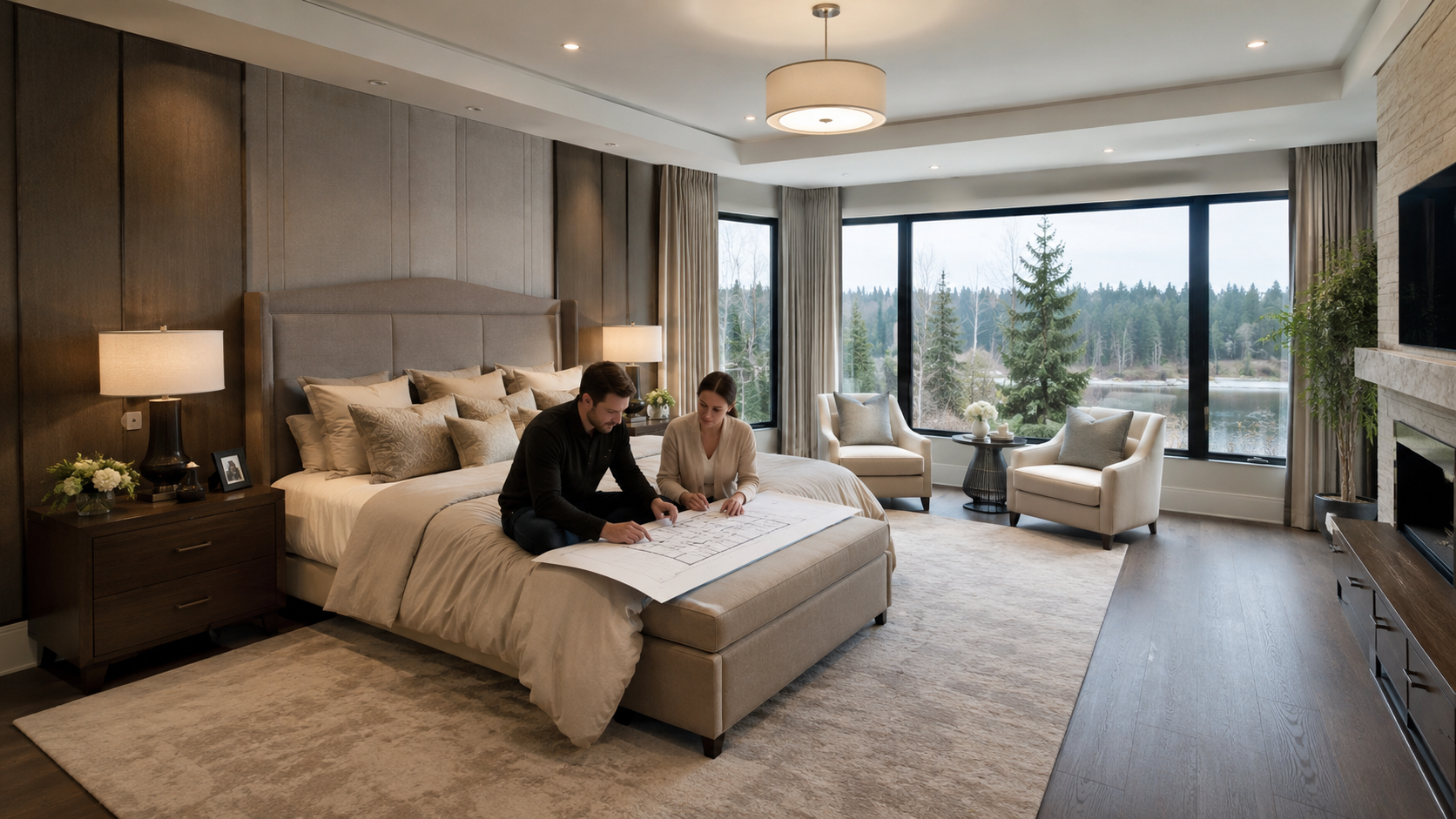
The master bedroom is the most personal space in any home, it's where you start and end every day. Whether you're designing a new build, planning a home addition, or simply trying to understand if your current space measures up, knowing the standard master bedroom dimensions helps you make better decisions. This guide covers average sizes, minimum comfort thresholds, furniture layout planning, and practical design tips to help you get the most out of your master bedroom, whatever its size.
What Is the Average Master Bedroom Size?
The average master bedroom size in Canada is approximately 14 x 16 feet, or 224 square feet. This figure varies based on home type, construction era, regional building norms, and whether the room includes an ensuite or walk-in closet.
Master Bedroom Size Categories:
- Small master bedroom ranges from 10 x 12 feet (120 sq ft).
- Average master bedroom measures 14 x 16 feet (224 sq ft).
- Large master bedroom spans 16 x 20 feet (320 sq ft).
- Luxury master bedroom starts at 20 x 20 feet (400+ sq ft) and above.
What Affects Master Bedroom Size in Canadian Homes:
- Older homes typically feature smaller master bedrooms due to dated floor plan standards.
- Newer construction prioritizes larger primary suites with ensuite and closet space.
- Detached homes offer more square footage than condos or townhouses.
- Regional building norms vary between provinces and urban versus suburban areas.
A bedroom under 120 square feet is generally too small to function as a master suite. A king-size bed, nightstands, and a dresser require adequate clearance to use comfortably. Rooms below this threshold create circulation and furniture placement challenges.
Understanding average master bedroom sizes gives homeowners a reliable benchmark. Use these figures to evaluate your current space or plan a new layout that works for how you actually live.
Standard Master Bedroom Dimensions by Home Type
Master bedroom dimensions vary significantly across different housing types. Here's what you can typically expect:
Apartment Master Bedrooms
In apartment settings, master bedrooms tend to be more compact due to overall unit size constraints. The typical apartment master bedroom measures 10 x 12 to 12 x 14 feet (120 to 168 square feet). Space efficiency is critical here, built-in storage, wall-mounted fixtures, and multifunctional furniture make a meaningful difference in how livable the room feels.
Townhouse Master Bedrooms
Townhouse master bedrooms typically measure 12 x 14 to 14 x 16 feet (168 to 224 square feet). They often benefit from upper-floor placement, which allows for higher ceilings, better natural light, and occasional vaulted ceiling opportunities that make the room feel larger than its footprint suggests.
Single-Family Home Master Bedrooms
In standard single-family homes, master bedrooms commonly range from 14 x 16 to 16 x 20 feet (224 to 320 square feet). This size range comfortably accommodates a king-size bed, seating area, walk-in closet, and ensuite bathroom access, the combination most homeowners consider the baseline for a true master suite.
Luxury Home Master Bedrooms
Luxury home master bedrooms start at 20 x 20 feet (400 square feet) and can extend well beyond that. These spaces often include separate sitting areas, double walk-in closets, spa-style ensuites, private balcony access, and custom millwork, functioning less as a single room and more as a private residential suite.
While these dimensions serve as useful benchmarks, the ideal master bedroom size ultimately depends on your lifestyle, available floor space, storage needs, and the level of comfort you want to achieve.
Minimum Master Bedroom Size for Comfort
Under the Nova Scotia Building Code, which adopts the National Building Code of Canada standards, a bedroom must have a minimum floor area of 7 square metres (approximately 75 square feet) and a minimum ceiling height of 2.1 metres (6 feet 11 inches). However, these are code minimums, not comfort standards.
Most interior designers and custom home builders in Nova Scotia recommend at least 10 x 12 feet (120 square feet) as a realistic functional minimum for a primary bedroom.
At minimum size, you can fit:
- A queen-size bed with minimal clearance on each side
- One small nightstand
- A single dresser or wardrobe
- Narrow walking paths around the bed
For true comfort, meaning a king-size bed, two nightstands, a dresser, and reasonable circulation space, 14 x 16 feet (224 square feet) is the practical minimum most interior designers recommend.
Minimum Room Size by Bed Type:
- Twin bed requires a minimum room size of 9 x 10 feet.
- Full or double bed requires a minimum room size of 10 x 12 feet.
- Queen bed requires a minimum room size of 12 x 14 feet.
- King bed requires a minimum room size of 14 x 16 feet.
- California king bed requires a minimum room size of 14 x 18 feet.
A room that technically fits the furniture is not always a room that functions well. Adequate clearance around the bed allows for comfortable movement and daily use. Storage options become severely limited in undersized bedrooms. Frustration with the space compounds over time when dimensions are too tight.
How to Choose the Right Master Bedroom Size
Choosing the right master bedroom size isn't just about square footage, it's about how the space needs to function for your specific lifestyle. Here are the key factors to consider:
- Bed Size Preference: Your preferred bed size is the single biggest driver of how much floor space you need. A king bed in a small room leaves little room for anything else.
- Storage Requirements: Nova Scotia's four distinct seasons mean more clothing variety and storage needs. A walk-in closet or well-planned built-in wardrobe is a practical priority, not a luxury.
- Ensuite Bathroom: Ensuite access is increasingly expected in Nova Scotia's new home market. Both spaces need to be planned together as a unified suite .
- Seating or Sitting Area: A dedicated reading chair or small sofa requires at least an additional 40 to 50 square feet of usable floor space.
- Home Office Use: Many homeowners now incorporate a small desk or workspace into their master bedroom, which requires thoughtful size and layout planning.
- Future Resale Considerations: Buyers consistently rate master bedroom size as one of the top priorities in home selection. A well-proportioned master suite significantly improves resale appeal.
Choosing the right master bedroom size from the start saves you from costly renovations later and creates a space that genuinely supports how you live every day.
Ideal Furniture Layout for Different Master Bedroom Sizes
Getting the furniture layout right is just as important as the room dimensions themselves. Here's how to approach layout planning by room size:
Small Master Bedroom (10 x 12 ft - 120 sq ft)
- Queen bed centred on the longest wall
- One or two slim nightstands
- Wall-mounted lighting to free up surface space
- Narrow dresser or built-in wardrobe along one wall
- Avoid large freestanding furniture that blocks pathways
Average Master Bedroom (14 x 16 ft - 224 sq ft)
- King or queen bed with nightstands on both sides
- Dresser or chest of drawers opposite the bed
- Small bench or ottoman at the foot of the bed
- Walk-in closet or large wardrobe along one wall
- Clear 30 to 36 inch circulation paths around all sides of the bed
Large Master Bedroom (16 x 20 ft - 320 sq ft)
- King bed with full nightstand setup
- Dedicated seating area with armchairs or loveseat
- Full dresser and vanity area
- Walk-in closet with an organized storage system
- Space for a desk or workout area if needed
Luxury Master Bedroom (20 x 20 ft and above)
- Statement bed with full headboard wall treatment
- Separate sitting room area with sofa and coffee table
- His and hers walk-in closets
- Ensuite with spa features
- Private balcony or terrace access where possible
The best master bedroom layout balances comfort, functionality, and easy movement. Choosing furniture that matches your room size helps create a space that feels open, organized, and comfortable for everyday living.
Master Bedroom Size vs. Standard Bedroom: What's the Difference?
The distinction between a master bedroom and a standard bedroom extends beyond square footage. Function, features, and hierarchy within the home define the difference between the two room types.
Standard Bedroom:
- Average size measures 10 x 12 feet (120 sq ft).
- Ensuite bathrooms are rarely included in standard bedroom design.
- Walk-in closets are uncommon in standard bedroom configurations.
- Ceiling height follows standard residential construction norms.
- Natural light levels vary depending on location within the home.
- Standard bedrooms can be located on any floor of the house.
Master Bedroom:
- Average size measures 14 x 16 feet (224 sq ft).
- Ensuite bathrooms are commonly included as a core feature.
- Walk-in closets are standard in most Canadian master bedroom designs.
- Ceiling height is often higher or vaulted for an elevated feel.
- Natural light is typically prioritized through window placement and orientation.
- Master bedrooms are usually positioned on the main or upper floor.
A standard bedroom is designed to sleep one or two people comfortably. A master bedroom is designed as a complete private retreat. Sleeping, dressing, storage, and bathroom facilities are integrated into one cohesive space. This distinction directly affects how the room functions on a daily basis.
Common Mistakes to Avoid When Planning a Master Bedroom
Even with the right square footage, poor planning decisions can undermine a master bedroom's functionality and comfort. Here are the most common mistakes to avoid:
- Oversizing the Bed: Choosing a bed that's too large for the room leaves inadequate circulation space and makes the room feel oppressive rather than restful
- Ignoring Natural Light: In Nova Scotia, where winter days are shorter and darker, window placement and size in the master bedroom deserves extra attention
- Underestimating Storage Needs: Seasonal clothing, winter gear, and bedding storage are real considerations in Atlantic Canada's climate. Insufficient storage leads to clutter, which makes even large bedrooms feel cramped and disorganized
- Poor Door and Window Placement: Doors and windows that conflict with furniture placement limit your layout options significantly
- Skipping the Ceiling Height: Low ceilings in a small master bedroom compound the feeling of confinement; wherever possible, maximize ceiling height
- Neglecting Electrical Planning: Insufficient outlets, poor lighting circuit placement, and no provision for ceiling fans or smart home systems are all expensive to fix after construction
- Treating the Ensuite as an Afterthought: The master bathroom and bedroom need to be planned together as a unified suite, not as two separate rooms
Avoiding these planning mistakes from the start saves significant time, money, and frustration, and results in a master bedroom that functions beautifully from day one.
Design Tips to Make Any Master Bedroom Feel More Spacious
A well-designed master bedroom can feel significantly larger than its actual square footage suggests. These practical design strategies work regardless of room size:
- Use a Consistent Flooring Material: Continuous flooring without breaks makes a room feel larger and more cohesive
- Choose Light, Neutral Wall Colours: Soft whites, warm greys, and muted tones reflect light and visually expand the space, a particularly effective strategy in Nova Scotia's lower-light winter months
- Maximize Natural Light: Larger windows, skylights, or glass doors to a balcony flood the room with light and create a sense of openness
- Use Vertical Space: Floor-to-ceiling wardrobes, tall headboards, and vertical artwork draw the eye upward and make ceilings feel higher
- Limit Furniture Quantity: Fewer, better-chosen pieces create more breathing room than filling every wall with furniture
- Use Mirrors Strategically: A large mirror on one wall or mirrored wardrobe doors effectively doubles the perceived depth of any room
- Choose Built-In Storage Over Freestanding Pieces: Built-ins occupy less visual space and create a cleaner, more streamlined look, especially useful in older Nova Scotia homes with compact room proportions
- Layer Your Lighting: Ambient, task, and accent lighting working together make a room feel dynamic and well-considered rather than flat
These design strategies help any master bedroom, regardless of its size, feel like the restful, well-appointed retreat it should be.
Final Thoughts
Master bedroom size matters more than most homeowners realize until they're living in a space that doesn't quite work. Whether you're planning a new build, a home addition, or simply rethinking your current layout, understanding standard dimensions, minimum comfort thresholds, and smart furniture planning gives you the tools to create a space that truly serves you. The best master bedroom isn't necessarily the biggest one, it's the one designed with intention, proportion, and your daily lifestyle at the centre of every decision.
FAQs
What Is The Average Size Of A Master Bedroomin Nova Scotia?
The average master bedroom in Nova Scotia measures approximately 14 x 16 feet (224 square feet). This size comfortably accommodates a king-size bed, nightstands, a dresser, and reasonable circulation space around all sides of the bed.
What Is The Minimum Bedroom Size Under The Nova Scotia Building Code?
The Nova Scotia Building Code, aligned with the National Building Code of Canada, requires a minimum bedroom floor area of 7 square metres (approximately 75 square feet) and a minimum ceiling height of 2.1 metres (6 feet 11 inches). For practical comfort, most builders recommend at least 10 x 12 feet.
What Is A Good Size For A Master Bedroom With An Ensuite?
A master bedroom that includes ensuite access should be at least 14 x 16 feet for the sleeping area alone, with the ensuite adding an additional 40 to 80 square feet depending on the bathroom layout and fixtures included.
How Big Should A Master Bedroom Be For A King-Size Bed?
A king-size bed measures 76 x 80 inches. To accommodate a king bed with proper clearance on all sides, the room should be at least 14 x 16 feet, ideally larger if nightstands, a dresser, and a seating area are also planned.
Is A 12 X 12 Master Bedroom Too Small?
A 12 x 12 foot master bedroom (144 square feet) can work for a queen-size bed with limited additional furniture, but it's considered below average for a primary bedroom. It becomes particularly challenging if walk-in closet or ensuite access is also required within that footprint.
What Is The Difference Between A Master Bedroom And A Primary Bedroom?
The terms are largely interchangeable in modern usage. Many builders and real estate professionals now prefer "primary bedroom" as a more inclusive term. Both refer to the largest, most feature-rich bedroom in the home, typically including an ensuite bathroom and walk-in closet.
How Much Does It Cost To Add A Master Bedroom In Nova Scotia?
Adding a master bedroom through a home addition in Nova Scotia typically costs between $80,000 and $200,000, depending on size, location, whether an ensuite is included, and current construction labour costs in your area.
What Ceiling Height Is Best For A Master Bedroom?
A minimum ceiling height of 8 feet is standard for master bedrooms. Nine-foot or ten-foot ceilings are increasingly common in new builds and make the room feel noticeably more spacious and comfortable, particularly in smaller rooms.
Should A Master Bedroom Face A Particular Direction?
South or east-facing master bedrooms receive more natural morning light, which many homeowners prefer. North-facing rooms tend to be cooler and darker. The best orientation depends on your climate, lifestyle, and personal preference for light and temperature.
How Can I Make My Small Master Bedroom Feel Larger?
Use light wall colours, maximize natural light, choose built-in storage over freestanding furniture, use mirrors to increase perceived depth, and maintain clear circulation paths around the bed. Consistent flooring and minimal clutter also contribute significantly to a more spacious feel.